Category Archives: Uncategorized

Onward 458 kilometers to the Bergenland

We had a nice drive yesterday in good weather. Before we left we went out in Udine and purchase a picnic of proscuitto, cheese and bread. Luther also had his wishes come true and purchased two cuban cigars. Oddly, another incomprehensible Italian rule says you must pay cash for tobacco products. Anything else you could pay with a credit card. Go figure.

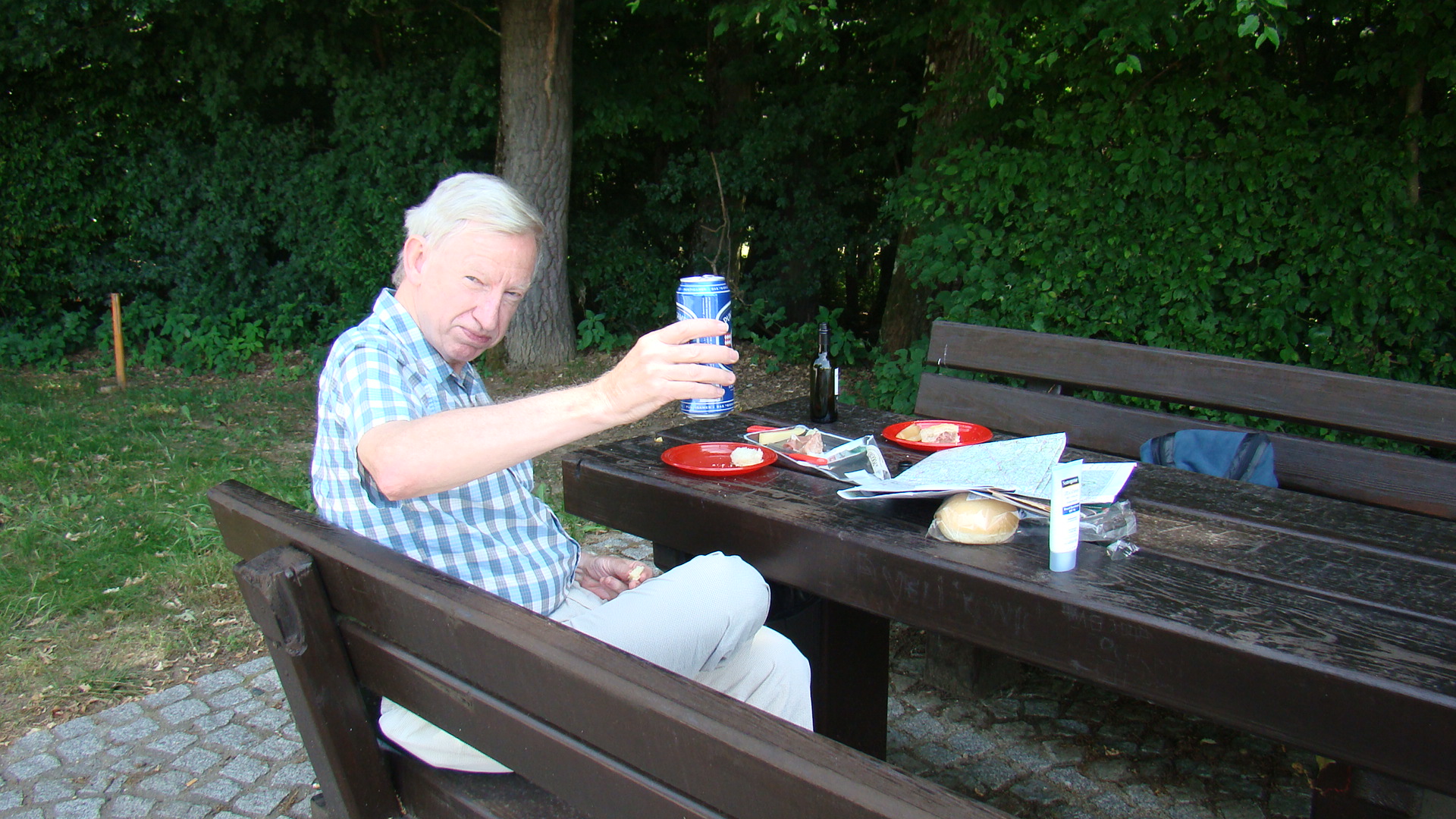
We flew(!) mostly on autobahns through Italy/Austria but got off about 100 km from our final destination to put the top down and have a picnic to save ourselves for dinner. They have pleasant picnic areas along the highways.

DSC04438

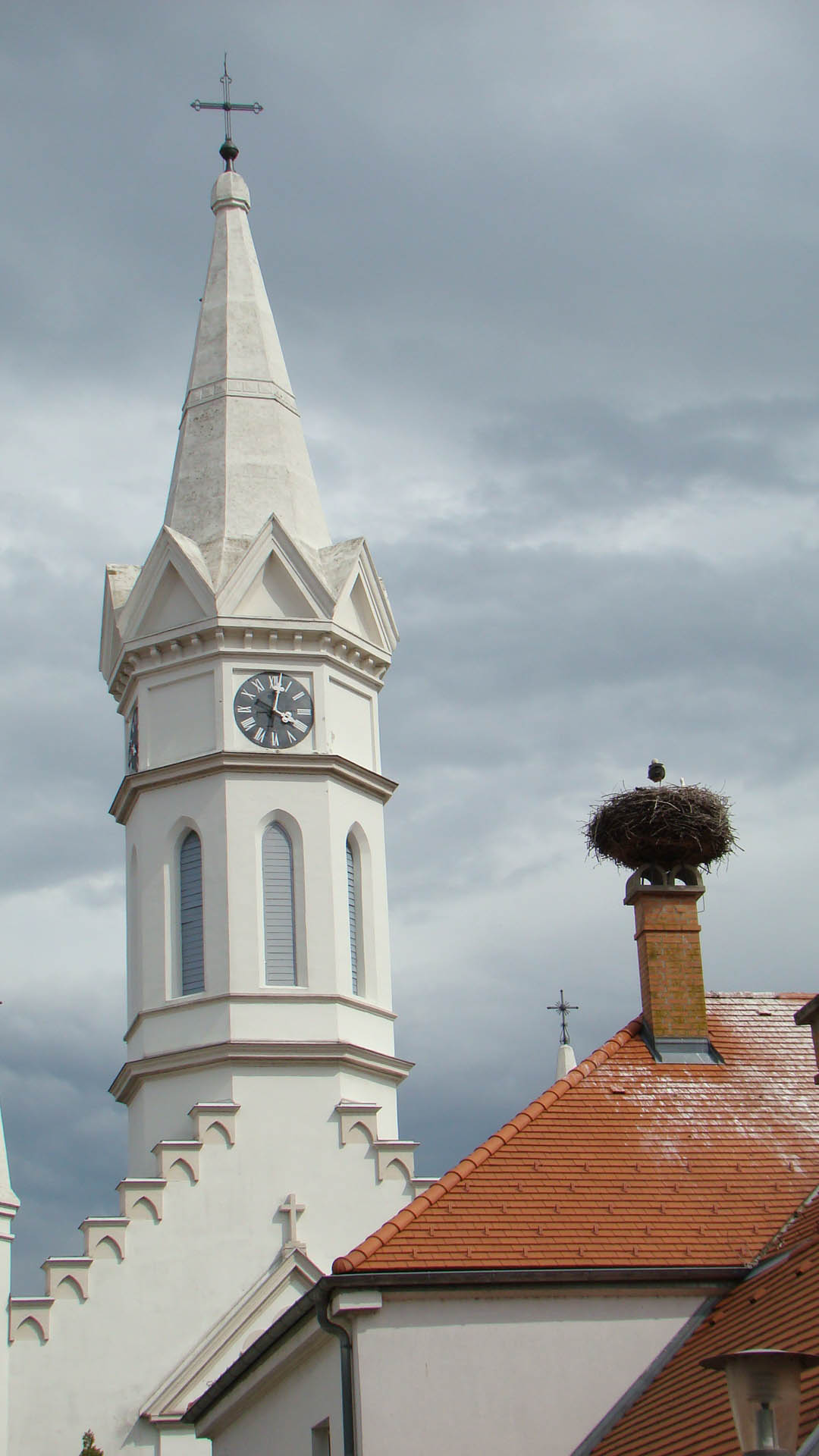
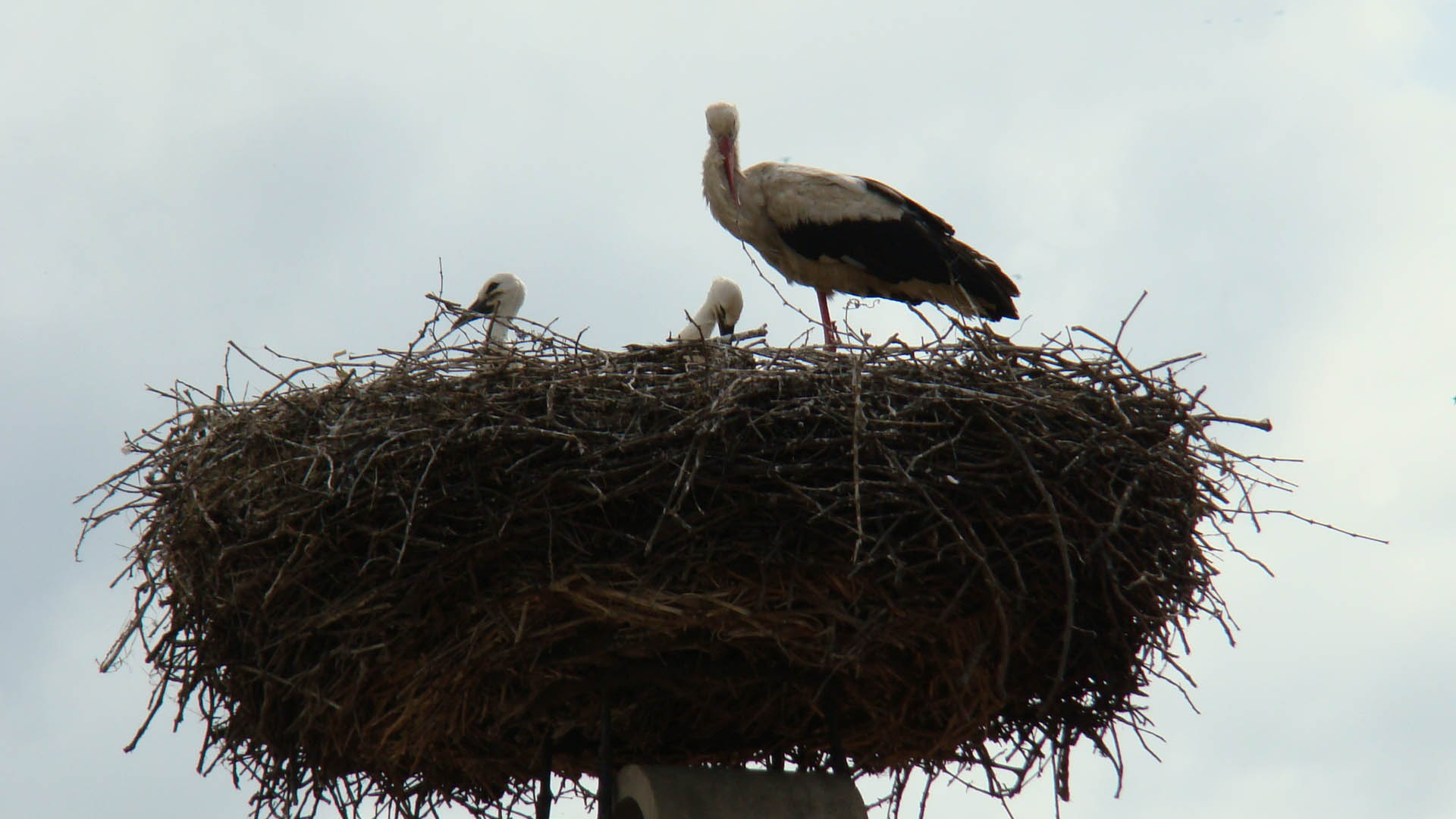
Our next destination, Mörbisch is in the Bergenland in Austria south of Vienna. It is just at the bottom end of the Neusiedlersee, a large lake with marshes, home to many birds, foremost of which are the storks. Every town had many of the large metal nest spaces on their roofs hoping to attract the big birds to nest. They are said to be good luck. So far every town had at least two nests with mom and two babies.
DSC04442
DSC04445

We checked into the Weingut Schindler which has 6 rooms it rents out. Frau Schindler met us and offered us a glass of their wine which we enthusiastically accepted. The Weingut has an interior courtyard full of flowers and tables at which you can enjoy their wine. Our room is nice. Not fancy but fine. We are staying three nights. We walked around town, checking out the restaurants and pretty alleys full of flowers. We stopped at a Heuriger which is an establishment that serves wine and snacks – typically they have a bough from a tree to indicate they are open for business. Earlier our Frau had recommend the Sommer restaurant for dinner so we searched it out while on our walk.

Restaurant Sommer had nice outside tables. We enjoyed typical German-style food. Both of us had Weiner Schnitzels as entrees. Lucky for me I ordered the small portion! Luther’s was HUGE. We also enjoyed the local wines, the red was produced by the family who owns the restauruant. It began to rain while Luther was smoking his cigar. We huddled under the umbrella then walked (quickly) back to the Weingut.

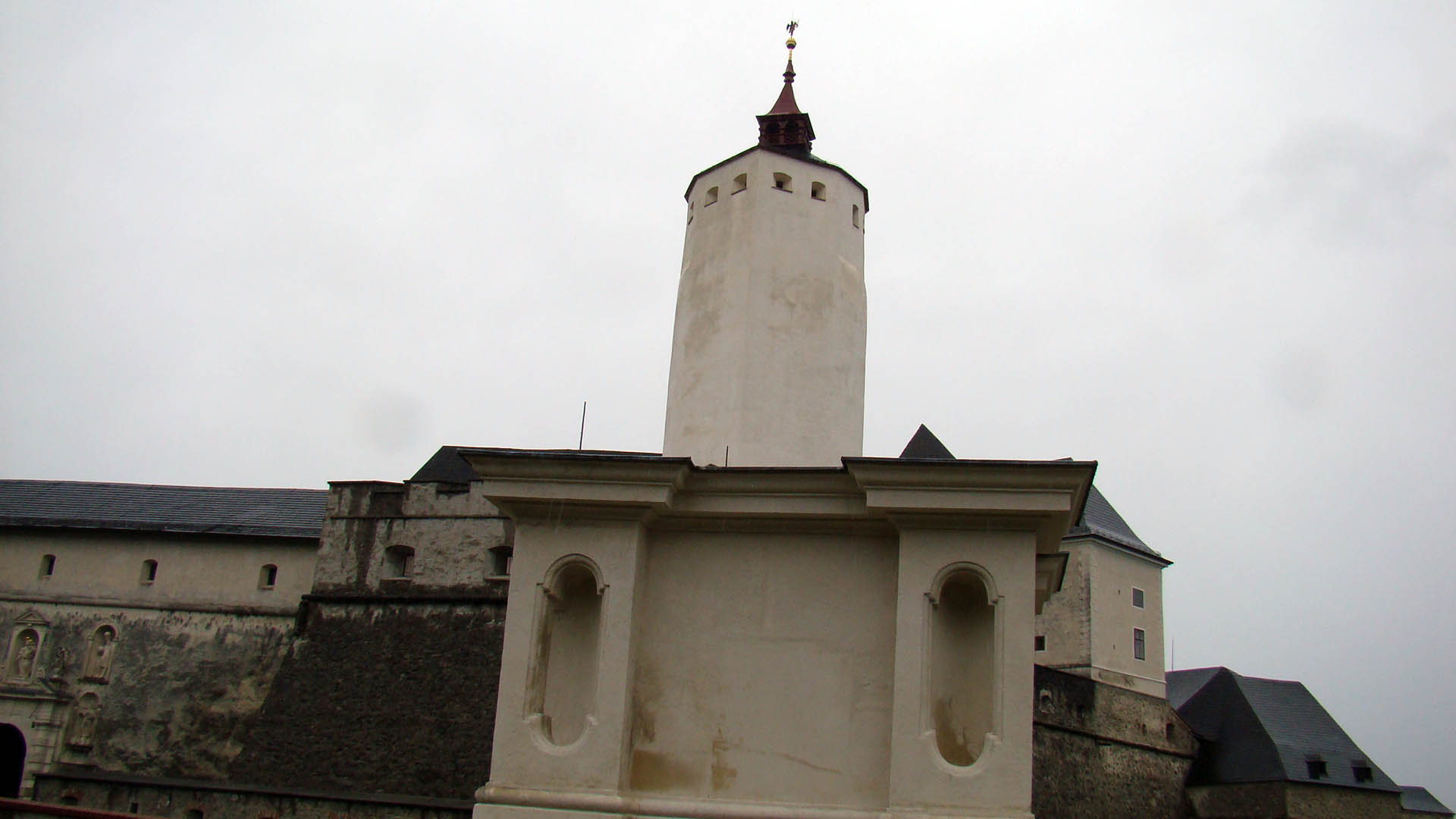
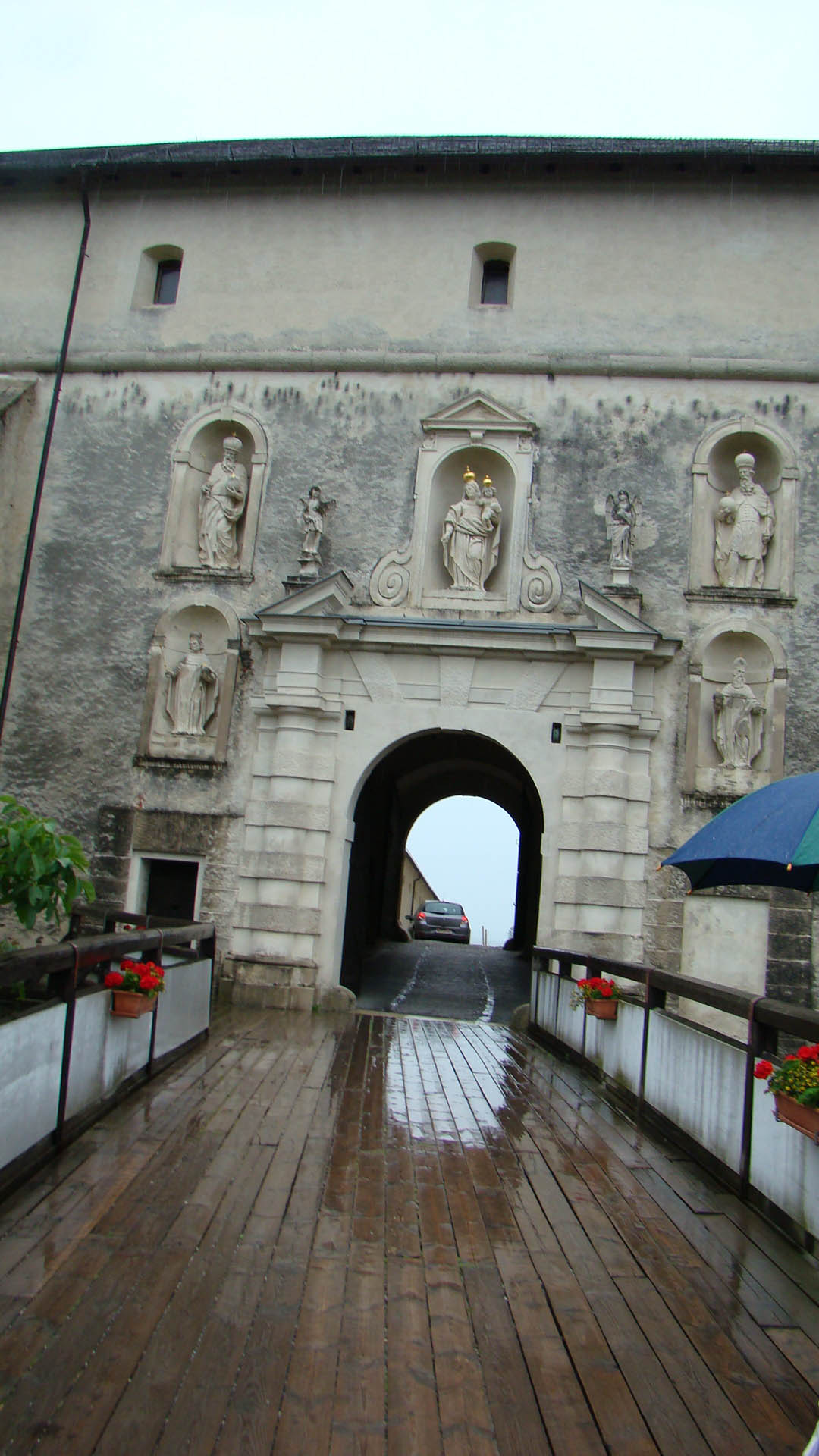
This morning dawned cold, gray and rainy. Too bad. We had breakfast at the weingut which was nice with most things you could want. We headed out to the capital city of this area, Eisenstat. It was nice enough but since the rain was steady we drove on to Forchtenstein which has a Schloss and fortress. We visited. I couldn’t take any interior pictures but here it is on of the outside approaching.

DSC04446DSC04447
It was impressive but the family Esterhazy were pretty disgusting. In order to be able to rule what is now Hungary they had to prove a long line of ancestry. They pretty much made it up with portraits of their non-existent relatives in their hall of the ancestors. Very pretentious folks.

The rain continued all afternoon. We went back to the lake to Rust for lunch at a seafood place. I had a nice spicy soup which, to me, seemed very Hungarian which is not so strange given we are about 2 miles from the border. Luther had a roasted chicken which was reminiscent of KFC.

After lunch we visited the Sommer Weingut. Tasted wines and endured their terrible two year old, Felix. Their wine was quite nice. We bought a case.
DSC04451

DSC04448
It is now around 7pm and happily, the sun is finally out. I looked up the weather and it should be nice through our Budapest leg of the trip. I had to buy a sweater this morning as it was only 14C today. Brrrr.

New Wine Guy post – Visiting a winery – Villa Mongalli

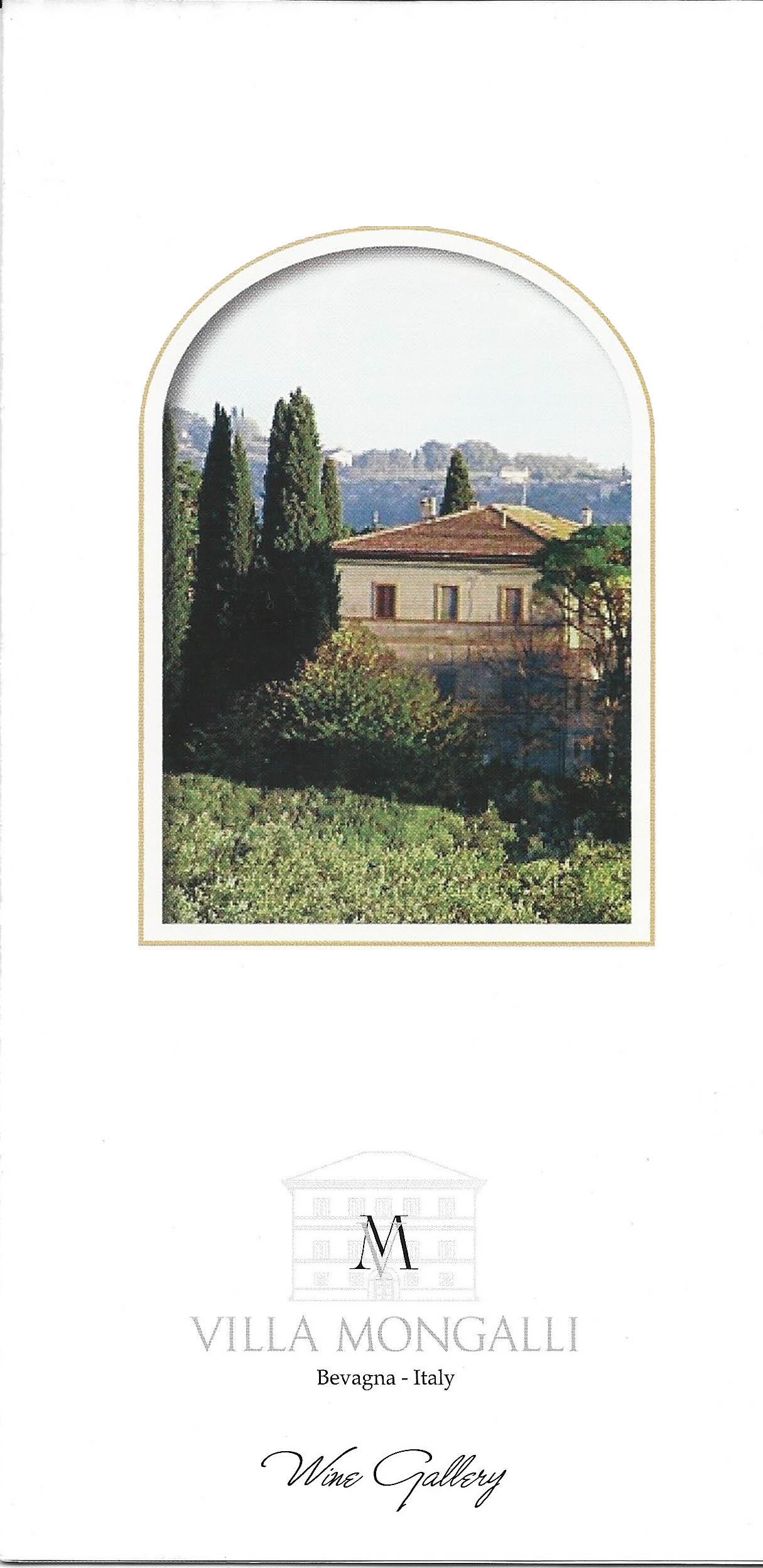
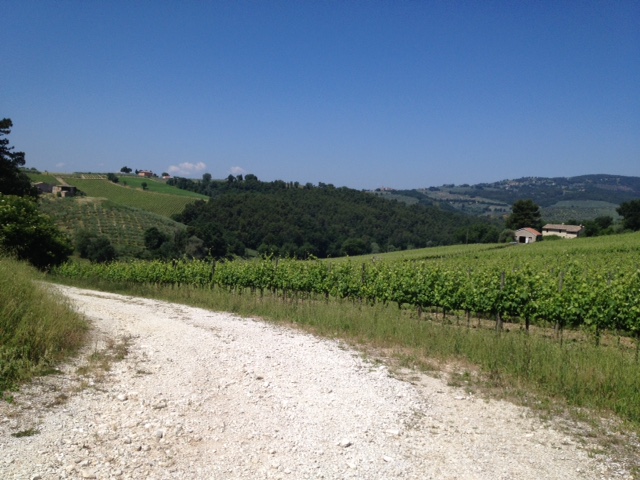
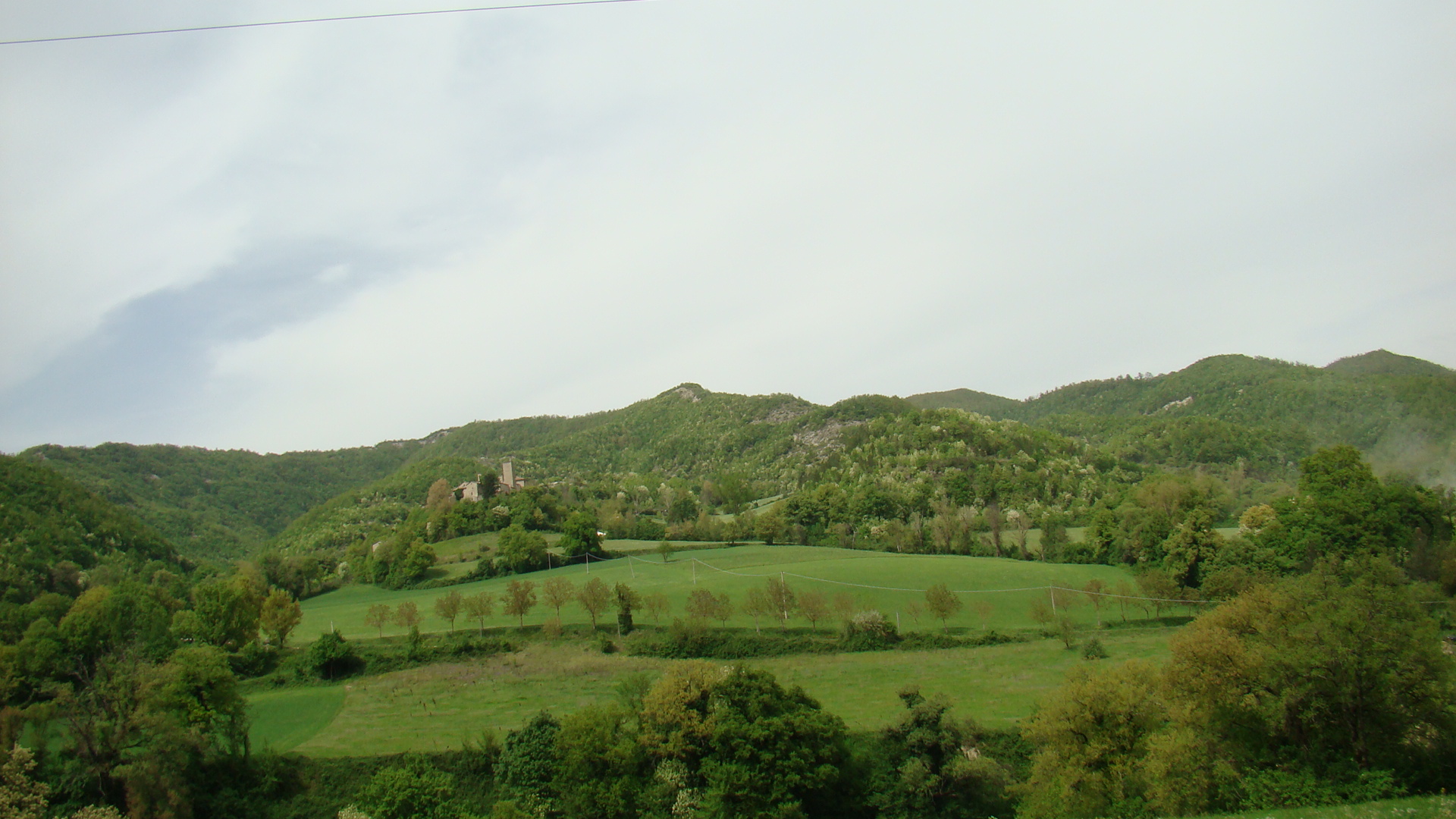
brochure copyIt’s a gorgeous day, as we head south along the E45, once the old Roman road, Via Flavia, which two thousand years ago connected Rome, on the western side of Italy, with Rimini on the Adriatic coast. Because the weather is particularly fine today, we remain on the E45 past Perugia towards Ripabianca. From here, we can put the top down and take a leisurely cruise along the SP415 through the countryside towards Montefalco and Bevagna, the land of Sagrantino. The SP415 follows a valley cut by a small creek past the lovely hill town of Gualdo Cataneo and ends just before the the unfortunatelly named town of Bastardo–yes, it means the same thing in Italian. We take the SS316 towards Montefalco and Bevagna and enter the Via del Sagrantino, the Sagrantino Road.

I’ve taken the precaution of going to the winery’s website and printing out a map. This turns out to have been a smart move, as the navigation system in the car seems convinced that the road we’re looking for does not exist. This is not unusual in Italian winery hunting as most of the wineries are truly in the middle of nowhere. We have discovered many interesting places while trying to find a place we’re interested in, if you’ll pardon that. Anyway, after a little looking, we find the correct road, which is, thankfully, paved. We follow it up a fairly steep incline to a hilltop amid the trees and go looking for the address I got from the website.

As we approach Villa Mongalli, we have our doubts, even though we know the address is correct. The winery, a wooden, barn-like structure, is framed by areas of unmown grass at least three feet high. A look around one side is both assuring and offputting; what is clearly a lovely deck with chairs and tables (winery!) had grass growing up to its floor. (out of business winery?) We might have left at that point, had we not seen a slightly opened door and two cars parked in front. Pretentious the place is definitely not.

IMG_0085

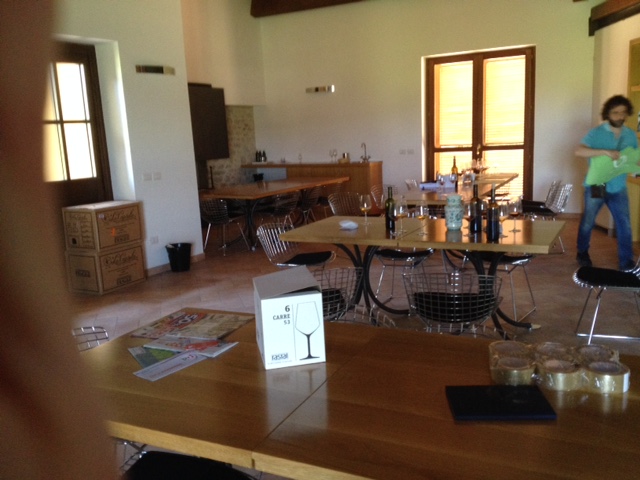
Entering a large open unlit room, we again experience hopes and fears: Hope, because we are clearly in some sort of tasting room with medals and articles on the walls, tables and chairs, and stacks of wine guides and reviews. Fear, because it looks a bit like the aftermath of a fraternity party, with empty bottles and glasses on most of the tables.

IMG_0086

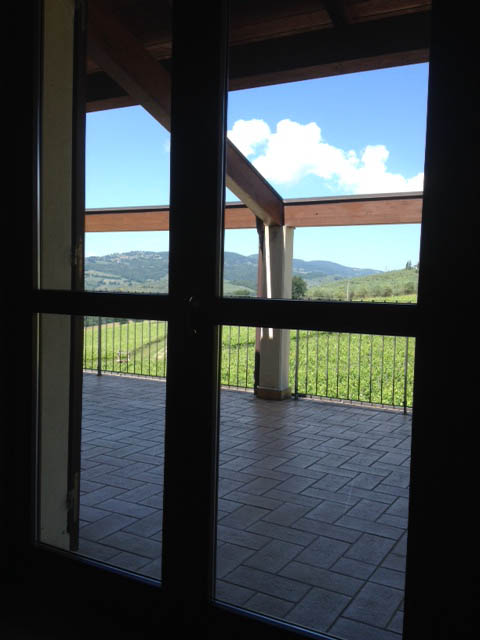
From a smaller, better lit office area, a slightly built fellow with curly brown hair and intriguing grey eyes emerged and introduced himself as Pierpaolo Menghini. He and his brother Tommasso, who is also in the office, handle the everyday operation of the winery under the overall supervision of the father, who founded the operation. Pierpaolo is in charge of all things associated with making the wine; Tomasso handles sales, marketing and all things associated with the business. Pierpaolo throws open the curtains, revealing the deck we saw earlier, which presents a magnificent view of the rolling vineyards outside, gets glasses and finds a clear table. It’s tasting time.

IMG_0096

IMG_0087

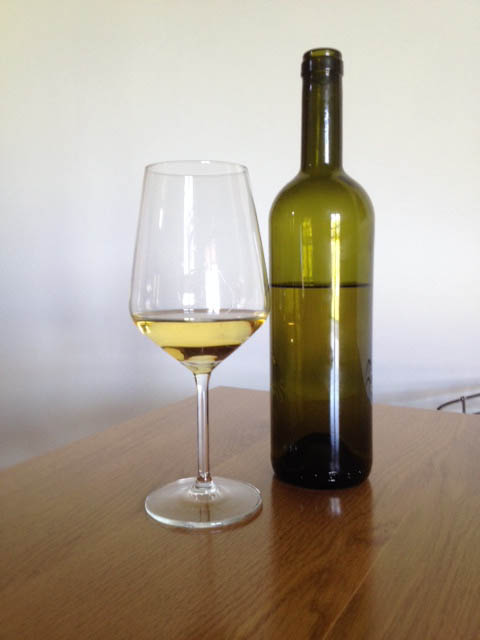
Our tasting begins with Calicanto, Villa Mongalli’s Trebbiano Spolentino 2013. As you probably know, I am a big fan of this grape. But, for me it is still a very satisfying surprise. The wine is big and fat in the mouth, with a substance and character that I rarely find in most white wines. It is 100% Trebbiano Spolentino grown on an a 4.4 acre segment of the winery’s 33 acres. What was particularly interesting was that the wine opened up over time: something I associate only with reds. Pierpaolo sets some aside and twenty minutes we compare it with a freshly opened bottle. The difference is impressive. The wine seemed to gain depth and strength. This is, to date, the best Trebbiano Spolentino I’ve tried. [Nancy here: Pierpaolo was clearly VERY proud of this wine. I was stunned as the aroma of the wine drastically changed as it opened up over a period of over thirty minutes. Agree with the Wine Guy, I’ve never seen a white wine do this, only the reds. Amazing]

IMG_0093

I noticed that many of the bottles we were tasting are unlabled. Welcome to Italy. Most of the wines made at Villa Mongalli are DOC or DOCG wines and receive the special DOC and DOCG label on the necks of the bottles. These labels are provided by the Government, which hasn’t gotten around to making them yet. Pierpaolo can’t run the bottles through the labelling machine twice, so he has to hold on to racks of unlabelled wine waiting for the labels. Ah well, as I’ve noted before: if you’re the impatient type, you better go to northern Europe. In Italy things get done when they get done.

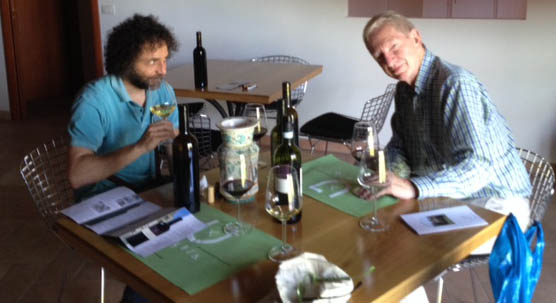
Wine guy and Pierpaolo.
IMG_0095
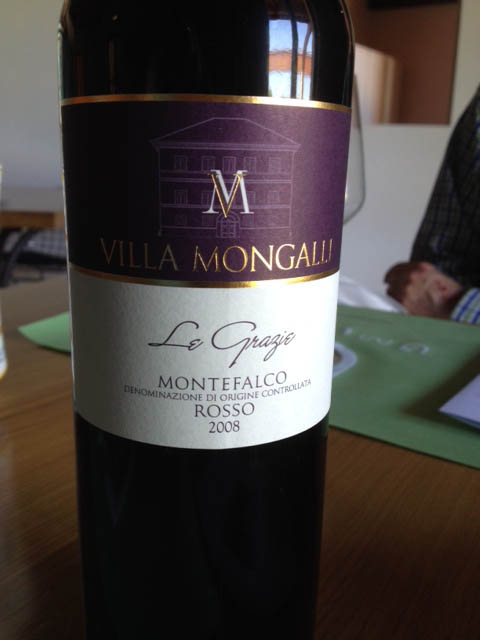
The rest of Villa Mongalli’s vines are red. We continue with the La Grazie 2010, which is a DOC Rosso di Montefalco. Unlike most Rosso di Montefalco’s, which tend to be 15% Sagrantino and 75% Sangiovese. At Villa Mongalli, the wine is 15% Sagrantino, 50% Sangiovese and the remainder a blend of Cabernet and Merlot which Pierpaolo adjusts each year to produce a balanced, ruby wine with plenty of fruit up front. A year in large oak barrels followed by a year on the rack give the wine backbone. I imagine you could lay it down for a while, but Pierpaolo considers it his “everyday” wine and I have to agree that it’s drinking fabulously right now.

IMG_0091

Next, we passed to the main event, the Sagrantino. Villa Mongalli makes two Sagrantinos di Montefalco, Pozzo del Curato and Della Cima. The Pozzo del Curato is made from Sagrantino throughout the property, while the Della Cima (Italian for from the summit) comes from a 2 acre plot at the very top of the property that he points out to us from the deck. They are both prepared the same way, with three years in small oak barrels and a year in the bottle. With the air of a lion tamer demonstrating that he can keep the big cats under control, Pierpaolo pours the wines out. We let them breath for about ten minutes–always an excellent idea with Sagrantino–and taste. These are monsters. The wine is intensely ruby to purple, bursting with fruit and spices. We are drinking the 2005 vintage, but the tannic basis is still there. I daresay this wine could easily go another ten years. Pierpaolo thinks that the Della Cima has a bit more elegance and aging potential–it’s slightly more alcoholic at 14,5% as opposed to 14.0% for the Pozzo del Curato. It is hard to tell for sure. They are both fabulous. He calls these “occasion wines” and I have to agree. These are wines that are too commanding to drink as accompaniments to food. They deserve to be enjoyed by themselves. Perhaps chocolate, or very powerful cheese might work, but I think the wine demands your attention. Think port without the sweetness.

IMG_0094

Finally, we come to Pierpaolo’s surprise wine, the Col Cimino 2005. This is Pierpaolo’s single non-traditional wine, which he says is particularly loved by “the Anglo-Saxons”. It is a wine of equal parts Sangrantino, Cabernet and Merlot with three years of barrel age and, to me, it resembles a fine Bordeaux (please don’t tell the French I said this) with the tannins of the Sagrantino and Cabernet giving the wine a solid structure and the fruitiness of the Sagrantino and Merlot offsetting the more closed character of the Cabernet. We find it very satisfying. I’m not sure how much farther the 2005 can go, perhaps a few years, but I would say it is near perfect right now. Don’t expect any fancy labels on this wine. Because it’s not produced according to the DOC/DOCG standards it is labelled a humble IGT Rosso Umbria. It is most definitely a diamond in the rough.

After loading the car to bursting with wine, we asked if we could buy a bottle of wine and drink it with the picnic lunch we brought with us. “No problem” was the answer, and Pierpaolo fetched us a chilled bottle of Trebbiano Spoletino from the cellar. He than asked us if we’d like to take the bottles we had been tasting, most of which were not close to empty, with us! We gathered as many as we felt we could without looking too greedy. It was unbelievable.

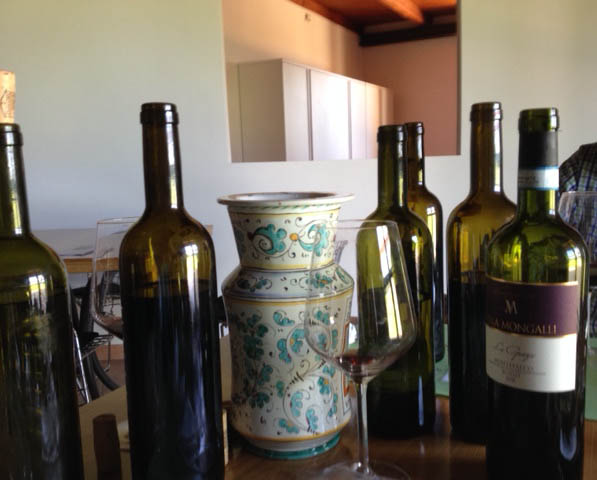
Our table littered with half empty bottles.
IMG_0102

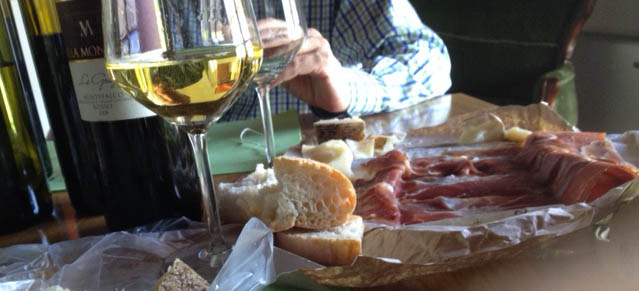
Our simple picnic of proscuitto crudo, pecorino cheeses and bread.
IMG_0100

For folks who are interested in this sort of thing, Via Mongalli exports solely to the Bay area in California. If you live there, lucky you. If not, it is an excellent excuse to take a jaunt to Umbria. On balance, Villa Mongalli is one of the best wineries we’ve visited here in Umbria.
EXPO in Milano

On Saturday we left Umbertide to visit the EXPO in Milan. They call it EXPO here but it is the same as the Worlds Fair. The theme is Feed the World, all about food. I had never been to a worlds fair before so I didn’t want to miss my chance. It opened in May and closes in October. The word at first was that it wasn’t really ready to open when it did so we waited a little.

We left Saturday and returned Monday with only one full day to see the Fair. As luck would have it, it was the hottest weather so far. In the upper 90s. It was broiling. We took the train to Florence. Then we changed to the fast and super nice, Frecciarossa, or Red Arrow. There were four classes of travel from opulent to nice. We were one up from nice.

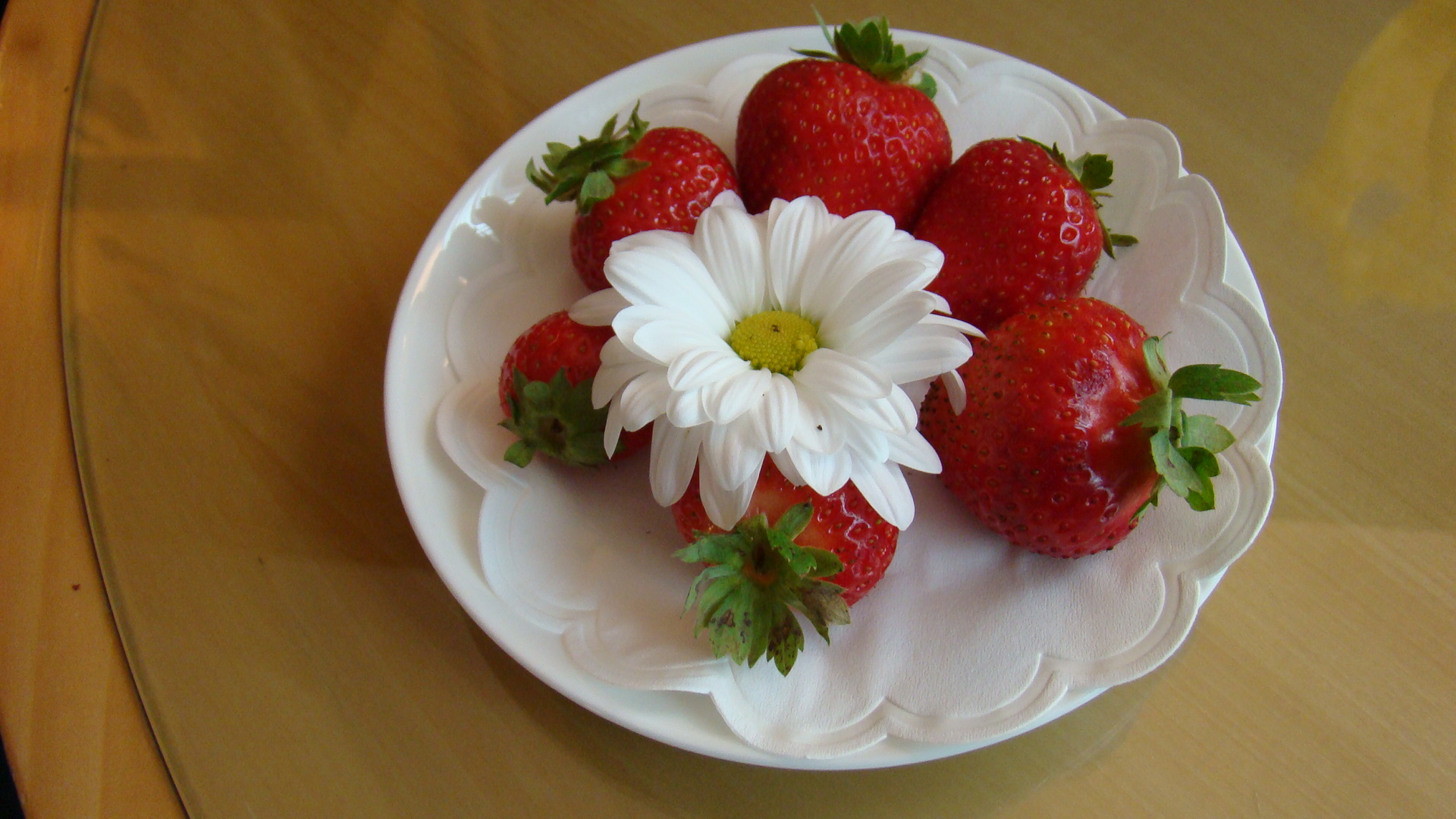
We stayed at the Spadari al Duomo right in the Centro near the cathedral. It was a lovely four star place with great service and comfy beds. They left strawberries for us…
DSC04325
You could take the subway out to the EXPO from the hotel very easily. It took around 30 minutes to get there. We left about 9:30 so got there when it was opening.

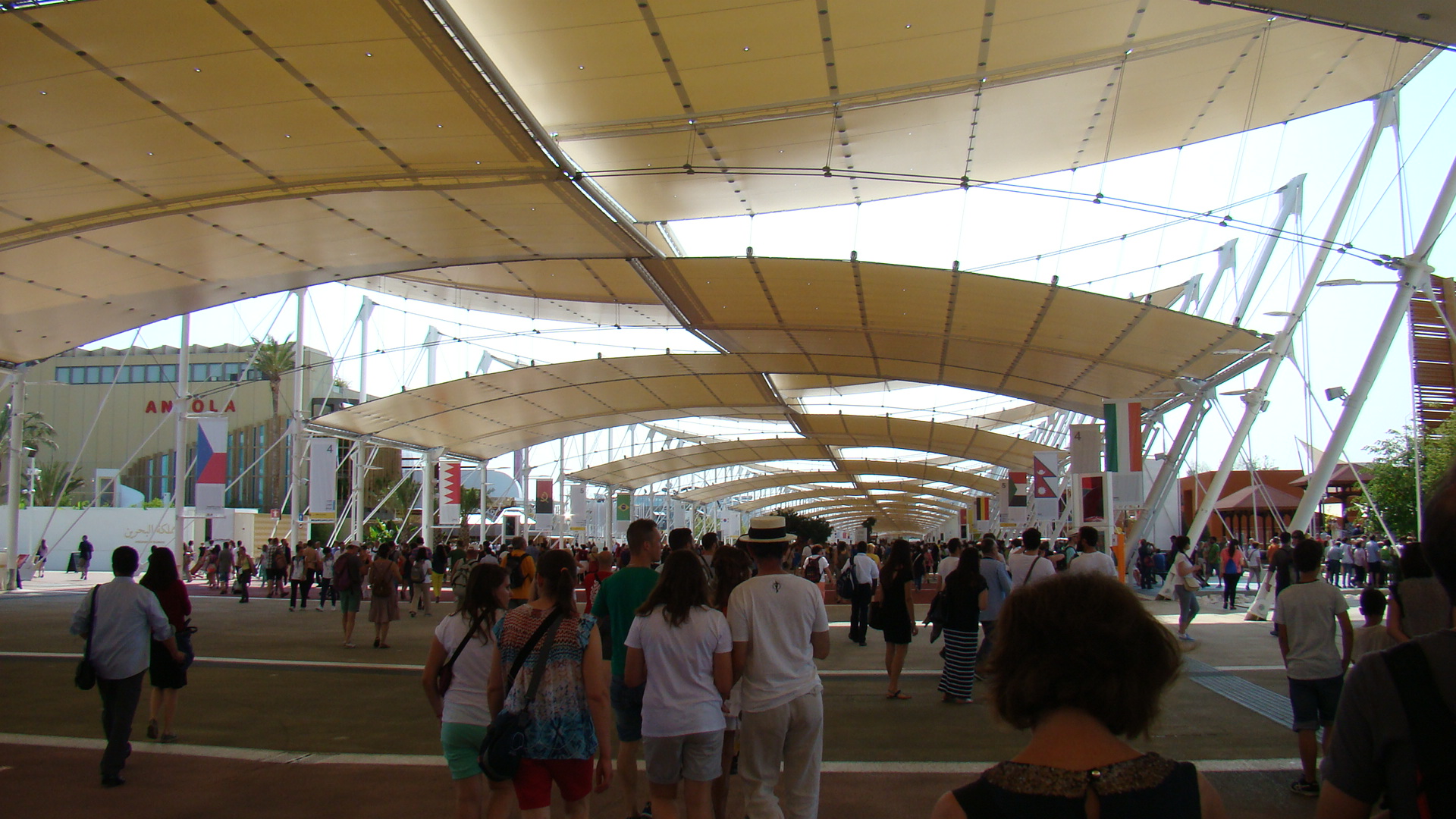
There is a main thoroughfare which is very wide and covered with giant sun screens. If they hadn’t been there you couldn’t have stood the heat. The very wideness of this space gave the impression the crowds were light.
DSC04328

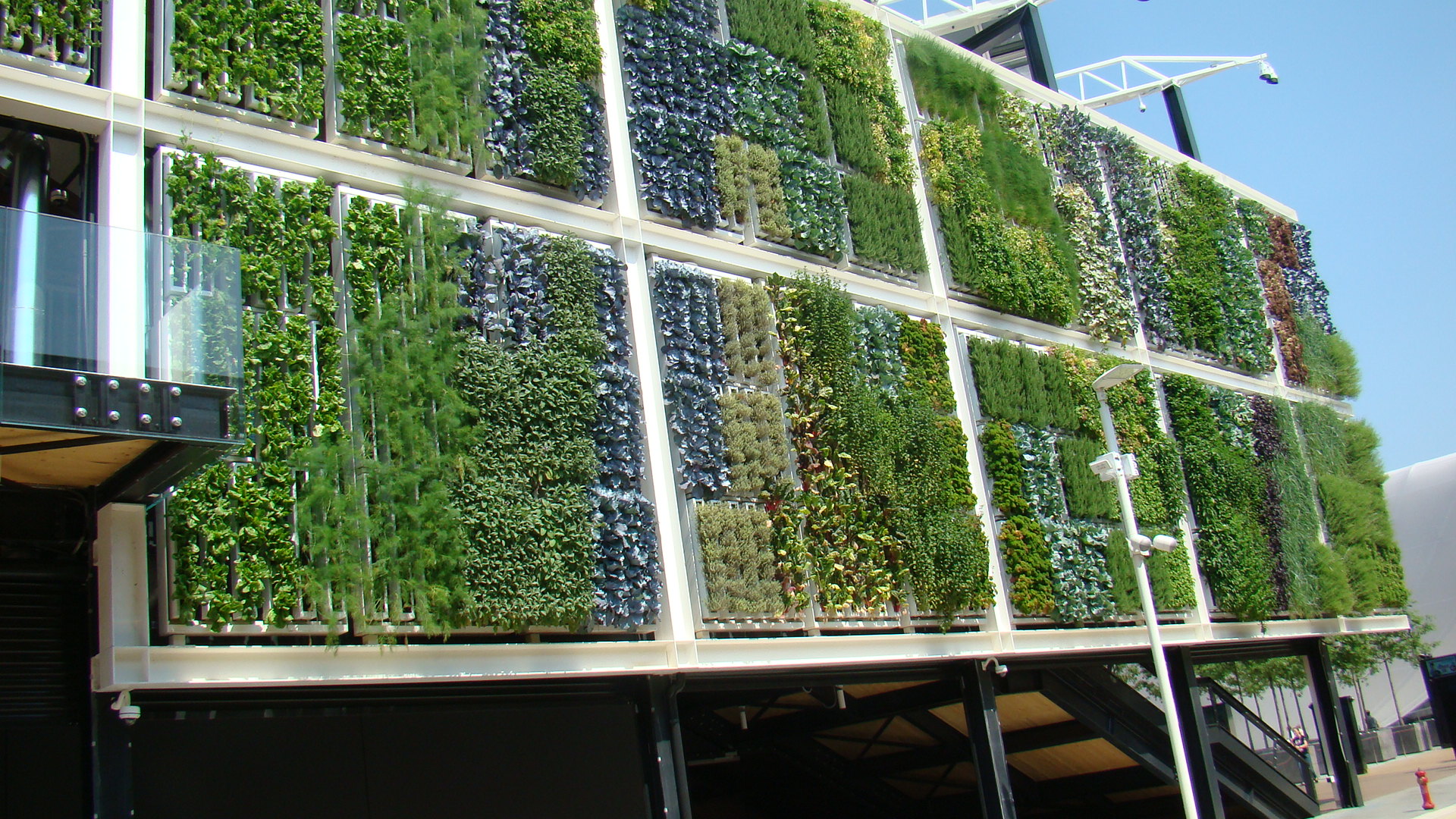
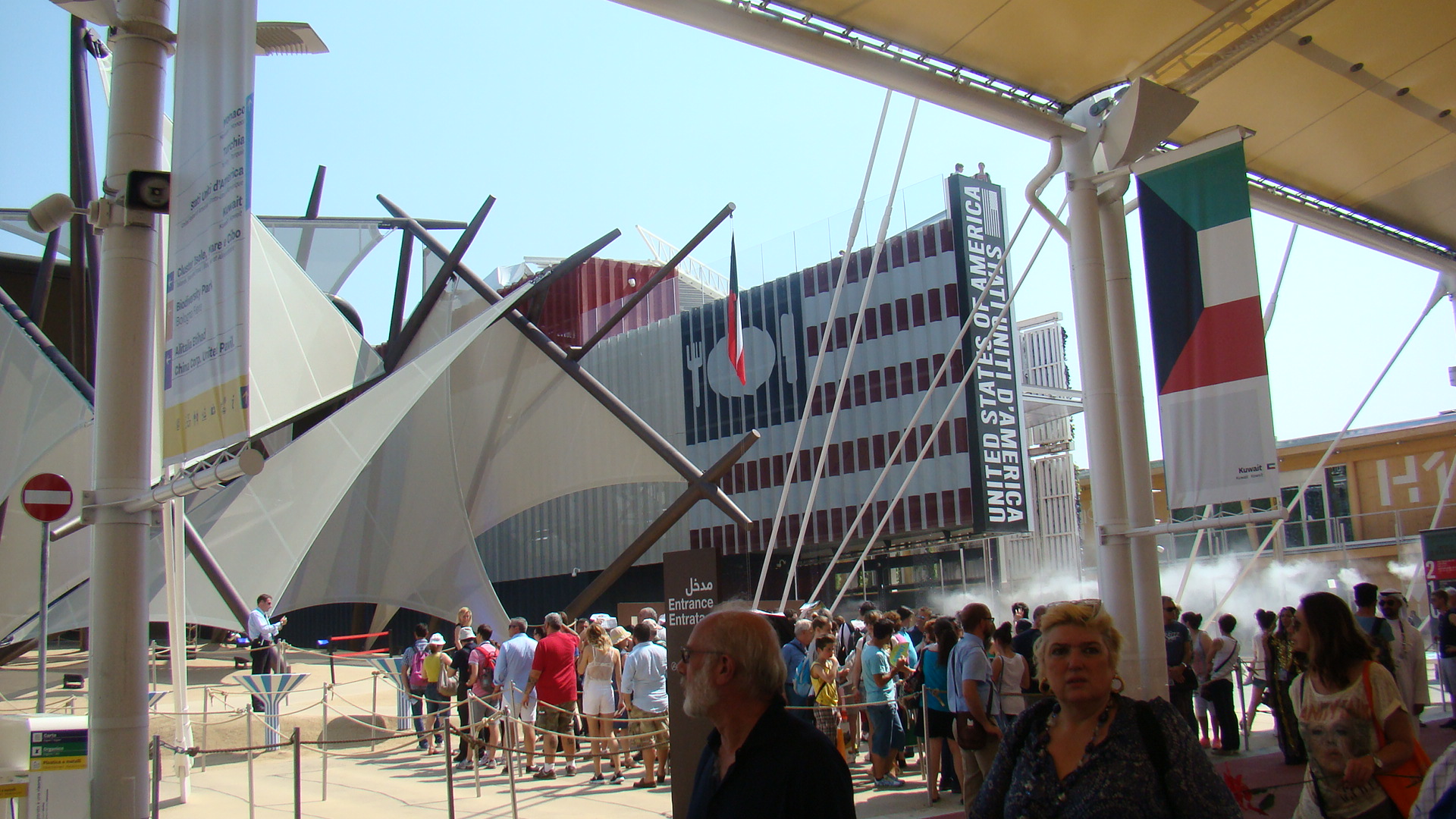
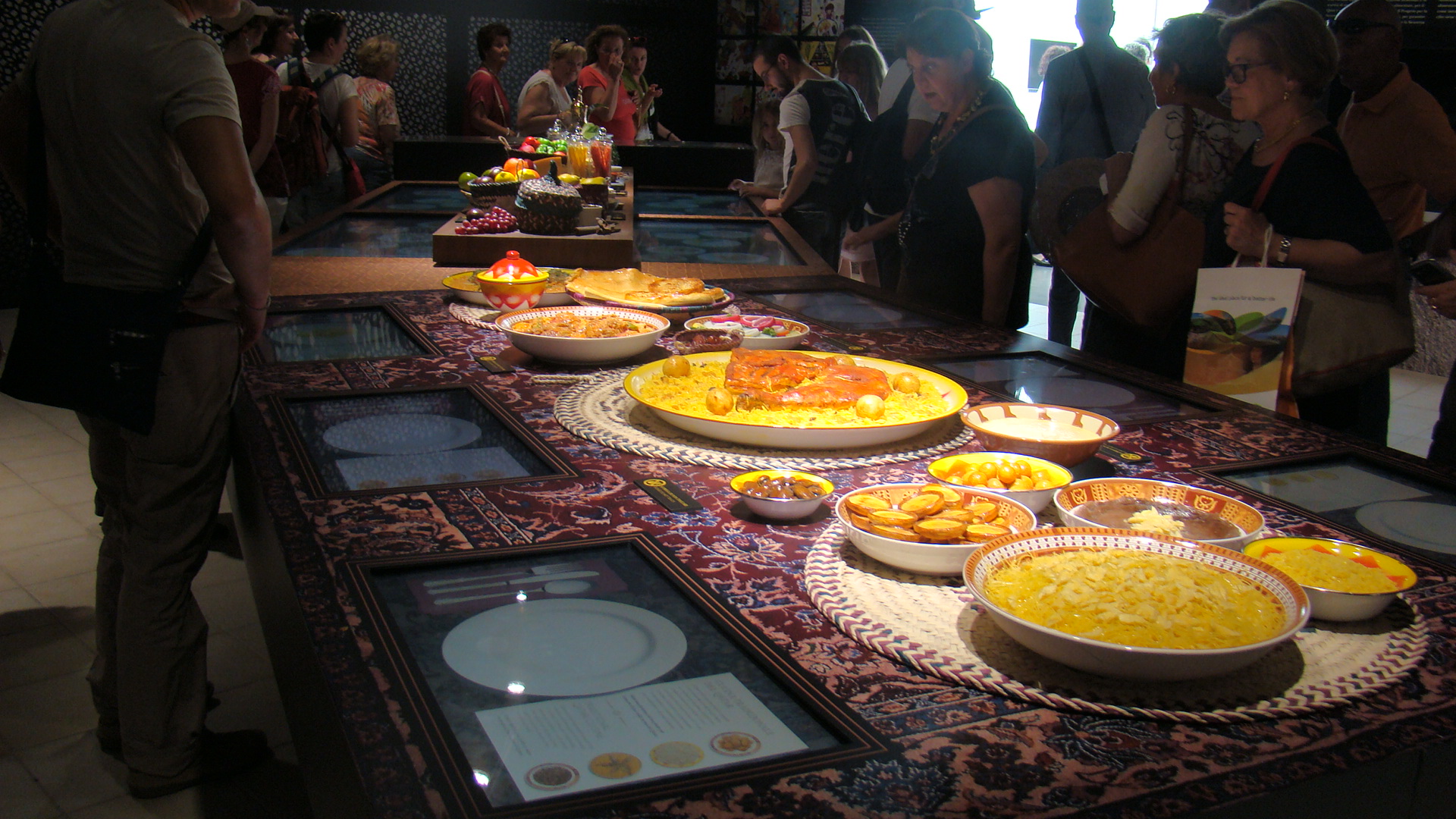
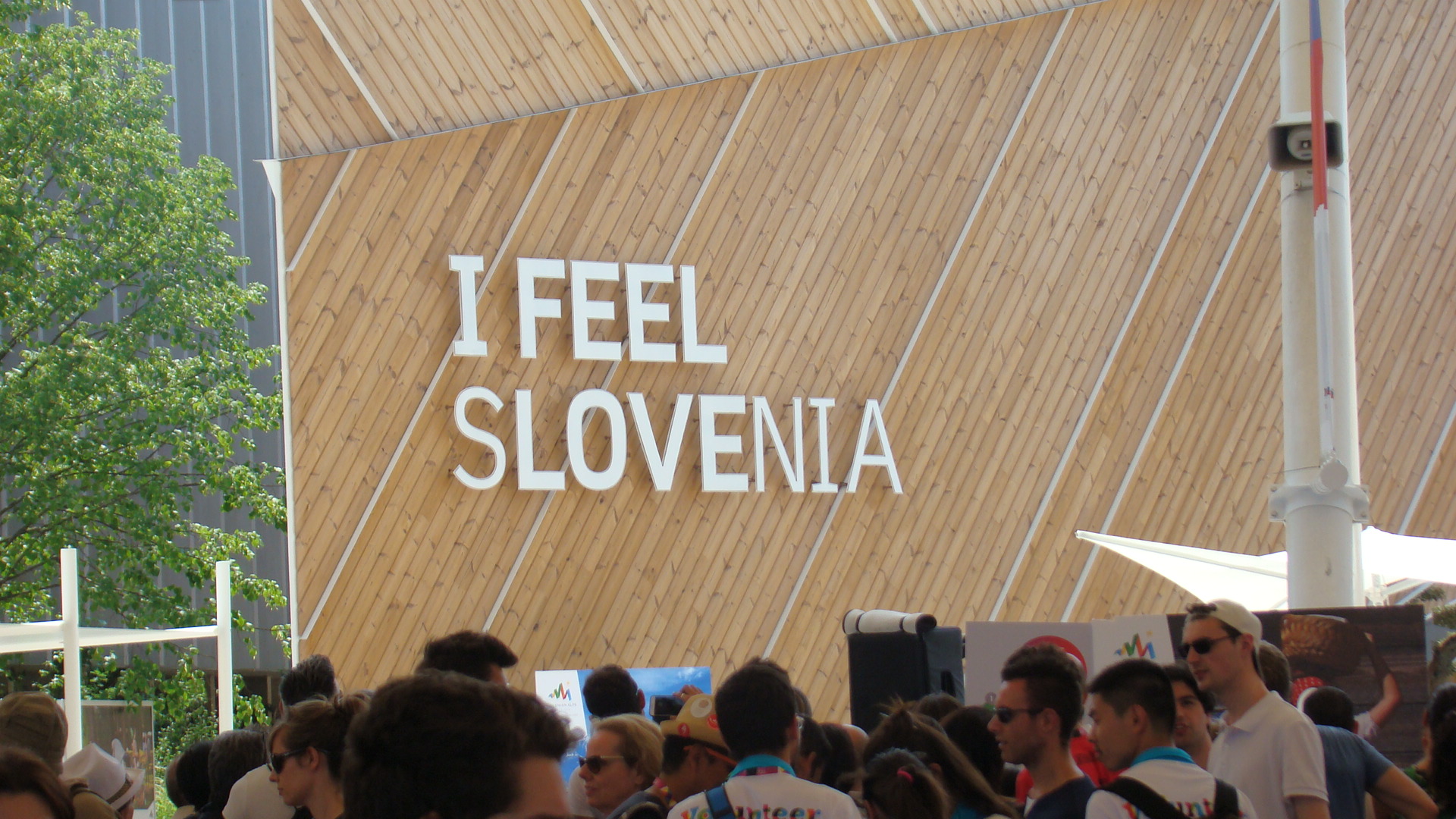
But no, if you tried to go into a pavilion the lines were long for the most part – and in the sun. They were handing out umbrellas to some suffering people. The Italian pavilion had lines 2 1/2 hours long early in the day. Many others had one hour waits. We did manage to go into the Israel pavilion, the Quatar pavilion, the Slovenian pavilion and the USA pavilion. All had presentations of their foods, or how their country was helping to feed the world, or something unique about themselves. The USA had the worlds largest vertical garden. Around the back was the Food Truck Nation. Four food trucks selling BBQ, Hamburgers, Lobster Rolls etc. Israel had a very nice multi-media presentation about how, after it became a nation in the mid twentieth century, it made lush gardens in the desert. They invented drip irrigation. They produce a tremendous amount of food in a very hostile environment.

USA pavilion vertical garden.
DSC04343

Outside USA pavilion
DSC04342

Inside Quatar pavilion.
DSC04347

Outside the Slovenian pavilion.
DSC04358

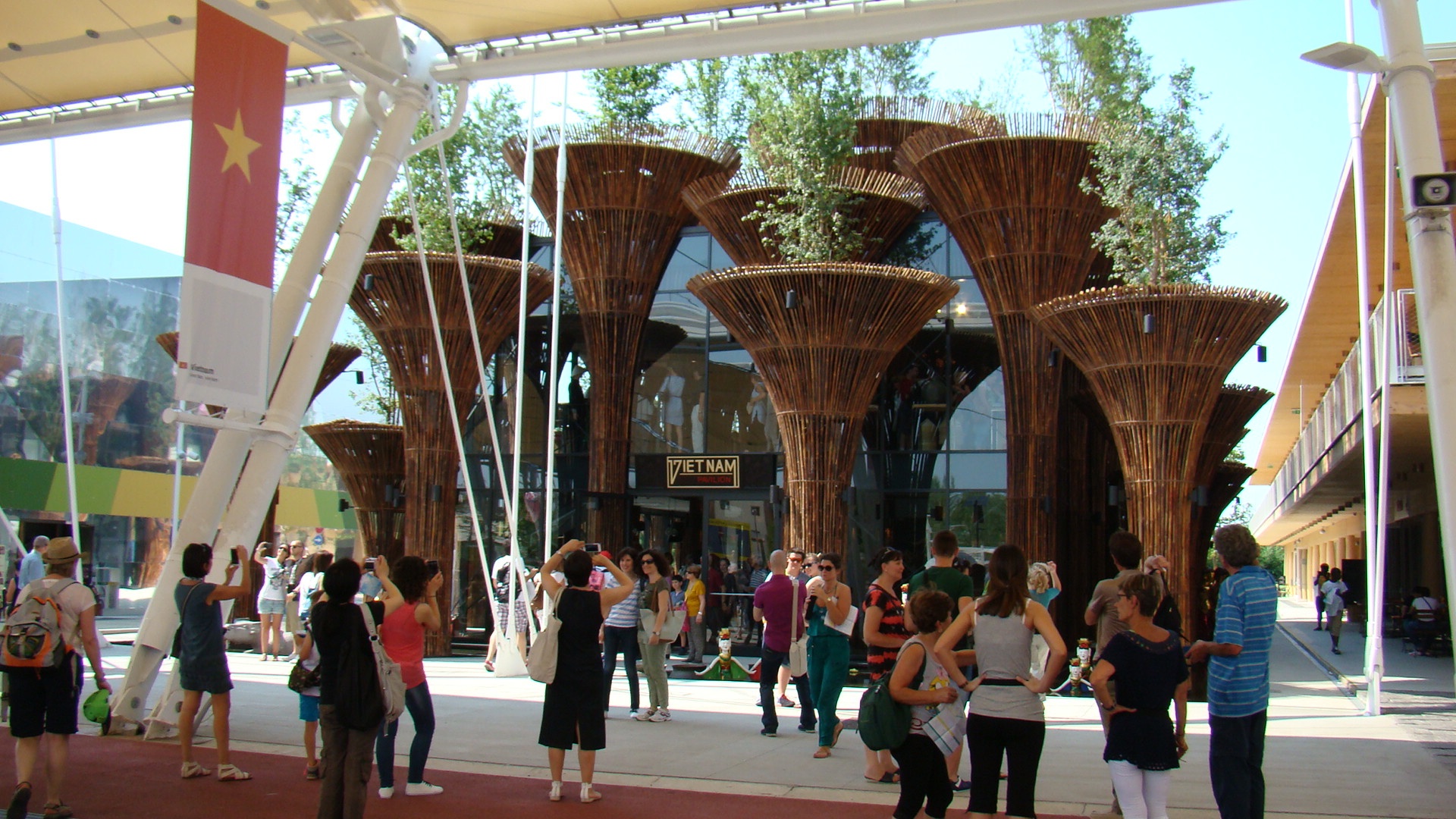
Here are some random peeks at the Fair. Vietnam pavilion.
DSC04332

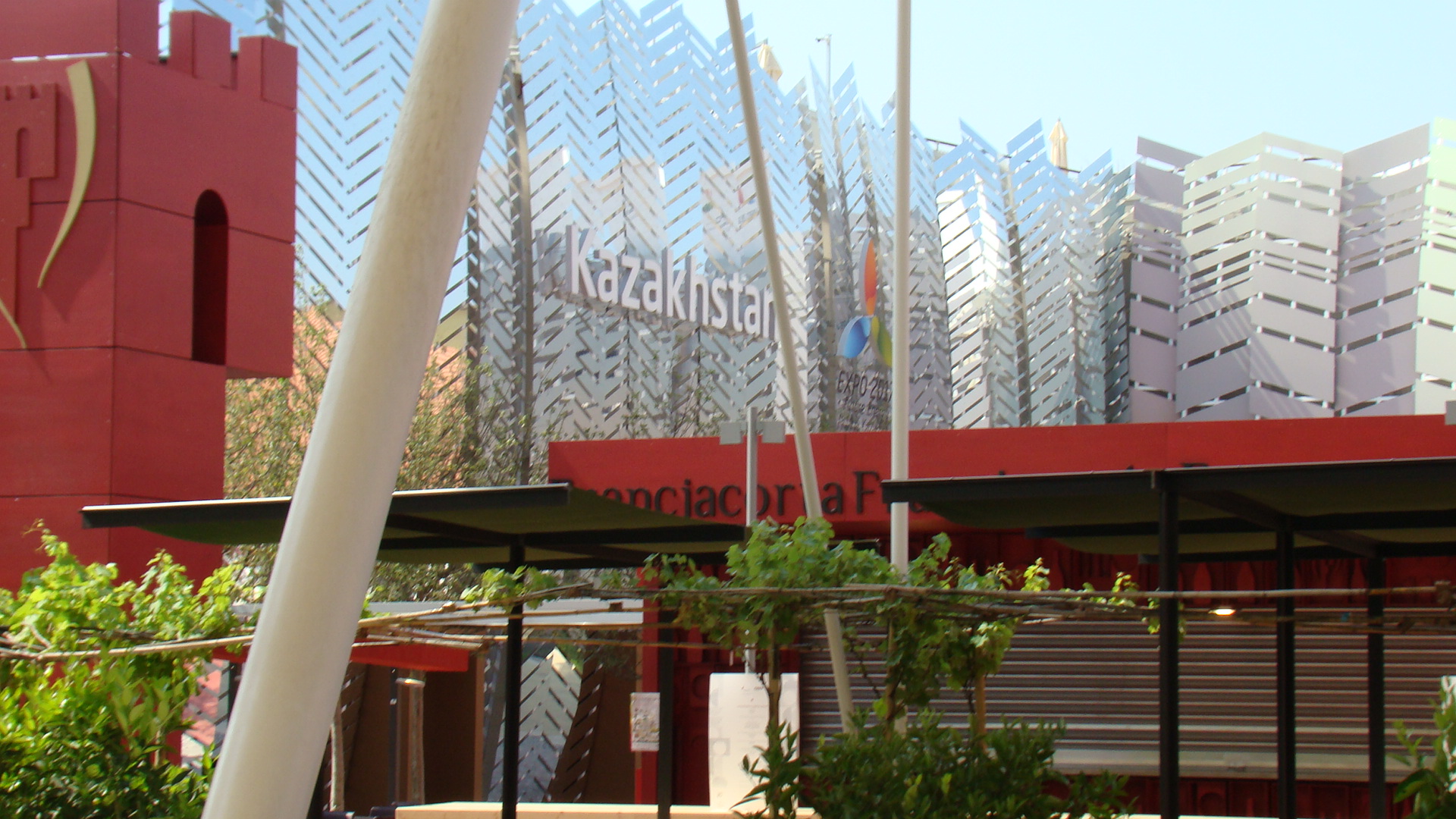
Kazakhstan
DSC04335

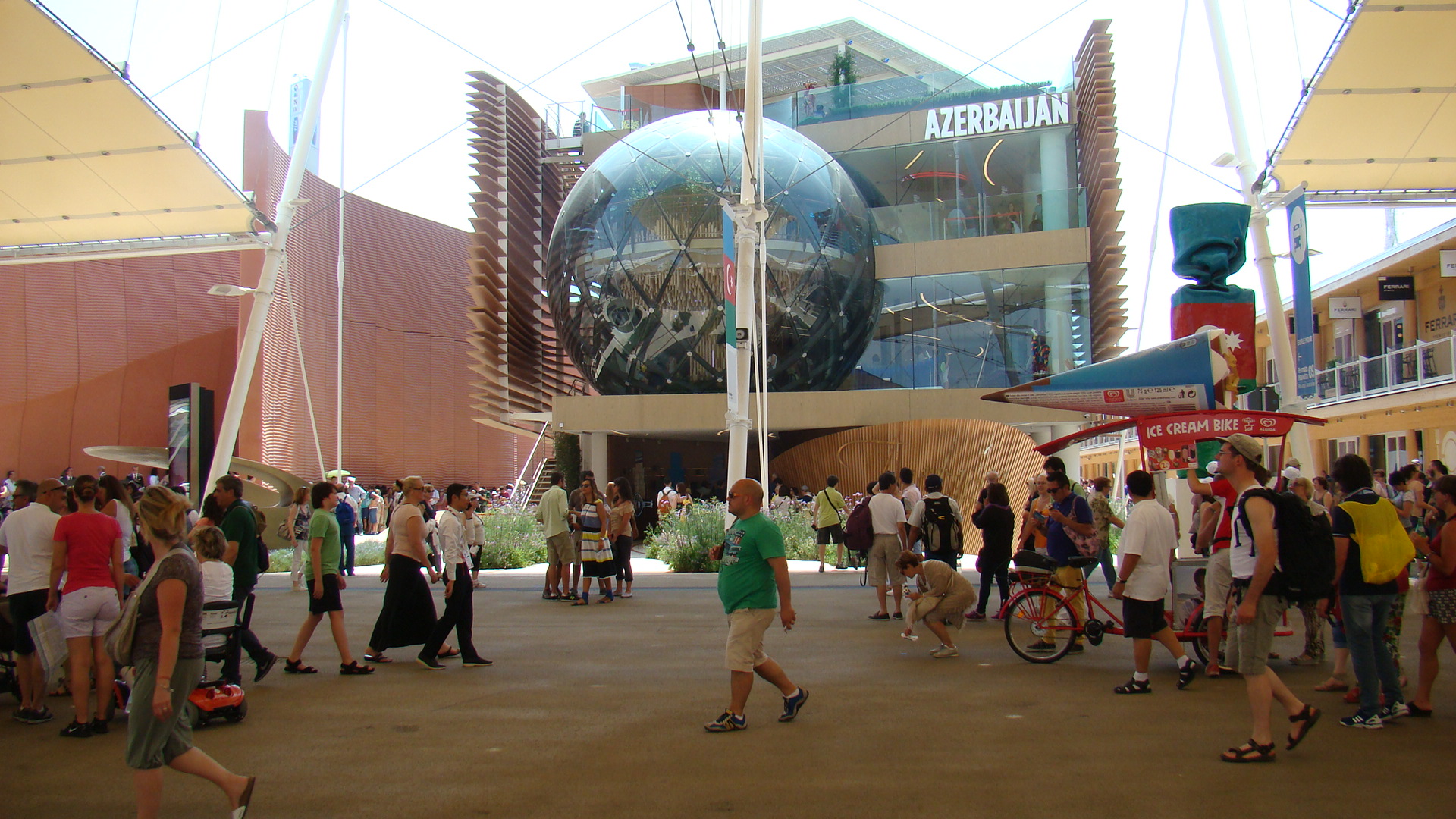
Azerbaijan
DSC04359

Italy pavilion – inside.
DSC04338

On the way back home, after changing trains in Florence, our slow, hot, local train decided to break down. We sat, sweltering for 40 minutes before they finally got it going again. The joys of Trenitalia.

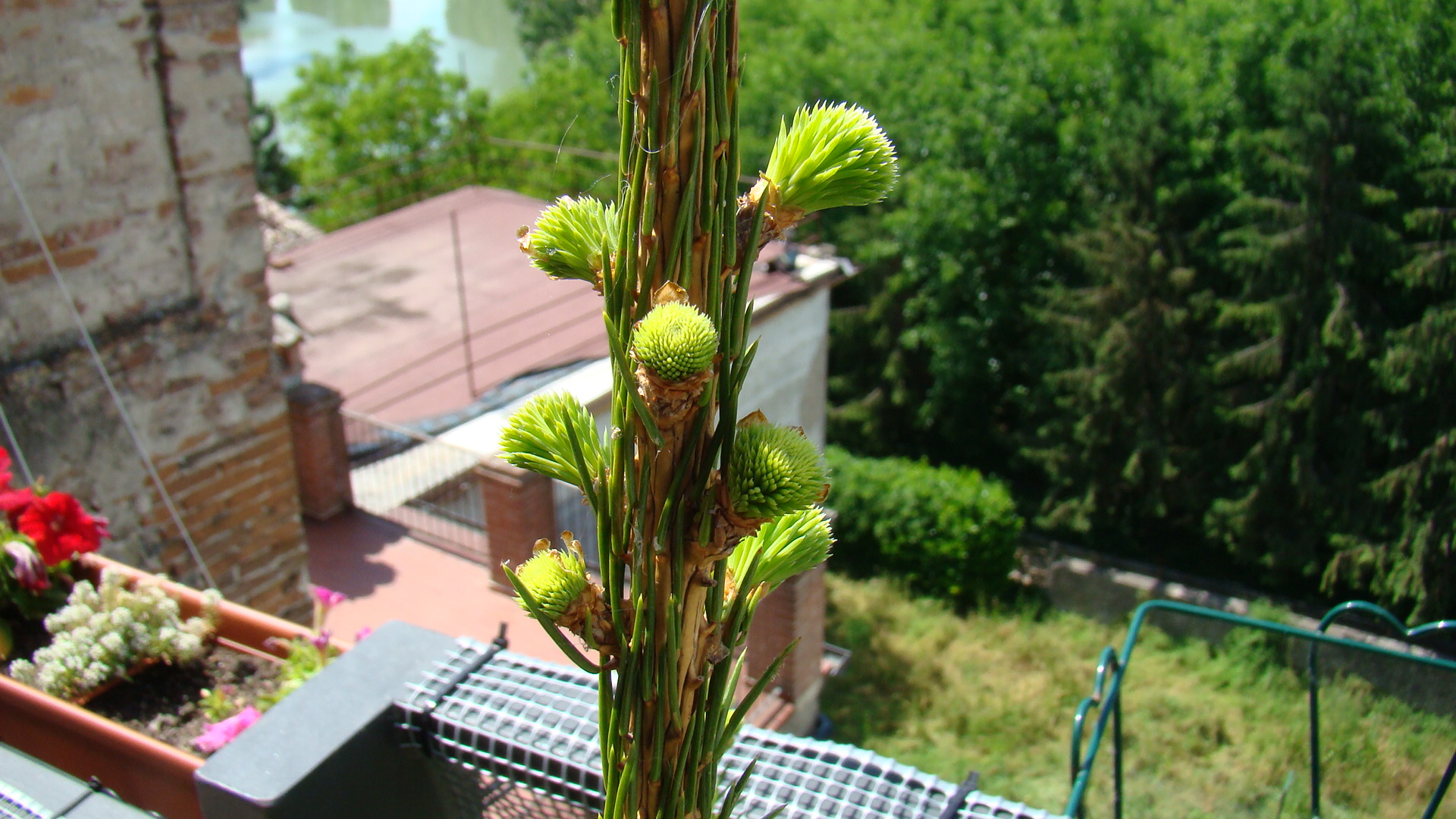
Finally, here is a picture of my christmas tree which is residing for the summer on the terrace. It must be happy because it is growing!
DSC04321

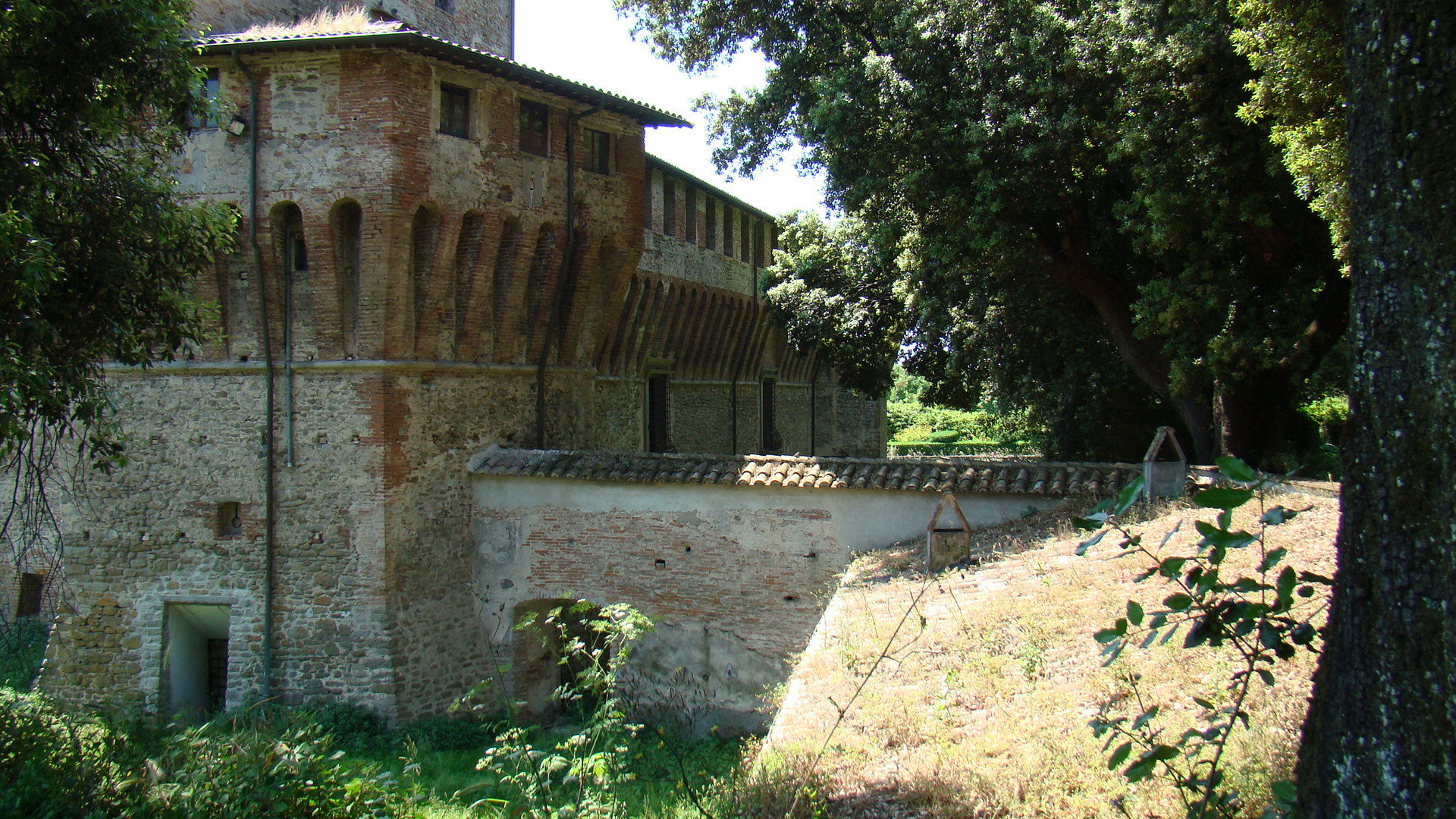
Castello Bufalini, San Giustino

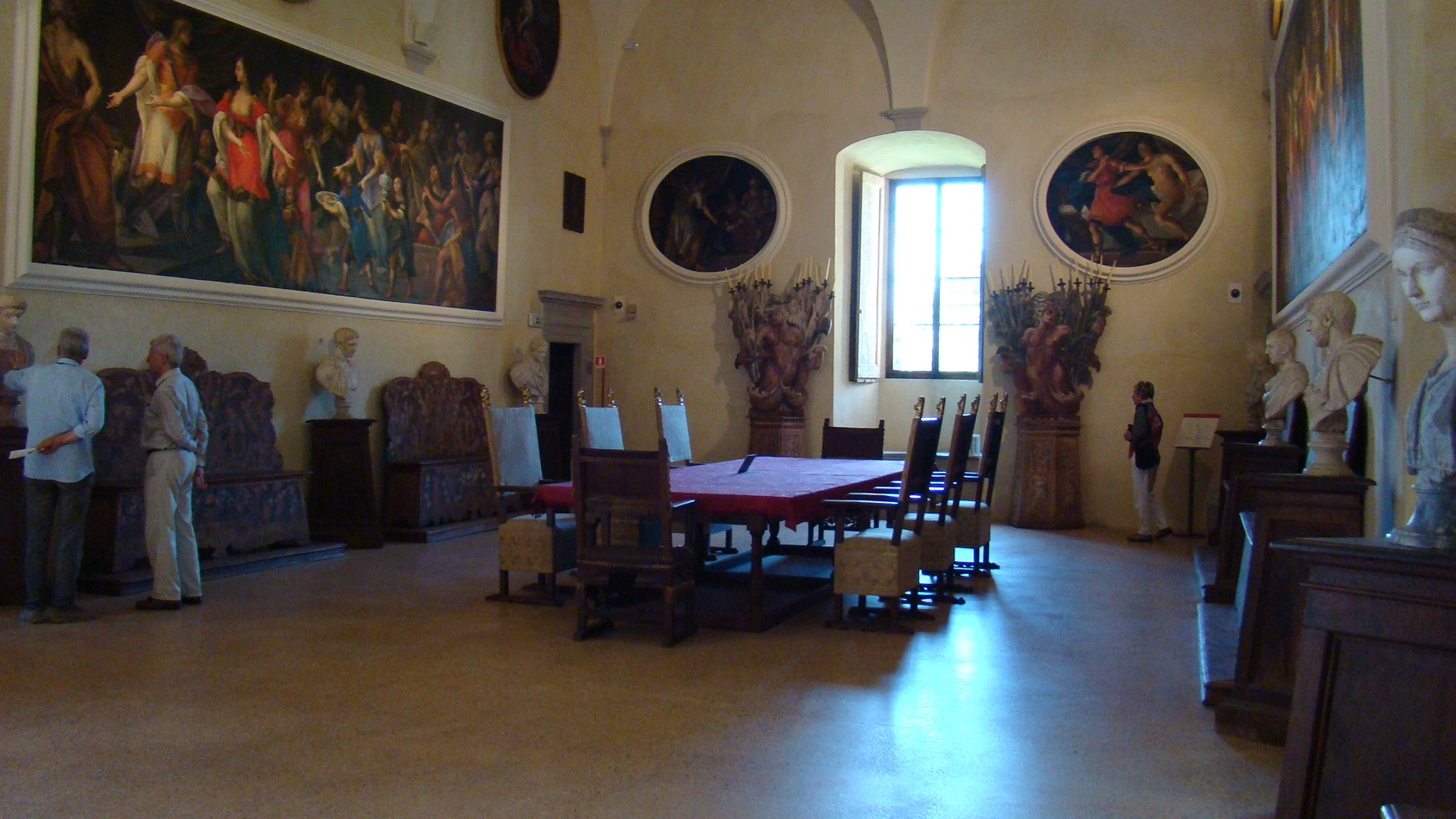
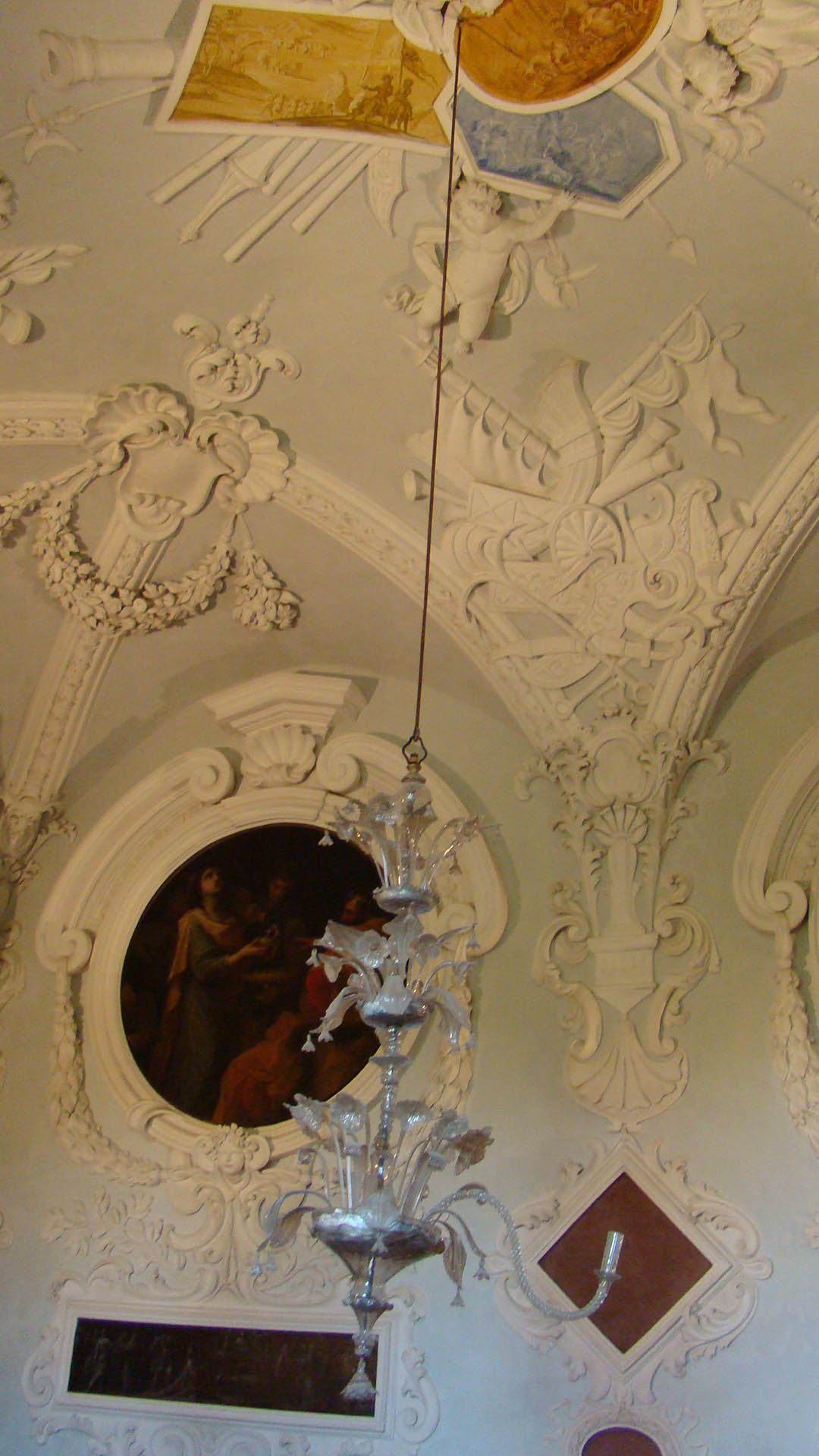
We have visitors for a couple of days so we thought we would visit a place nearby that is only open on Sundays. It was built in 1487 and continuously occupied by the Bufalini family until 1979 when the last family member died. They kept meticulous records of the farming operation from 1473 to 1979 which are important to historians and chronicle the activities of the estate, harvests, cattle breeding, milling and changing practices of agriculture through the centuries. They spared no expense with frescos painted on the walls and ceilings, Murano glass chandeliers, and extensive stucco decorations. Here are some pictures.

This first one is from a room called the chamber of Pagan delights.
DSC04283
This is the grand reception room.
DSC04284
Statue of the Medusa
DSC04288

Stucco decorations by artisans in Citta di Castello.
DSC04287

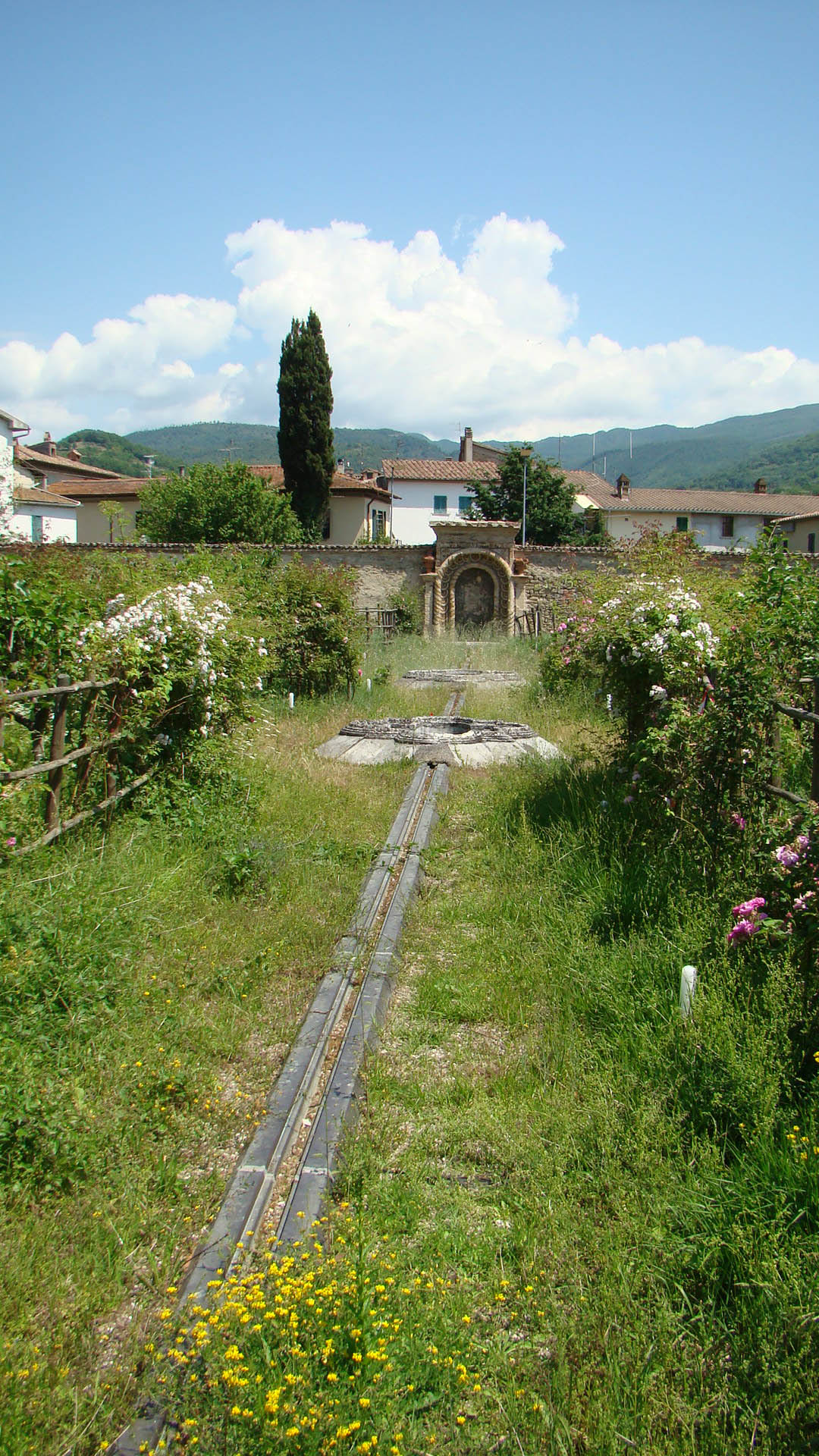
The famous gardens now, sadly, run-down.
DSC04294

Exterior of the castello which suffered great damage in the 1789 earthquake necessitating the addition of structural buttresses.
DSC04296

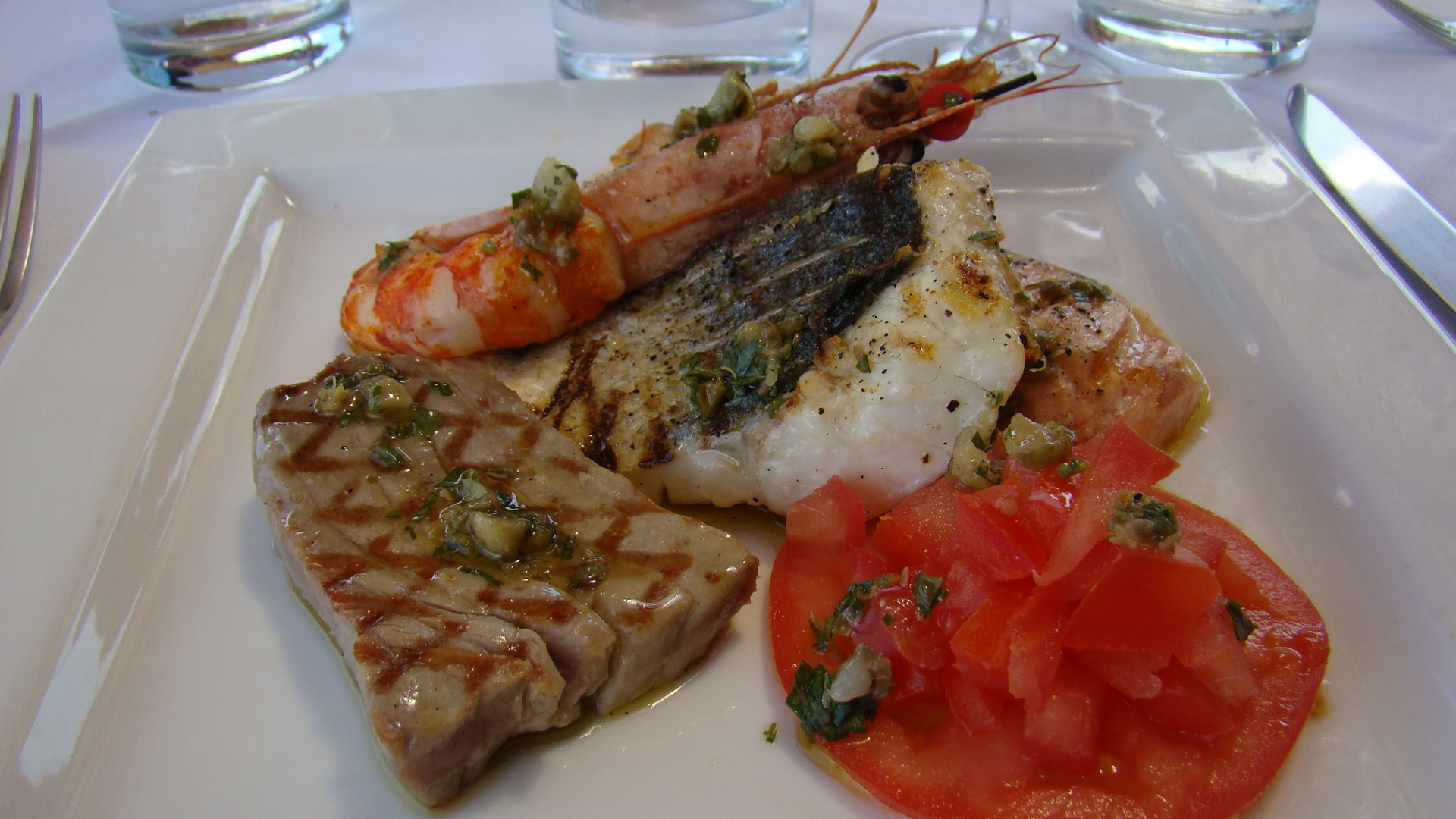
It was a marvelous day and we had lunch reservations at Calagrana. It was Frank’s (one of our guests) birthday celebration. The meal was, as always, wonderful.

My secondi – mixed grilled fish to include tuna, salmon and sea bass.
DSC04300

We also had our first experiences at the Pronto Soccorso or emergency room, here in Umbertide. Frank had scratched his cornea and it was really bothering him. We visited the PS and they flushed his eye, put numbing drops in and told him to come back Monday to see the doctor. By that afternoon he was all better. They charged him 25 Euro. Not bad!

Today is the Day of the Republic and a national holiday. Out in our piazza they have erected 3 what I would have to call pens. They have Royal Canin plastic on them. This clues us in that it must have something to do with animals. I will report back after we figure it out. Stay tuned!

Wine guy – Part 2

Another guest post from Luther the Wine Guy. WOW that was fast!


Whoops! I got sidetracked with all that DOC stuff and forgot to talk about the Umbrian red grapes, so let’s do that now…

Umbrian Grapes Redux
Sagrantino is Umbria’s gift to the red wine world. It is a monster, being considered one of the most tannic grapes in the world. Its production is extremely limited, as there are only about 100 hectares (about 240 acres) in the entire area. It produces a dense, dark wine capable of up to 16%(!) alcohol content that requires considerable aging just to get under control. The sagrantino area centers around Montefalco and Bevana, reaching southwest to Todi northwest to Perugia.

Sagrantino has been cultivated for hundreds of years in and around Montefalco, but was used strictly to make dessert and sacramental wines. (I’m told that “sagrantino” is dialect for sanctified). These wines were made in a style called passito wherein the grapes are not immediately crushed, but are allowed to dry out, increasing the concentration of the juice. This technique, which is similar to those used to make dessert wines in France and other Italian areas, is modified in Umbria in that the wine made is dry or almost nearly so. Wine made in this passito style remains popular in Umbria. I find it a little bit strange. It has the body and appearance of a port, but it lacks the sweetness. Some adventurous producers have experimented with stopping the fermentation process early, leaving a considerable amount of residual sugar. This makes a much more satisfying desert wine, which I would be proud to pour in place of an Late Bottled Vintage port, for example.

Fortunately for us big red wine fans, in the mid-seventies several sagrantino producers started to experiment with making a dry red wine from the grape. Because of the high level of tannin in the juice, the wine that comes out is almost undrinkable at first–think a zinfandel that shrinks your tongue to a sliver from its runaway tannins. But, unlike zinfandel, if you’re willing to age this stuff properly, it is fantastic. The Italian DOC requires that wines labeled “DOCG Sagrantino” be aged for a minimum of 29 months. What comes out in my opinion is still pretty raw. I have tasted these young ones. The fruit is there, but the body lacks substance and the tannins are still screaming away. After another three or four years, things are starting to smooth out and the result is, for me, like a very fine cabernet, but with a touch more fruit and less of that austerity that cabernet frequently exhibits. For those with less patience, most producers also offer a Riserva that undergoes several years additional barrel aging. Be aware though that there is no “Sagrantino Riserva” DOCG and so “Riserva” means whatever the producer says it means–it’s not a well defined turn. Nancy and I have been drinking the 2007 Adanti Sagrantino di Montefalco “Adanti” and it is fantastic. Better still, it’s sold in the USA, so you might be able to find some. Give it a go and let us know. Here is the half bottle of passito and the Adanti next to it.

IMG_0256

Although sagrantino is the big dog in the Umbrian kennel, the most ubiquitous red grape in Umbria, indeed in just about all of central Italy, is sangiovese. Most folks know sangiovese from the red wines of Tuscany, some which are exclusively sangiovese (Brunello di Montalcino, the Cadillac of traditional Tuscan winemaking), or the backbone of a blend of wines such as Chianti or Vino Nobile di Monepulciano. In most of Umbria, sangiovese is used to make round, juicy, fruit-forward wines that are a pleasure at a fairly early age. Most sangiovese sees very little barrel aging and is blended with local Umbrian grapes such as canaiolo and colorino, two grapes also used to make Chianti.

Sangiovese comes to the rescue of impatient sagrantino fans who just can’t let those bottles sit around the house that long. It is used to blend out a bit of the blast of young sagrantino and is usually blended about 60% sangiovese and 15% sagrantino with other grapes, primarily merlot to make Montefalco Rosso. There are two DOCs for Montefalco Rosso: the DOC Montefalco Rosso calls for a minimum of 18 months barrel aging, the DOC Montefalco Rosso Riserva requires a minimum of 30 months.

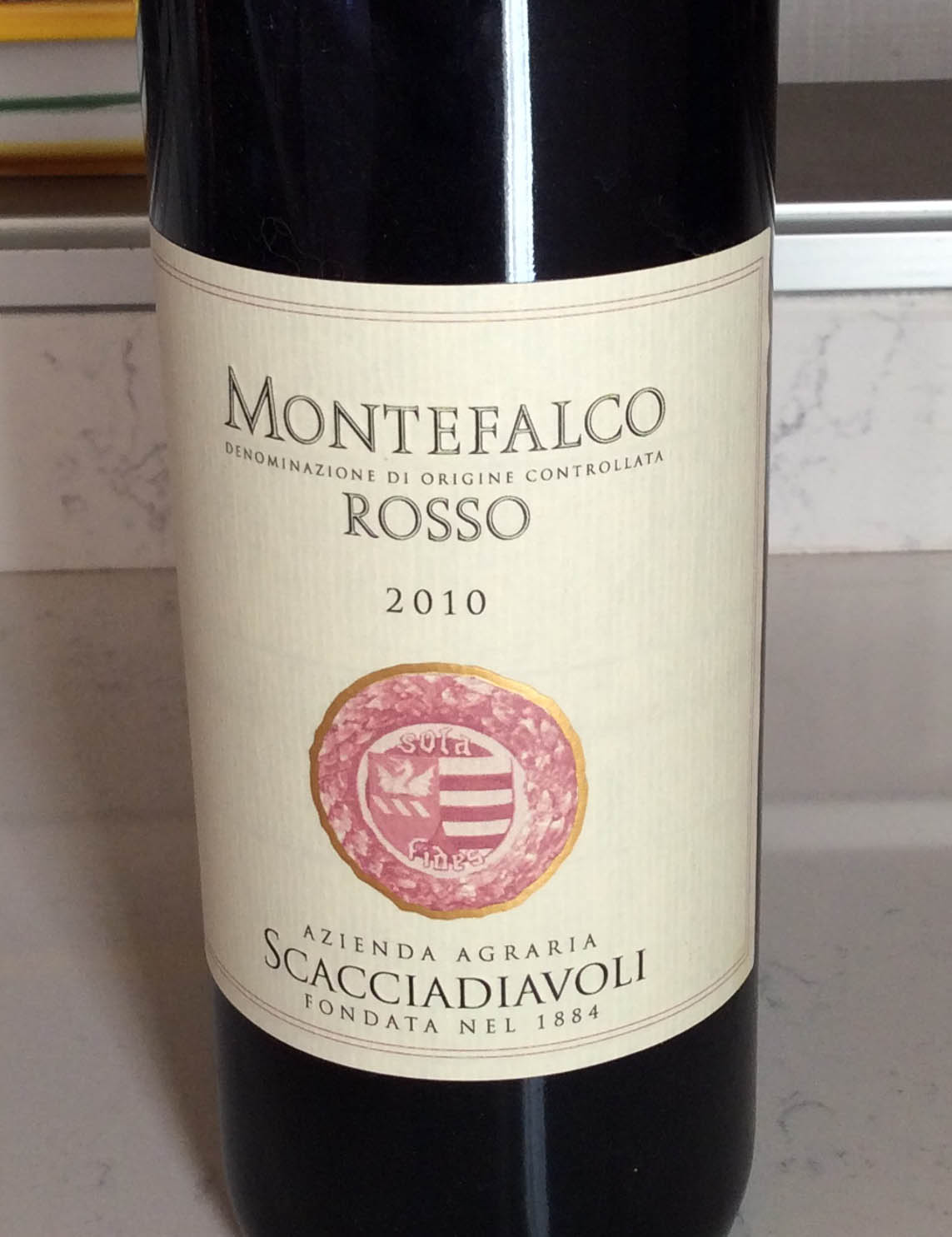
I am a huge fan of Montefalco Rosso. It is a remarkable red with excellent aging potential but without the tannin explosion associated with sagrantino. The Montefalco Rosso DOC is an excellent food wine at a ridculously reasonable price–we usually pay about 8 – 10 Euros a bottle for it ($9 – $11). With 30 months in the bottle, the riserva is a noble wine all by itself. Because I like my wines huge and with some fruit–I am a major zinfandel fan–the sagrantino rates tops for me. But some folks prefer a wine a little more austere and elegant, and the riserva nails this. It is probably Umbria’s best wine value.

IMG_0258

There are excellent producers of sangiovese-based wines across Umbria, but the most famous has got to be Lungarotti, based in the town of Torgiano, just a few miles south of Perugia. Lungarotti owns hundreds of acres of vineyards all over Umbria, with by far the major proportion around Torgiano. Lugarotti is huge, producing over 2.5 million bottles a year: almost triple the next major producer. Lungarotti’s sangioveses are considered so good that they have their own DOC, Rubesco di Torgiano and DOCG, Rubesco di Torgiano Riserva. Like the Rosso di Montefalco, the DOC Rubesco is a blend of sangiovese (75%) and the local grapes cannaiolo and colorino I mentioned earlier. It gets a year of barrel aging and another year in the bottle before release. The riserva requires four years in wood and comes exclusively from a single 120 acre property named (oddly enough), Rubesco. (For those trivia followers, Rubesco is an invention based on the latin word rubescare, to blush) I first sampled Rubesco maybe twenty years ago and I have loved it ever since. It used to be very widespread in the states. I could still find it in the Washington DC area if I looked, but it’s not as available as it used to be. Get some: you’ll like it.

All right. That’s enough of the tutorial. In the next segment I’ll talk about some of our field trips.


I hope you all enjoyed the second segment about Umbrian wines. I myself, am looking forward to doing some field testing for future articles!

Guest post from Luther the wine guy

People have been asking for a post about the wines around here. Luther has worked a WHOLE year on this and here is part one…


Wines of Umbria

Alright, already! I’ll write something now that I’ve had enough time to make a basic study.
Before we dive into the visits, here’s a bit of an introduction to Umbria and it’s wines. Geography lesson first.

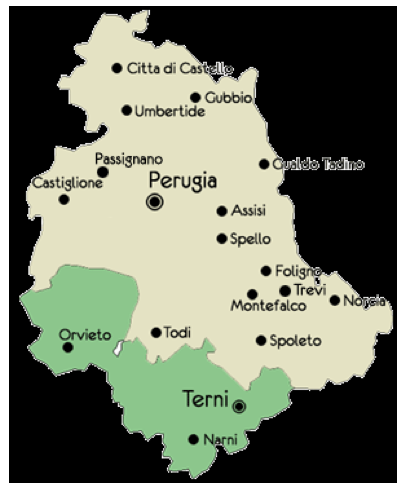
Umbria
Here’s a map of Umbria. Like every other province in Italy, Umbria produces an ocean of wine, from the really good stuff to the ho-hum. Most of the really good stuff comes from a band stretching from Montefalco in the east to Orvieto in the west.

umbria_map

Montefalco and the area around it specializes in red wines, although plenty of white is made there too. The production slowly switches to white as you cross to Orvieto, although Orvieto also makes some very nice red wines. There’s a lot of wine made in Umbertide, our neck of the woods, but as you can see, we’re a bit north of the big leagues. For the curious, Tuscany with its Chiantis, Brunellos and Montepucianos lies just to the west of Umbria. To the east, you’ll find the Marche, which is known primarily for the white Verdicchio grape and the red wines from around Ascoli Piceno. If you’re wondering about the green part, Umbria has two provinces, Perugia and Terni. I’ll leave it to the reader to figure out which is which.

Umbrian Grapes
That’s enough geography for now, let’s talk grapes: There are four major grape types cultivated in Umbria: Sagrantino (red), Sangiovese (red), Grechetto (white) and Trebbiano (white). The DOC laws (more on this later) governing Italian wines require that these grapes form the majority of all red and white wines getting the DOC pedigree in Umbria. Lots of other grapes are allowed: in particular, merlot, cabernet sauvignon, chardonnay and sauvignon blanc. There are some adventurous winemakers, particularly in the southwest, who are making excellent wines based on Chardonnay, Cabernet and Merlot in particular and we will visit several, but let’s stick to the big boys for now.
DSC04280

Grechetto is the main white grape of Umbria and has been here since grapes and olives originally came to Umbria with the first Greek traders, who brought them from the colonies in the south of Italy in the 7th century BC. Grechetto has a deep straw color and has a minerality that I find particularly refreshing. It provides structure to any blend due to its relatively high alcohol content. Grechetto is the primary slamming down white of Umbria. You can get it out of wine shops by pump–yes, just like a gas pump–at about $1.50 a liter. When grechetto is made from older vineyards and the grapes are carefully selected, it makes excellent varietal wines, both alone or blended with other variatals. Grechetto ain’t Chambertin, but it can be quite tasty and is never particularily expensive. Very nice grechettos can be had here for about $5.00 a bottle.

Trebbiano is the other main wine grape of Umbria. It is fresh and fruity, with low acidity and a yellow color. Trebbiano goes back to Roman times and is one of the most widely planted grapes in the world, appearing in everything from balsamic vinegar (good!) to cognac (very good!) to industrial alcohol (unfortunate). Outside Italy, most trebbiano is undistingished and usually blended or distilled. In Italy, however, trebbiano can be a heavy hitter, appearing in Italy’s admittedly rather small list of really interesting white wines. Umbria boasts two excellent versions of trebbiano: Trebbiano spolentino, which (they tell me) is a unique form of the grape native to the area around Spello but present across southern Umbria and procanico, another unique (they tell me) Umbrian native version of trebbiano. These two, along with grechetto, form the basis for the wines known as Orvieto.

Wine Labeling
Years ago the Italians realized that if we foreigners keep associating Italian wines with the crap that appears in those straw covered bottles labelled “Chianti” they are never going to sell anything but their cheap sludge outside the country. To ensure that buyers didn’t feel like they needed to try the wine first on an unwanted family pet, the Italian government adopted a set of labelling standards known as the Denominazione di Origine Controllata (DOC). Each DOC governs a particular geographic region. In order to receive the DOC label for a region, the wine inside must adhere to government-defined quality standards for wines of region that specify: the origin of the grapes used (no sneaking stuff in from other places); the types of grapes that can be used (no slipping the cheap grapes in with the good stuff); the yields per acre (minimizing the juice from younger vines, which tend to yield higher, but poorer quality, wines than older vines); the percentages of allowed grape types in the wine, ensuring that blending wines stay blending wines, not the dominant grape in the bottle; and a whole bunch of other quality factors. DOC wines have the phrase Denominazione di Origine Controllata on the front and back labels and the name of the actual DOC. The presence of a DOC on a lable doesn’t guarantee a good wine, but it does indicate that the wine has been made from known components in a quality fashion. If you find yourself having to guess about a wine, you really can’t go wrong by opting for one with a DOC label on it.

DSC04282

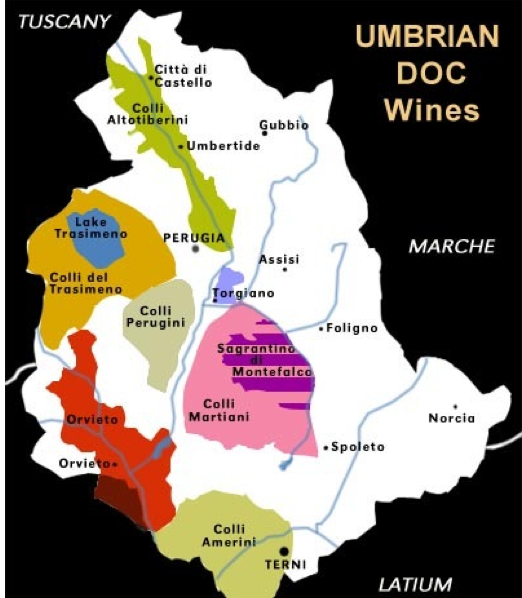
So you know where they are, here’s a map of Umbria with its DOCs.

DOC_wines

The DOC has been such a success in establishing Italy as a maker of quality wines commanding corresponding prices that the Italian government has upped the ante, introducing a much more exacting standard, the DOCG (Denominazione di Origine Controllata e Garantita). This term is for the wine regions or types considered particularily fine and adds further restrictions to the DOC standards. In addition to passing the more stringent standards, wines receiving the DOCG are rigorously tested during prooduction and submitted to a panel of tasters. There are a very limited number of DOCGs. Umbria, for example, has only three. As above, when faced with unknowns, go for the DOCG, if available. It will cost a bit more, but it figures to be extremely well made.

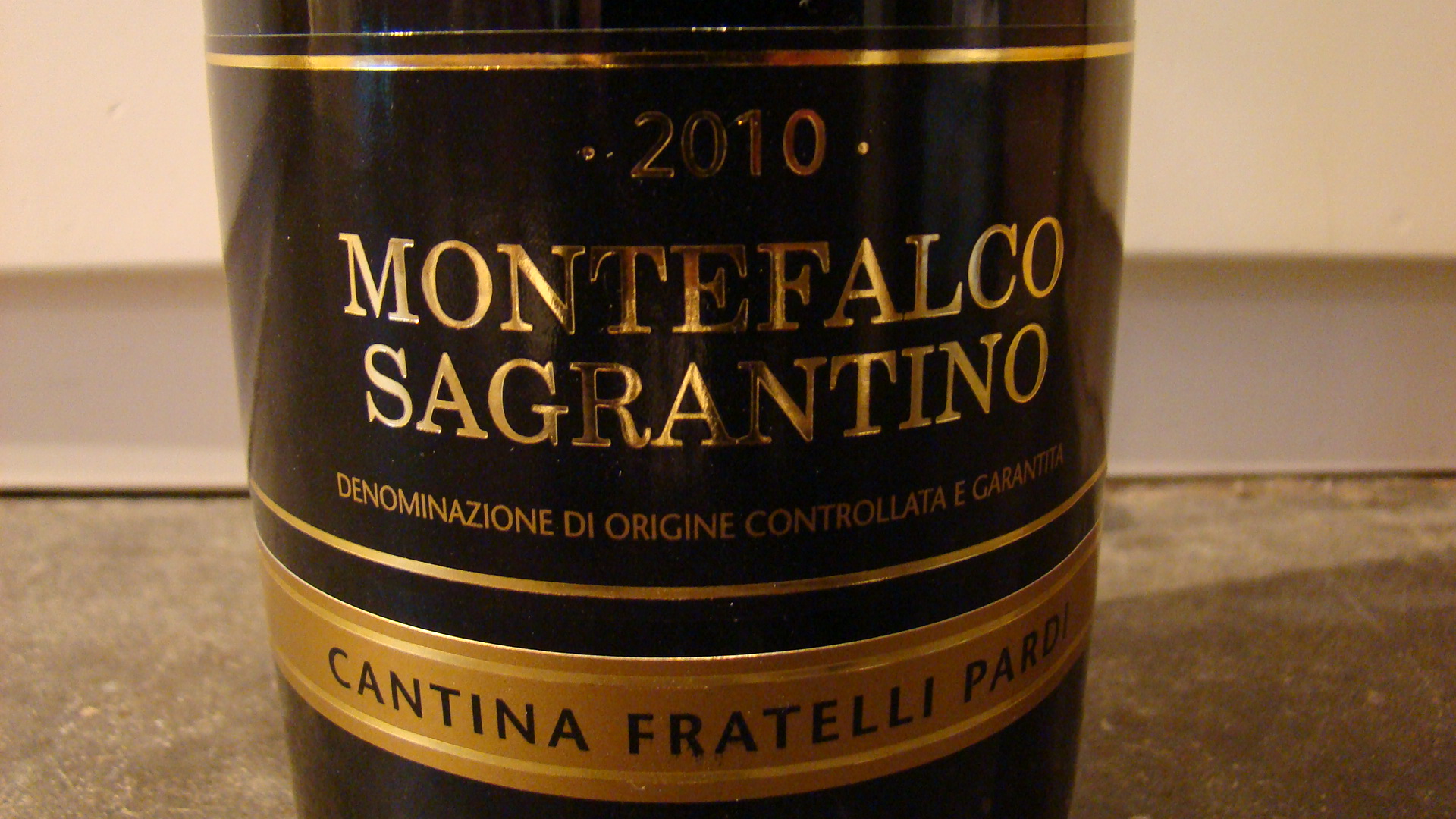
DSC04279

At this point you might be saying to yourself: Wow, I can become an afficionado just by knowing how to read the labels. Well, yes and no. The DOC/DOCGs are based on traditional Italian winemaking. For example, most traditionally great red wines from Tuscany are based primarily on the sangiovese grape, and to receive the DOC/DOCG, most DOC/DOCG red wines must be mostly, if not entirely, sangiovese based. In the last thirty years, winemakers have discovered that french grapes such as cabernet sauvignon and merlot also do very well in Tuscany and make tremendous wines, the so-called Supertuscans. Under the DOC/DOCG rules, these wines don’t qualify and in the past the winemakers were forced to lable these wines “Vino di Tavolo”, i.e., table wine. Not what you expect to see on the lable of a $100+ wine at all. To provide a little official cover for these winemakers, the label was borrowed from the food producers–it is used to indicate a local product of particular quality and shows up on things such as sunflower oil.

End of Guest Post


There will be a part 2. I hope it doesn’t take another year!

Ravenna in the rain

We drove the hour and a half north to Ravenna on Friday morning. The super strada goes through the rugged Apennine mountains. It is quite the feat of engineering soaring in the air above the old Roman road. It rained steadily but as we approached the coast it really picked up. Our GPS got us into a couple of sticky situations but we finally found the Hotel Diana. It is in the old town, the people were nice, it was not luxury but comfortable.

Off we went for a beer and then to get our ticket that includes the top four sights. It was raining steadily.

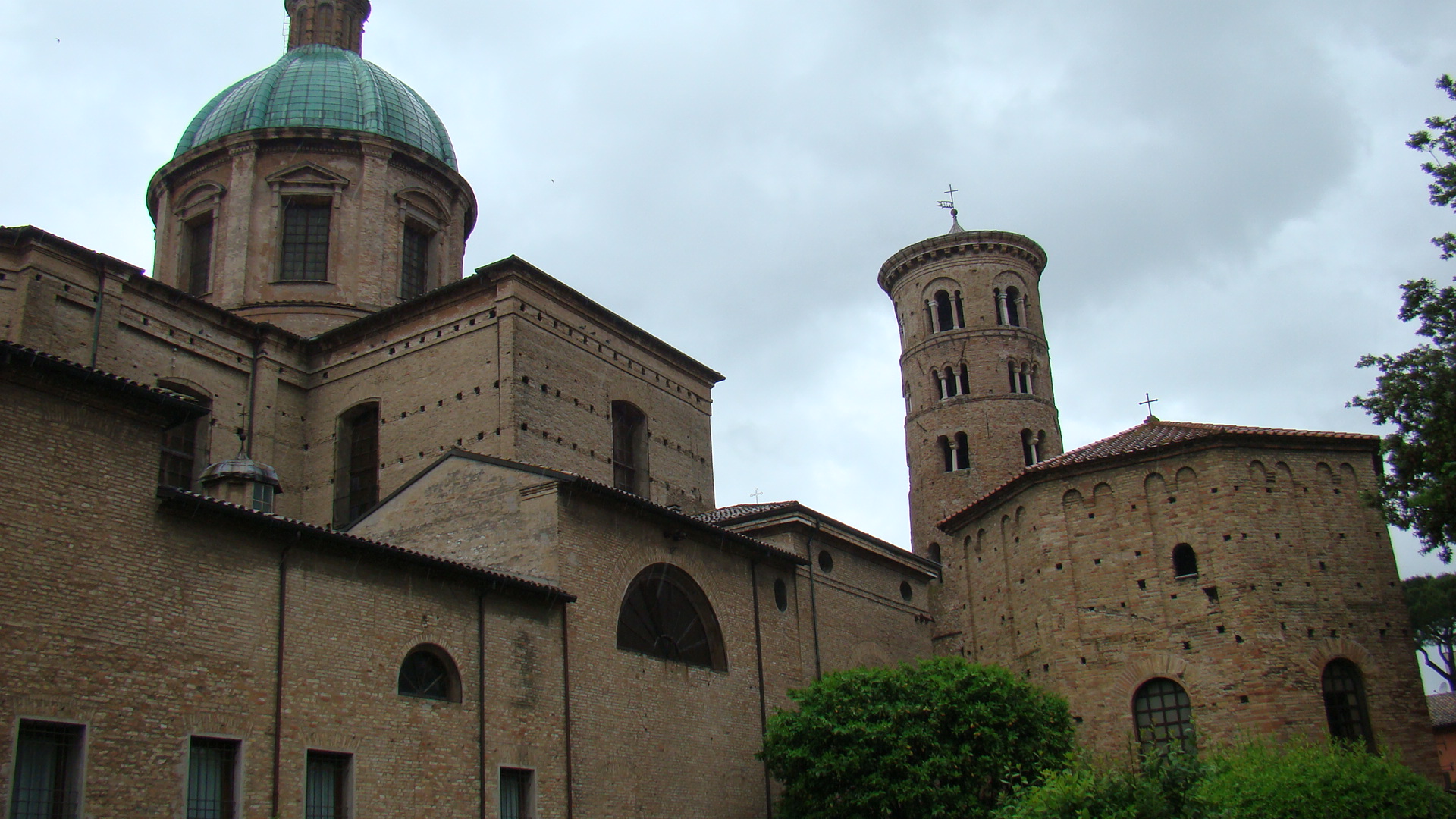
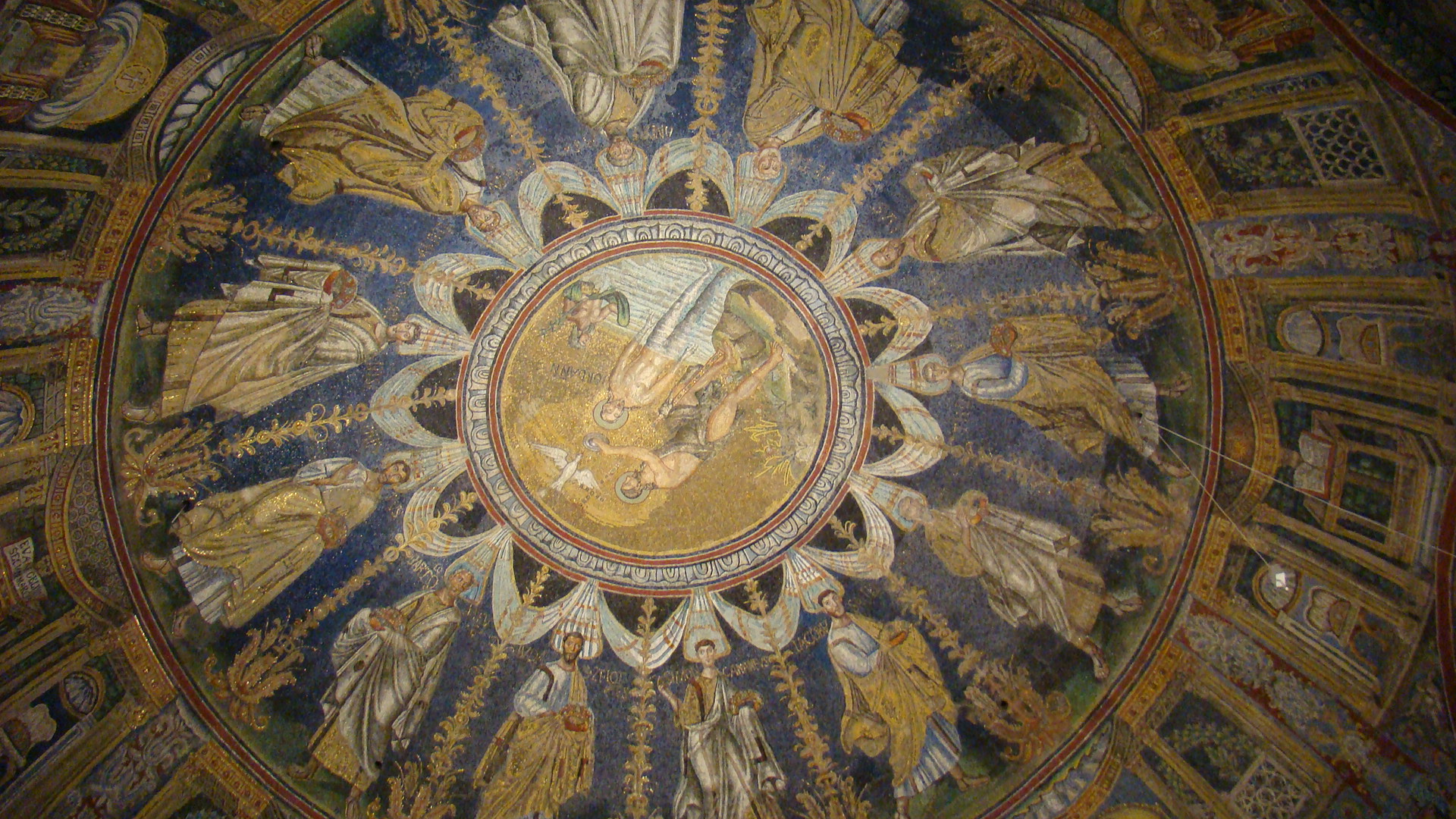
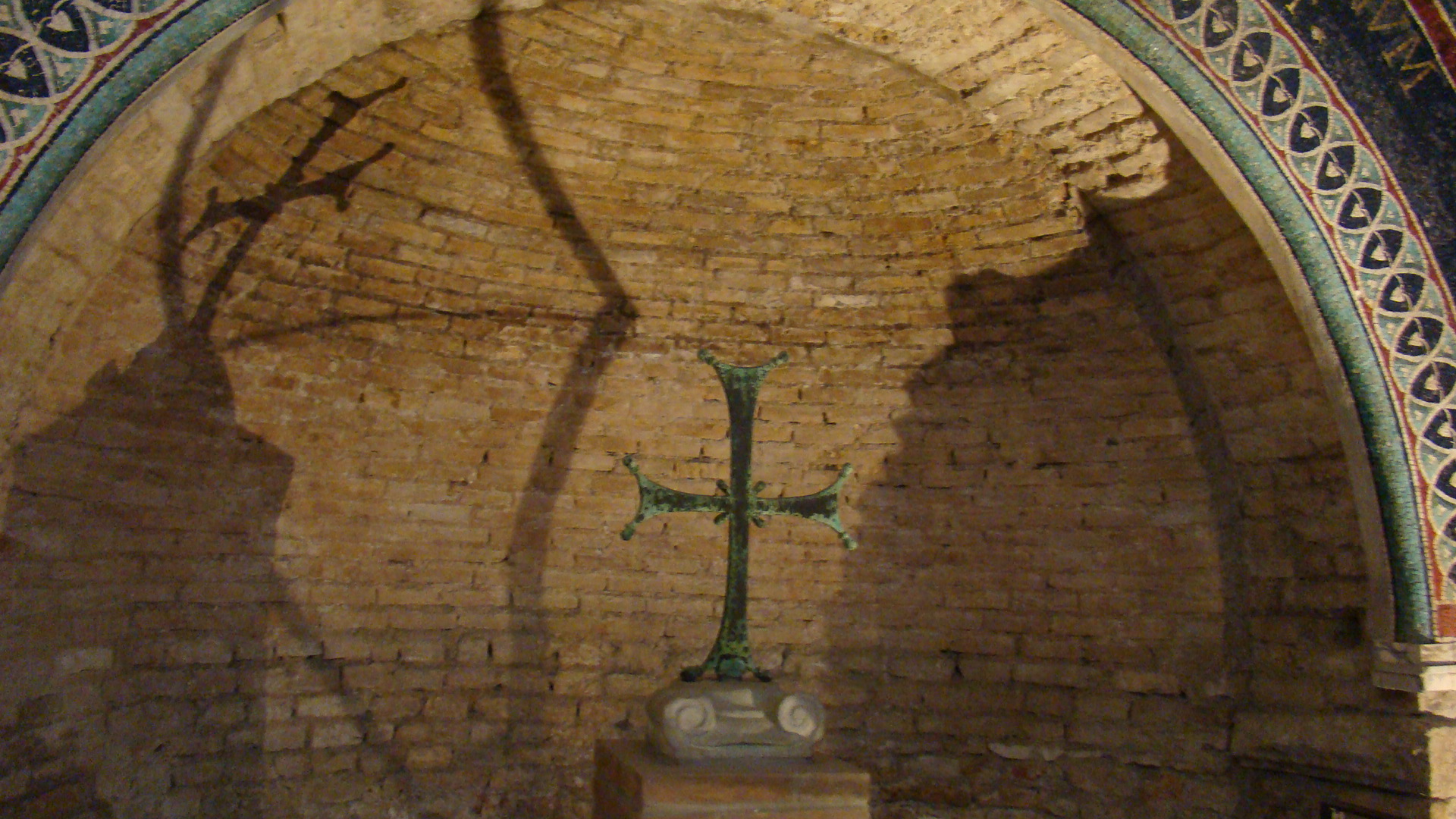
FIrst up was the Battistero degli Ortodossi (O Neoniano)

DSC04244

DSC04246

DSC04248

Then we visited Capella di Sant’ Angrea but no pictures were allowed. It was really a museum. After that we let our stomach do the walking to Ca’ de’ Vén, a ennotecca not far away. Did I mention it was raining?

Inside were a number of rooms all different, most in vaulted rooms, some with beautiful ceilings seen below. We sat at long tables.

DSC04243

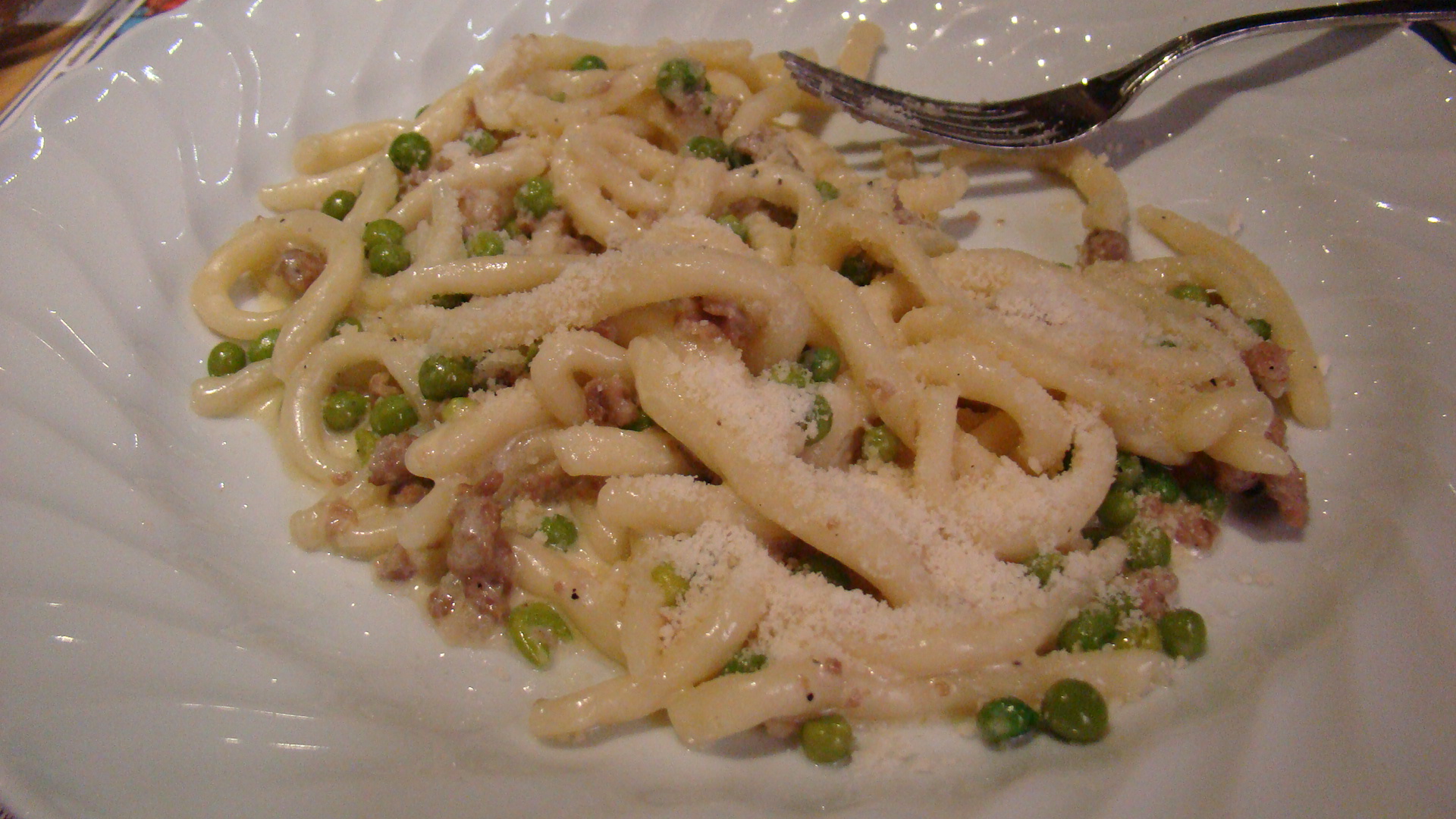
I had the local spaghetti type pasta similar to the Umbrian Stringozzi but much fatter. It was served with new peas and sausage in a cream sauce. Quite light and perfect for a lunch when a dinner is planned for later.

DSC04241

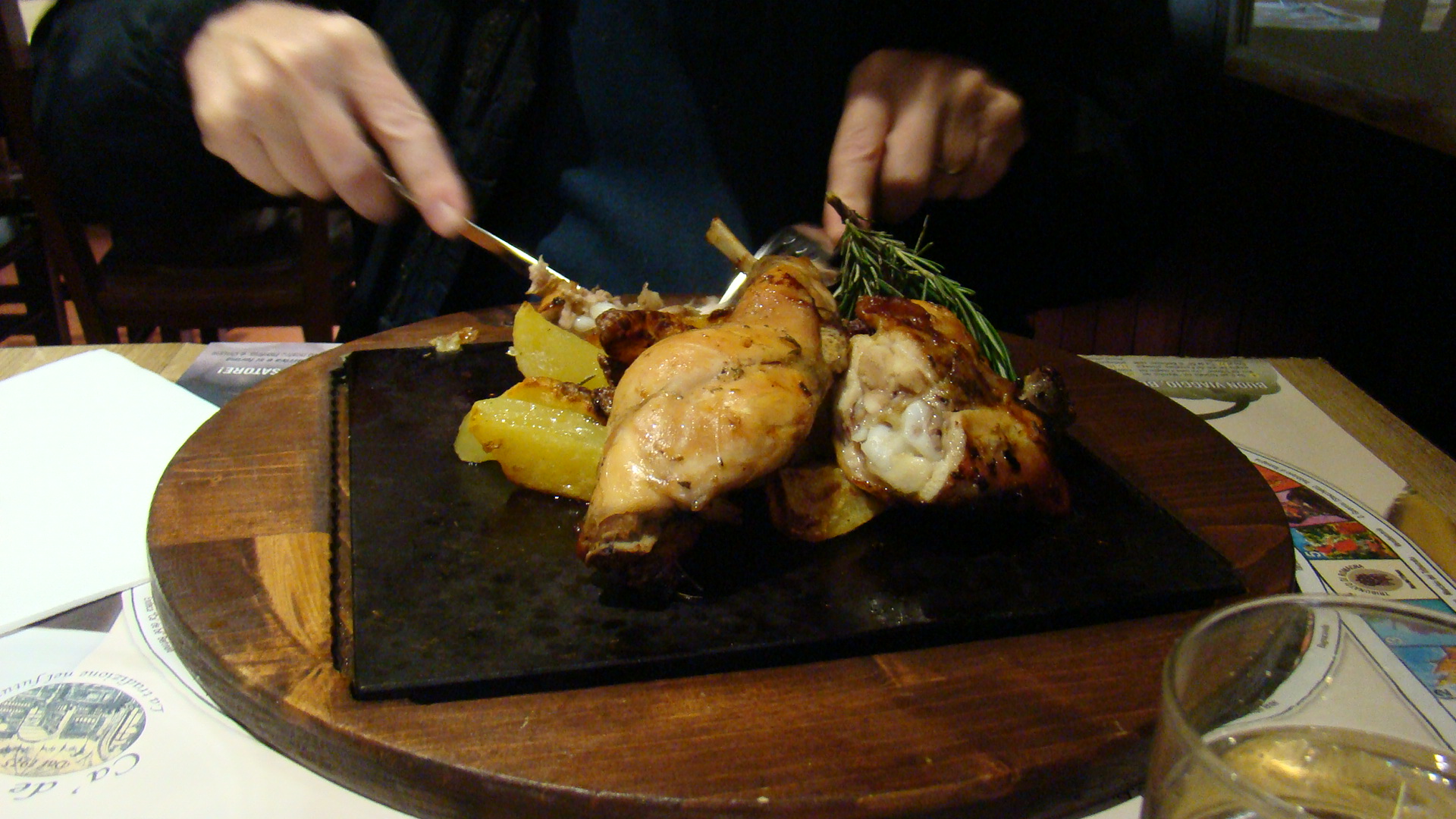
Luther got the chicken and rabbit with potatoes on a hot stone. They really got the chicken perfect, the rabbit was a little dry but the potatoes were perfect! The meats were flavored with rosemary and garlic. Too much food he said.

DSC04242

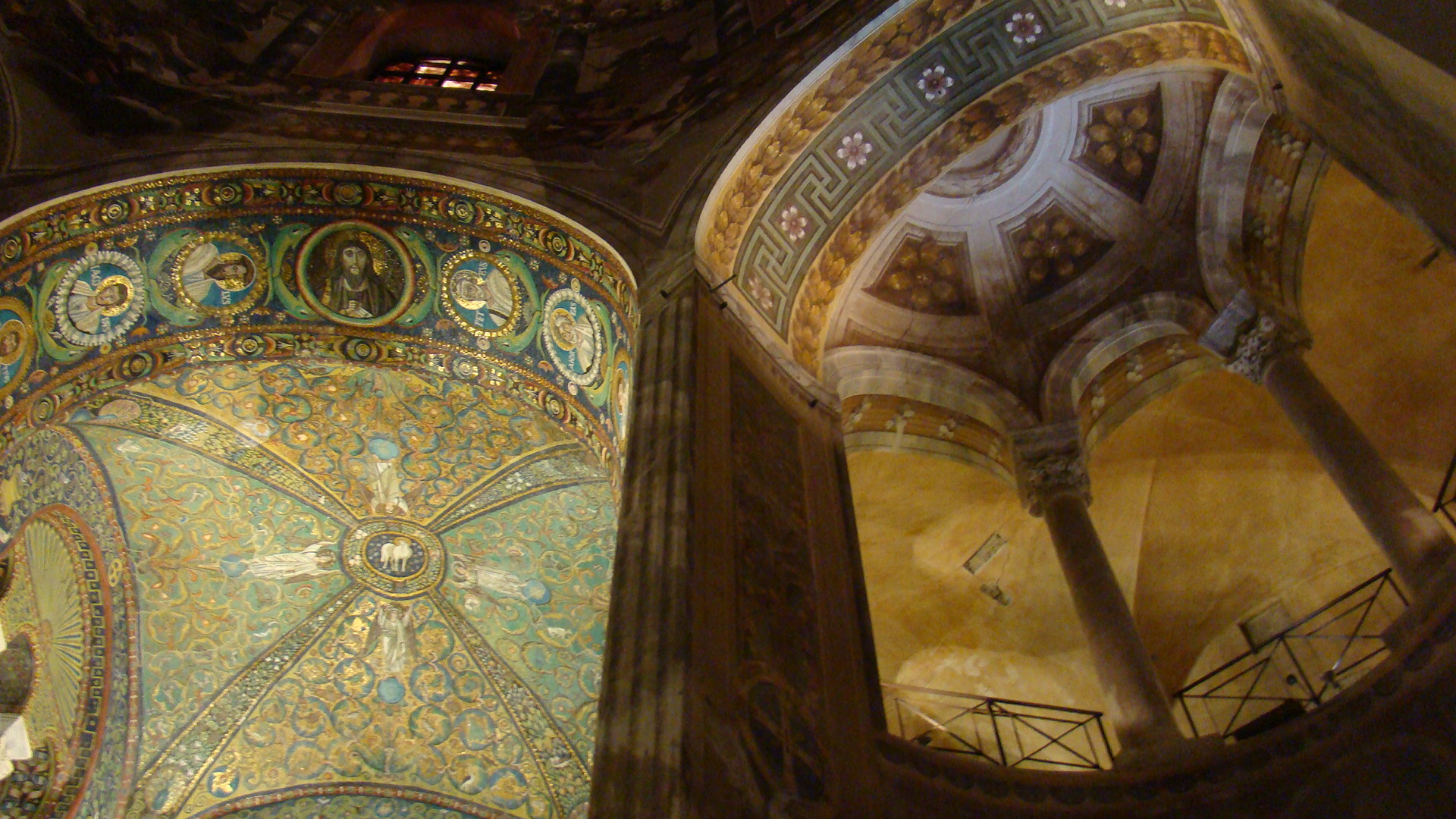
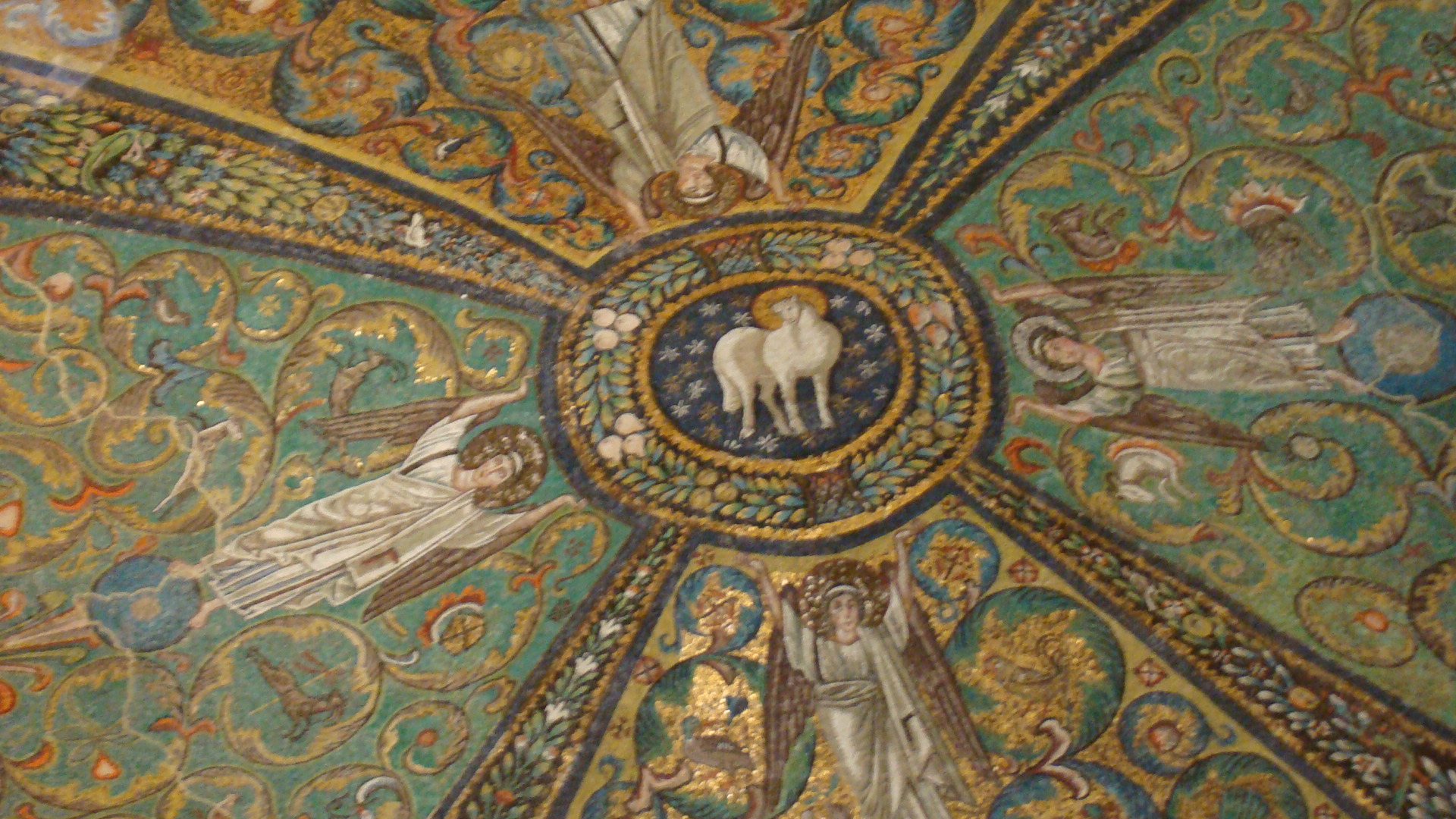
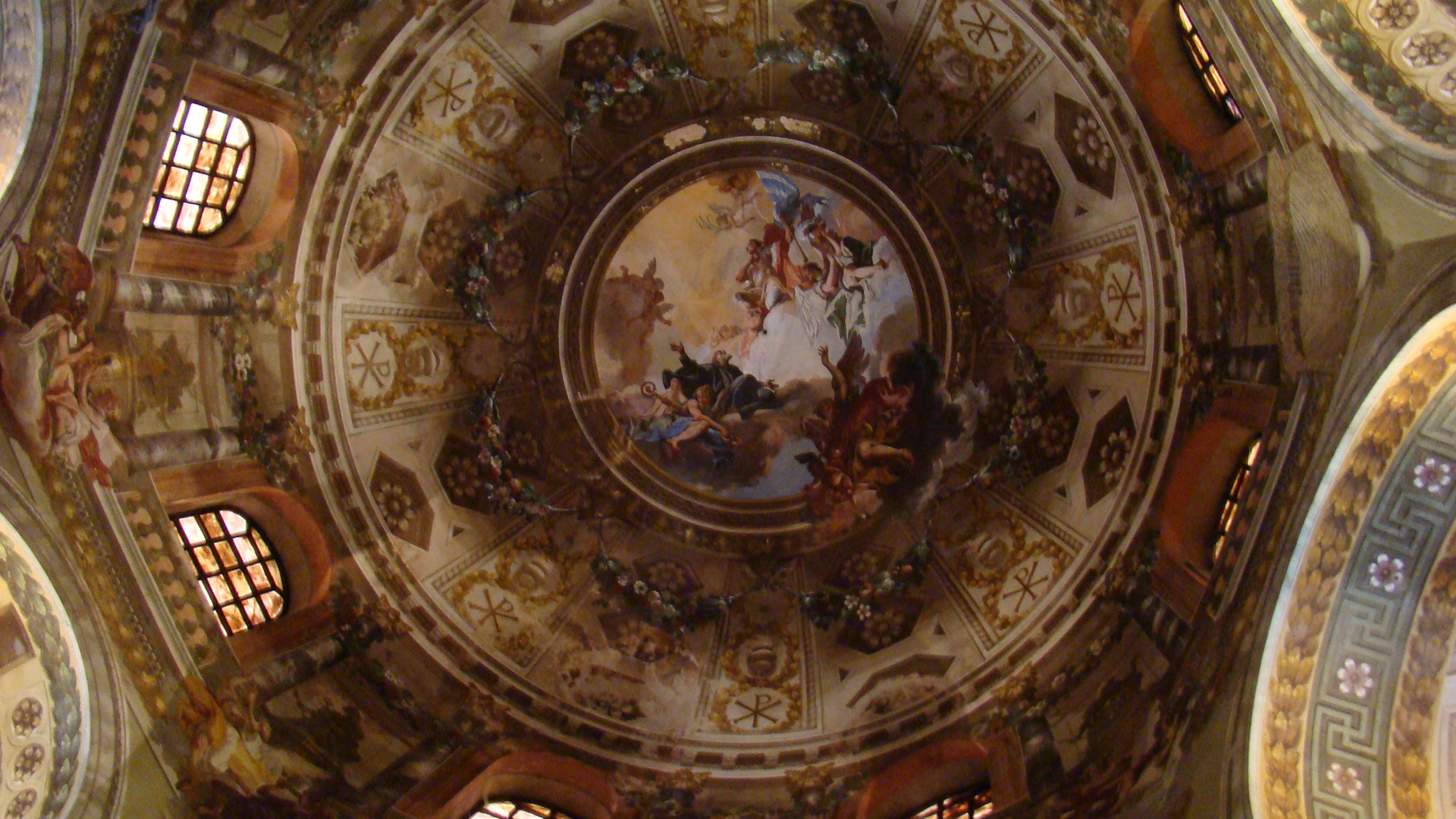
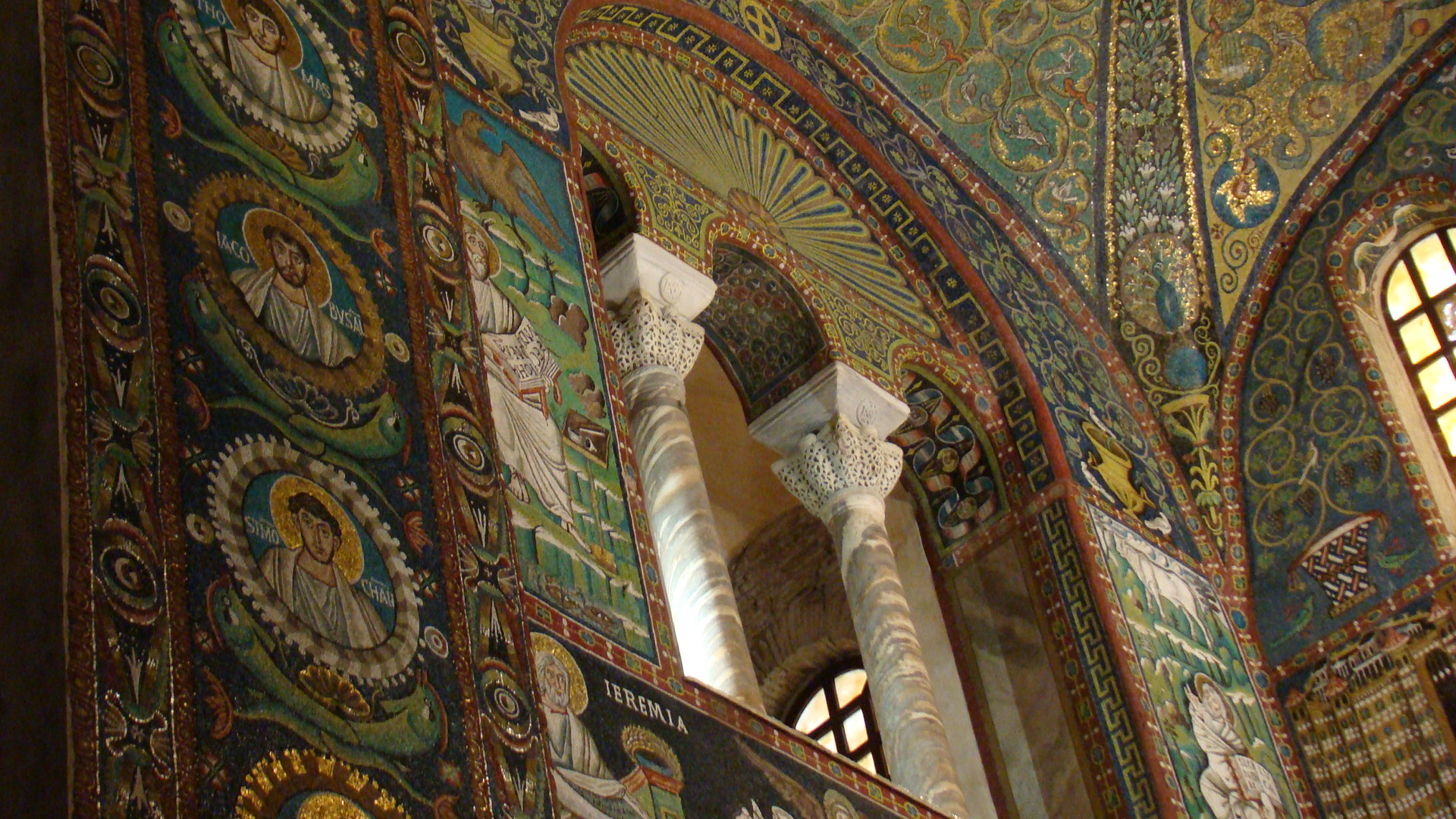
We left and it was raining… we visited Basilica di Sant Vitale which was breathtaking.
DSC04250

DSC04255

DSC04256

DSC04257

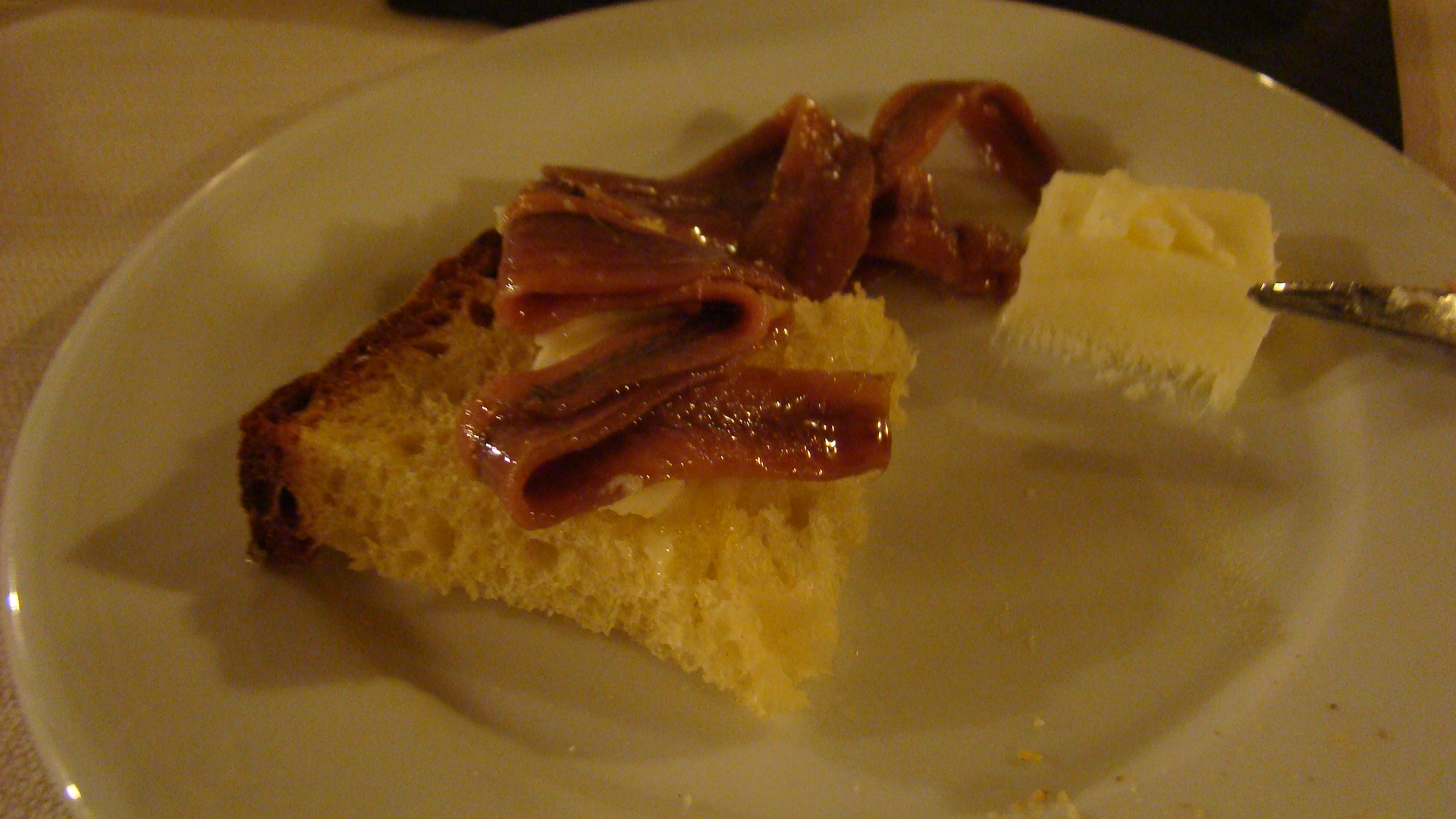
We retreated in the rain for showers and to recharge for dinner at L’Acciuga Osteria. Named after anchovies. And they DID have anchovies which we felt compelled to order. They came in a tin! With bread and butter. It was good but it was….anchovies. (my sister would have loved them!) They were from Spain and very expensive. We split them. Wouldn’t re-order them.
DSC04259

DSC04261

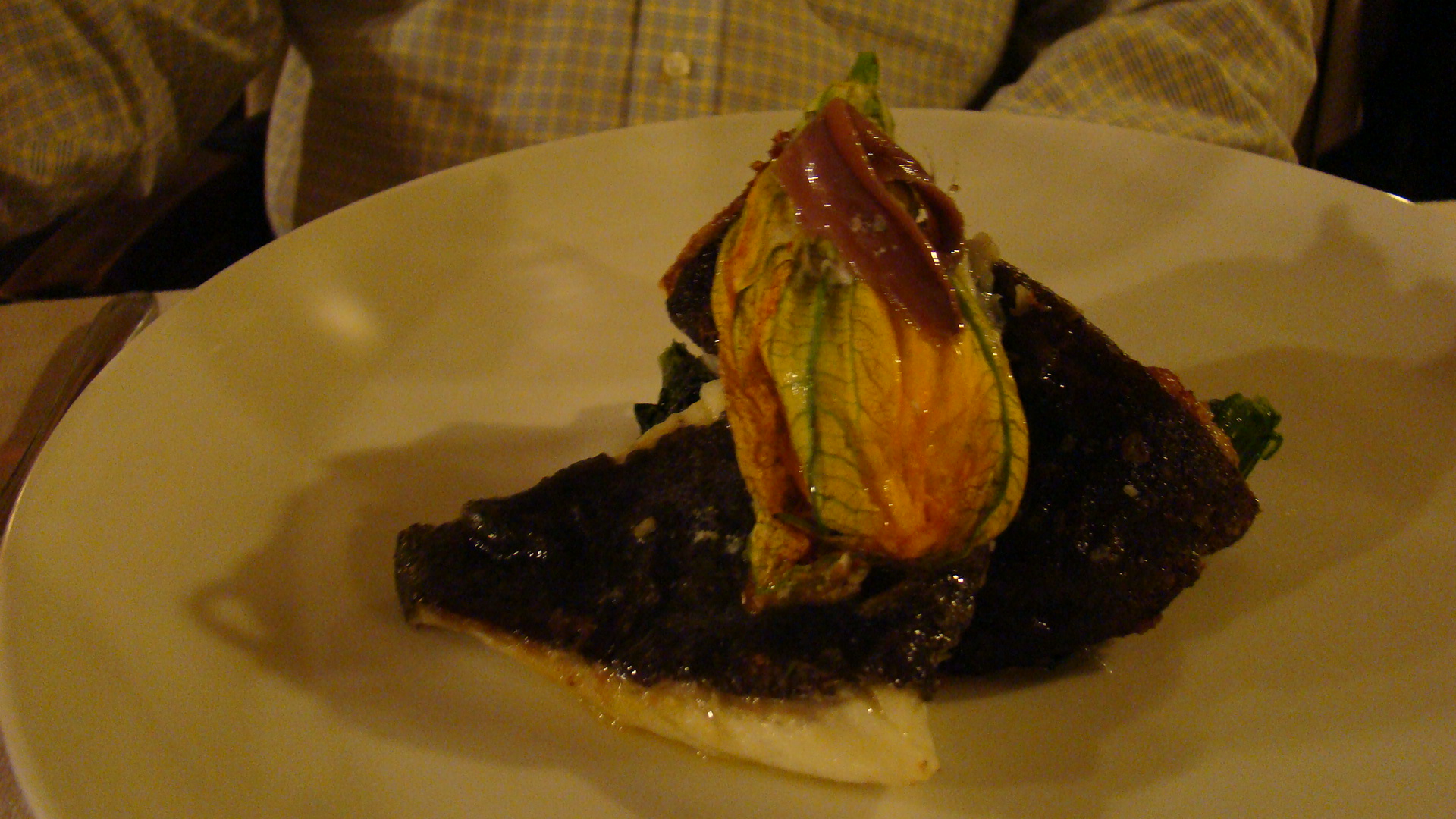
Luther had the sea bass which he loved. It was topped with a squash blossom.

DSC04262

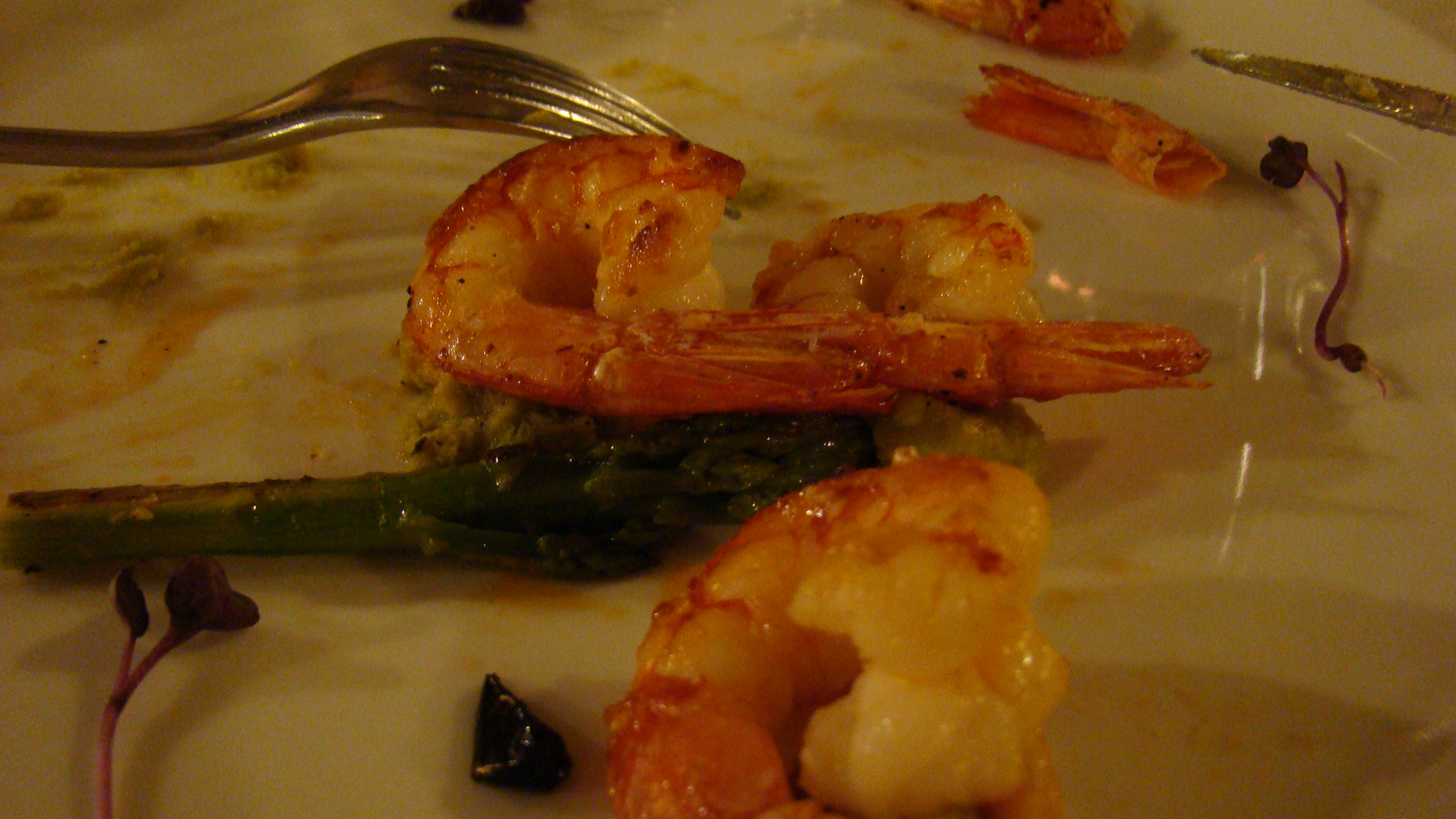
I had the shrimp with asparagus.

DSC04263

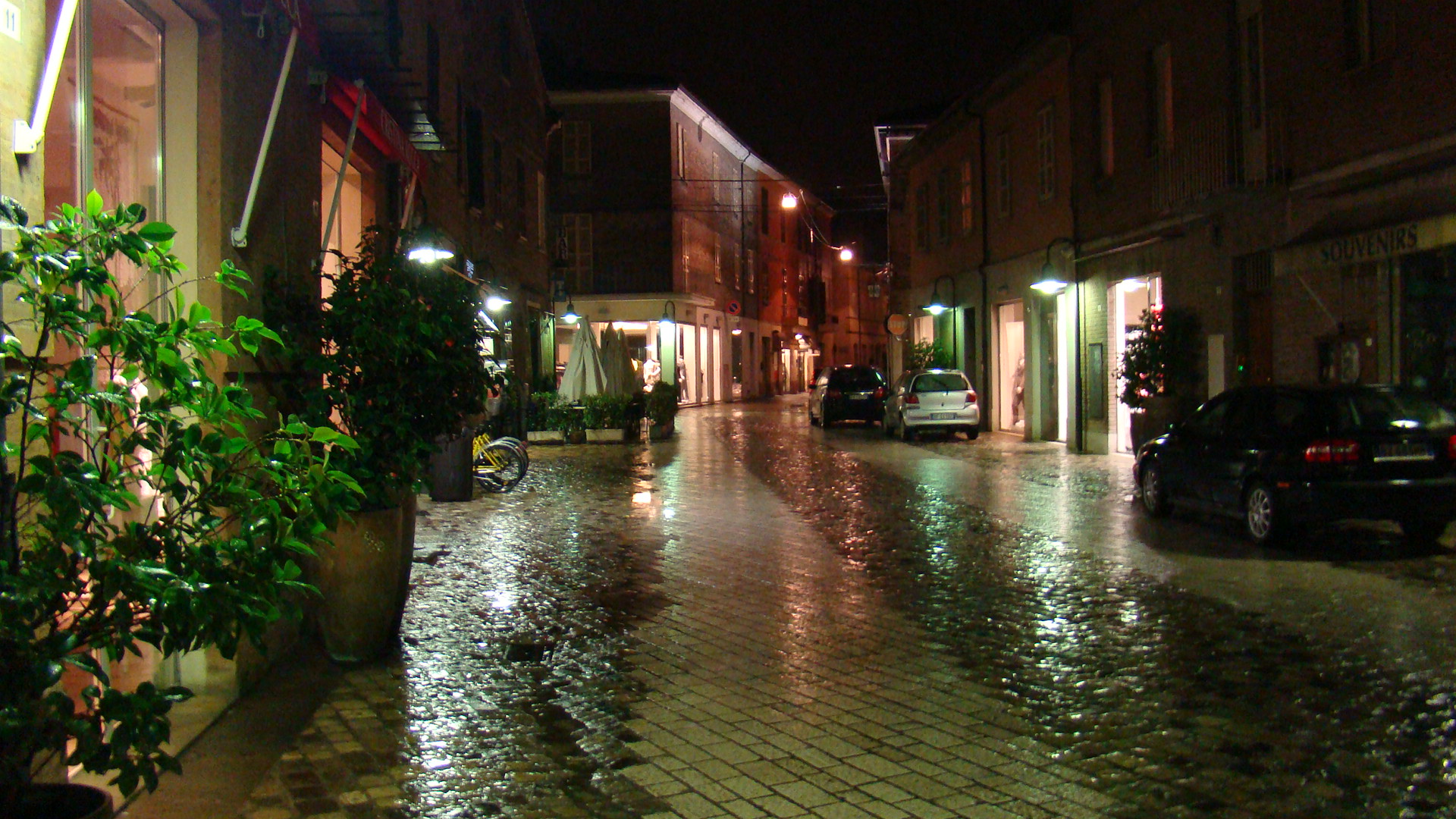
We had a lovely local red wine. It was a San Giovesi. Then we walked back to our hotel…in the rain.

DSC04264

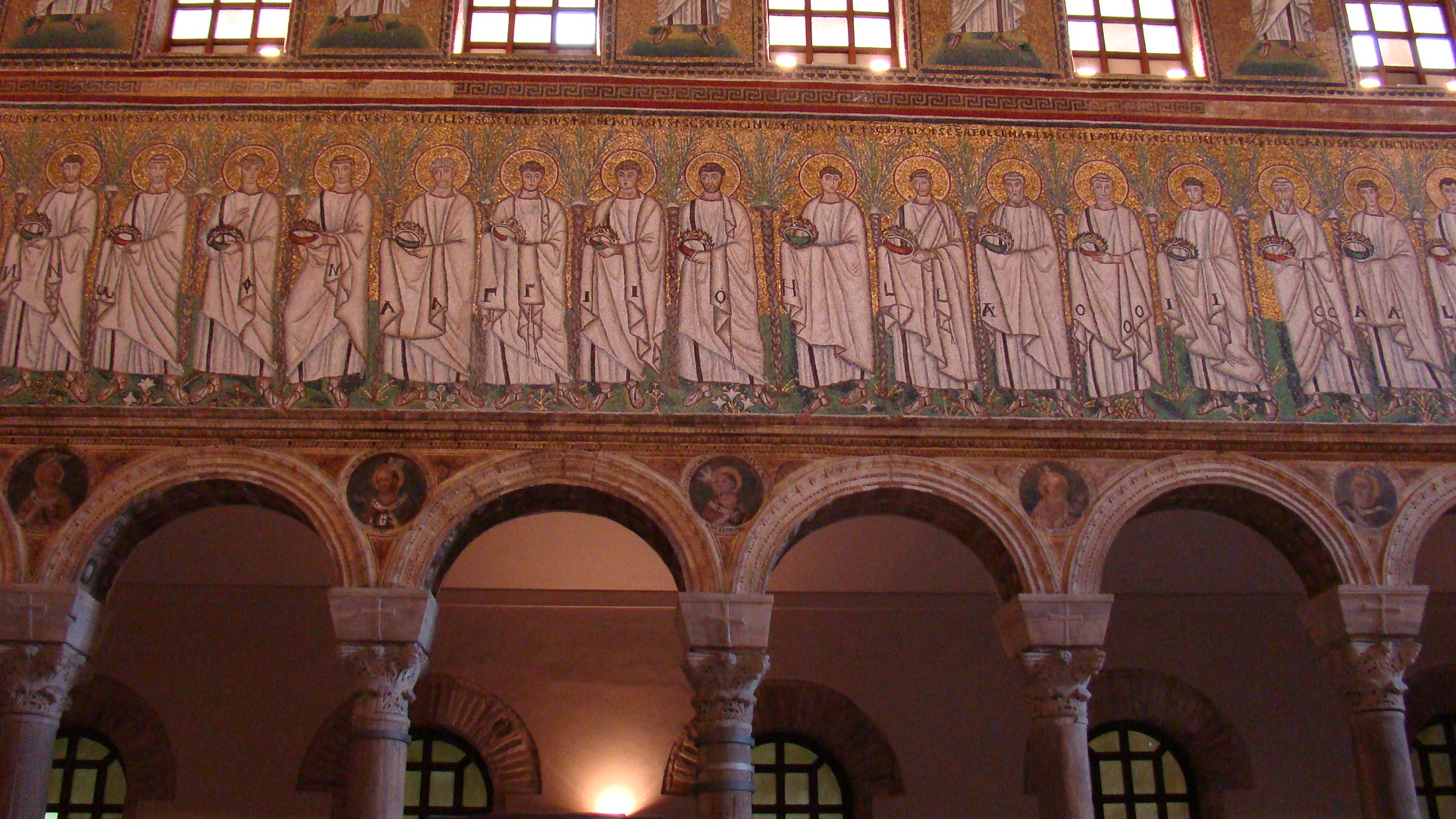
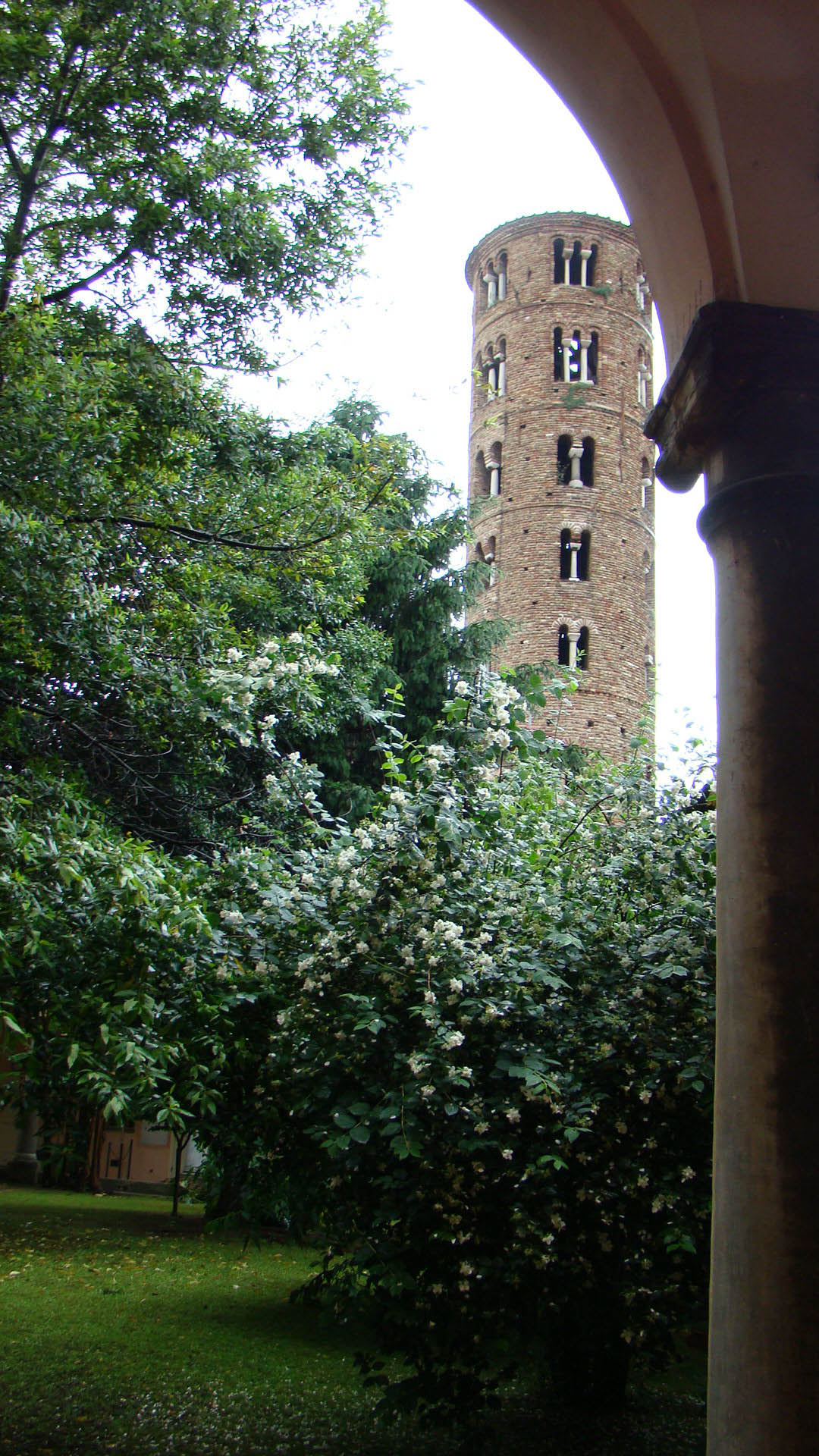
We had a good sleep and breakfast – checked out and headed for the last of the four main tourist sights – the Basilica di Sant Apollinare Nuovo. It was built in the 400s. Yep. Old. In fact Ravenna has a fascinating history. Now Ravenna is the capital city of the Province of Ravenna, in the Emilia-Romagna region of Italy. Earlier it was the capital city of the Western Roman Empire from 402 until that empire collapsed in 476. It was the port for the Roman Imperial fleet. Then it became the capital of the Kingdom of the Ostrogoths until it was re-conquered in 540 by the Eastern Roman Byzantine Empire. Afterwards, the city formed the center of the Byzantine Exarchate of Ravenna until the invasion of the Franks in 751, after which it became the seat of the Kingdom of the Lombards. To cut it short it was also variously ruled by the French, the Venetians, Germans, the Pope, etc. etc. During World War II two troops of the British 27th Lancers entered and occupied Ravenna on 5 December 1944. The town suffered very little damage.

Here are some pictures of he Basilica di Sant Apollinare Nuovo.

DSC04270 DSC04272 DSC04276 DSC04275Almost all of the churches we saw had magnificent mosaics. Beautiful. We headed back to Umbertide in another very difficult rain storm. It got so bad that the road was flooded with so many puddles we had to slow to a crawl – plus the road just outside of Ravenna and Forli was crumbling. Italians need to do something!

Near Umbertide the rain slowed and stopped. It was quite cool and cloudy though, much different than the recent weather.

Big day tomorrow… we pickup our Porsche Boxter which we ordered 5 months ago!

New food – Agretti aka Roscano.

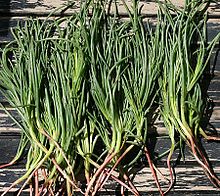
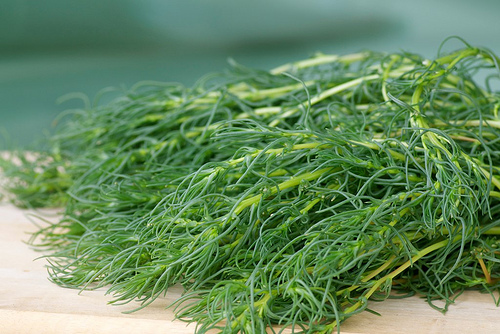
So, I have been seeing a vegetable unknown to me called Roscano here in our markets in Umbria. It looked a lot like chives with its roots but with the texture almost like a rosemary leaf. Finally, curious I grabbed a bunch and looked on-line for recipes. Here is what it looks like. (photo from wikipedia I forgot to take one before I used it!)
220px-Salsola_soda

…and from the food network.

DSC_0171

Also, during my exploration on-line I find that there are food fights going on in England over this stuff. Who knew what I was missing?!

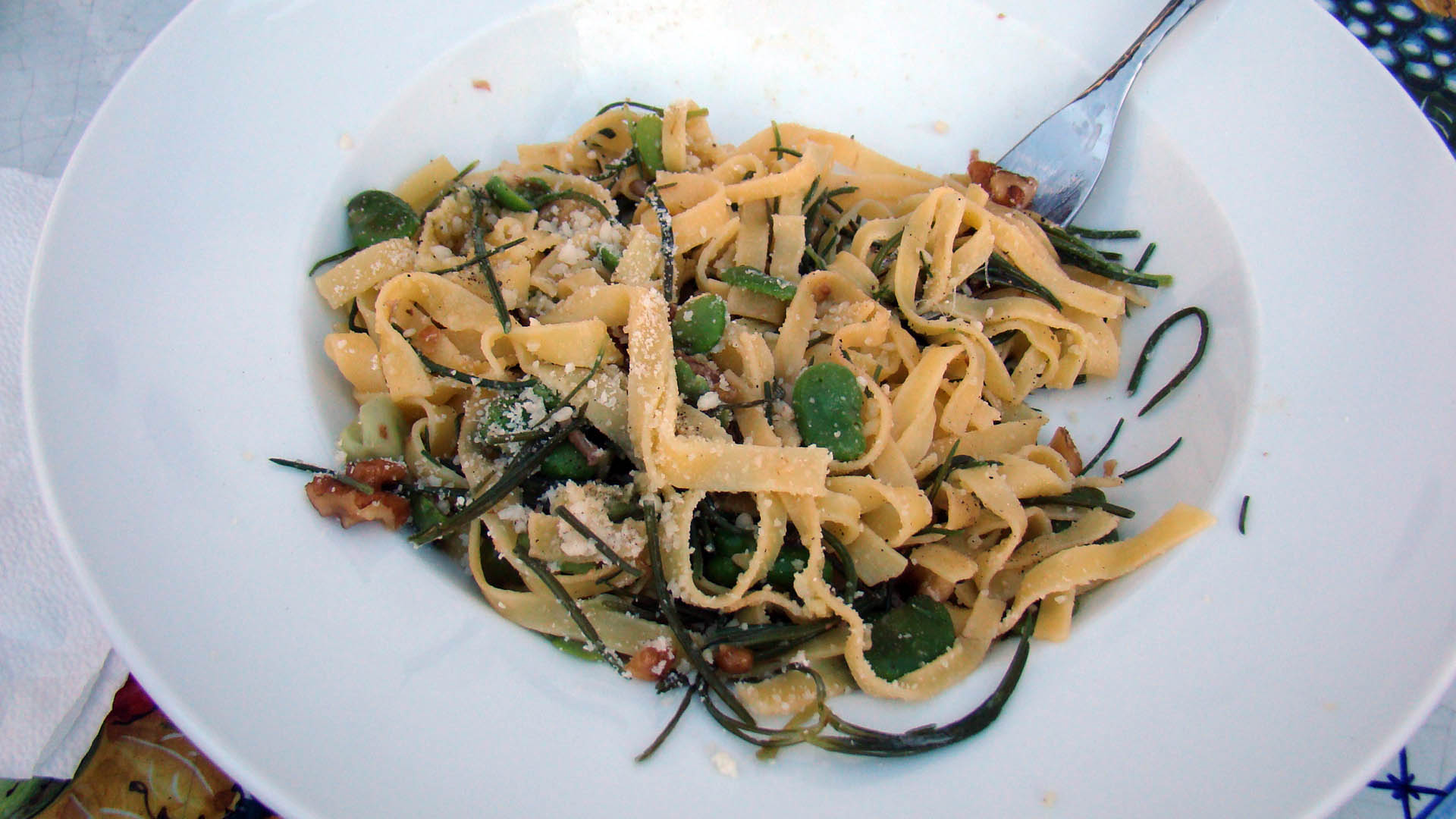
As for my preparation. You can just saute it in butter or oil with lemon and garlic as a side dish. Or you can make a pasta, which is what I did. It was a little tedious to clean but then you just blanch it in boiling water for a couple of minutes and add it to your pasta sauce. My sauce also had fresh fava beans, lemon, garlic and toasted walnuts. I liked it. The Agretti was grassy and unlike anything I’ve had before. I would do it again. I hope the season is not over yet!

DSC04238


Urbino in the Marche

We had a lovely day trip today to Urbino. It is a World Heritage site in the Marche district just next door to Umbria on the Adriatic. It is fully walled and on the top of a formidable hill. It has a long history, of course, where it went back and forth being independent or a Papal dependency depending on when you looked. It’s most famous inhabitant was Federico da Montefeltro, Duke of Urbino from 1444 to 1482. In 1626 the city again fell to the Pope. I won’t go into further history but we visited Federico’s Ducal palace while we were there.

It took about 1 1/2 hours to get there through mountainous terrain. The highway ran parallel to the old Roman road running to the sea. A pretty little river did the work of cutting an enormous gorge making a natural route.
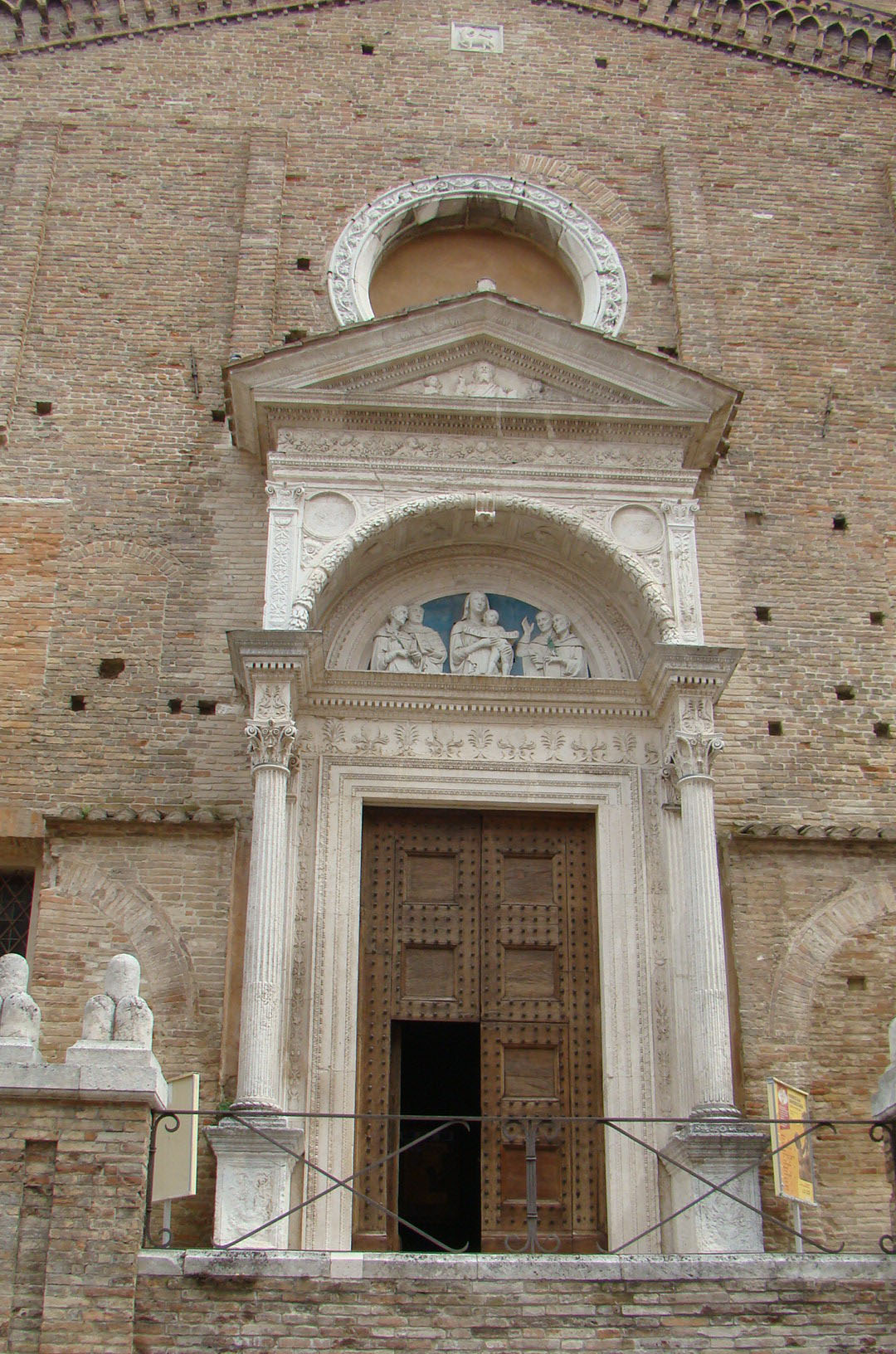
We parked below the town and walked up. The streets were steep and small. It is a university town with a school of design as well as a school of pharmacy. There were lots and lots of kids everywhere making for a lively scene. We went into the Duomo of Urbino which was begun on the foundation of a 6th century church in 1021. It was finished in 1604. In 1789 it was destroyed by an earthquake. It was rebuilt in Neoclassical style and finished in 1801. It is beautiful, clean and modern feeling inside with a soaring dome.

DSC04192

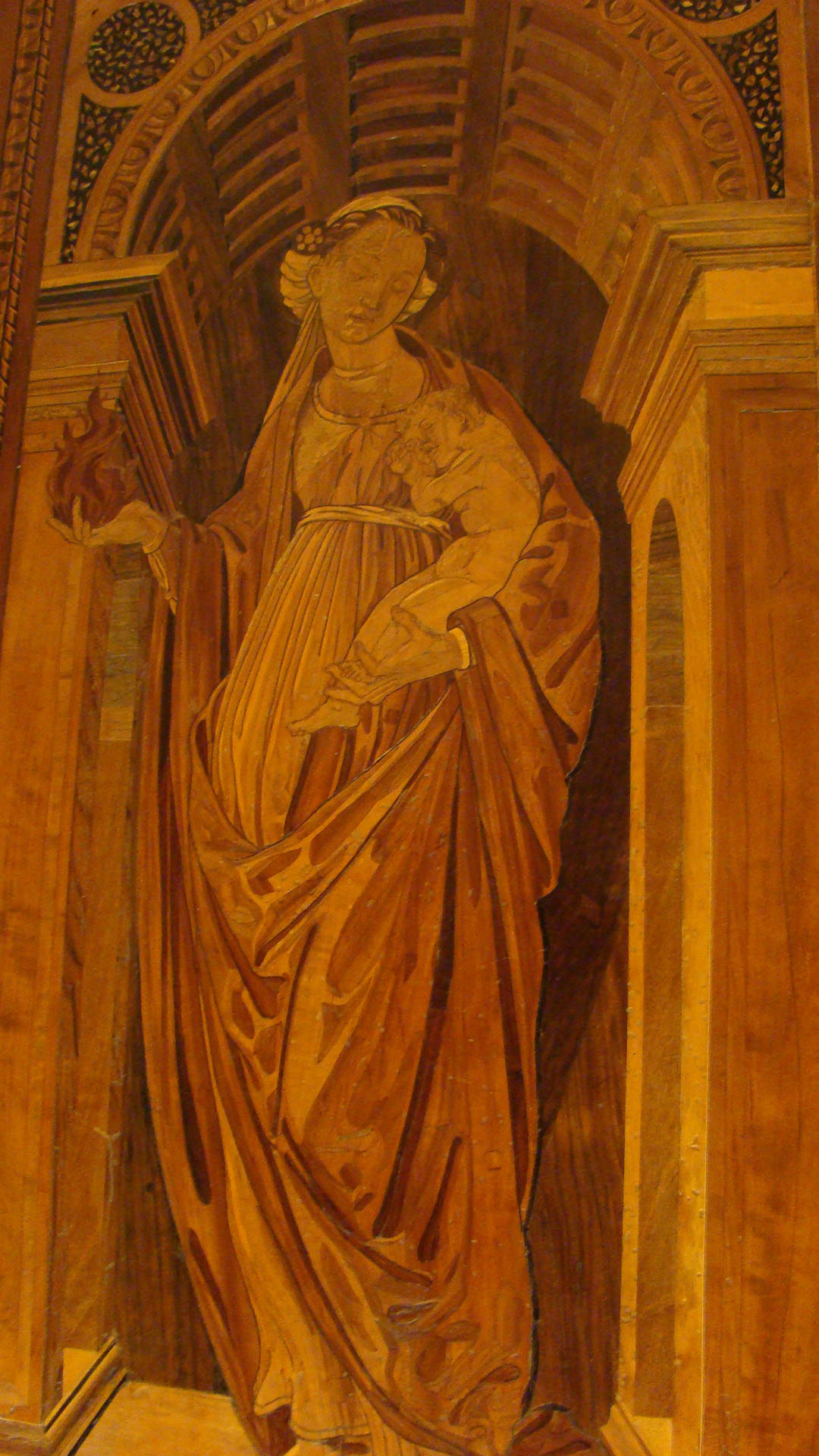
We entered the Ducal Palace and toured the rooms. Beautiful paintings, stone work, and especially beautiful inlay work in wood. Following are some pictures. We were there for about 2 hours. Believe it or not the next two pictures are of the magnificent inlay work entirely of wood. The perspectives are perfect. Check out the folds in the gown. Amazing work. AND it was created in the 1400s!

DSC04193

DSC04195

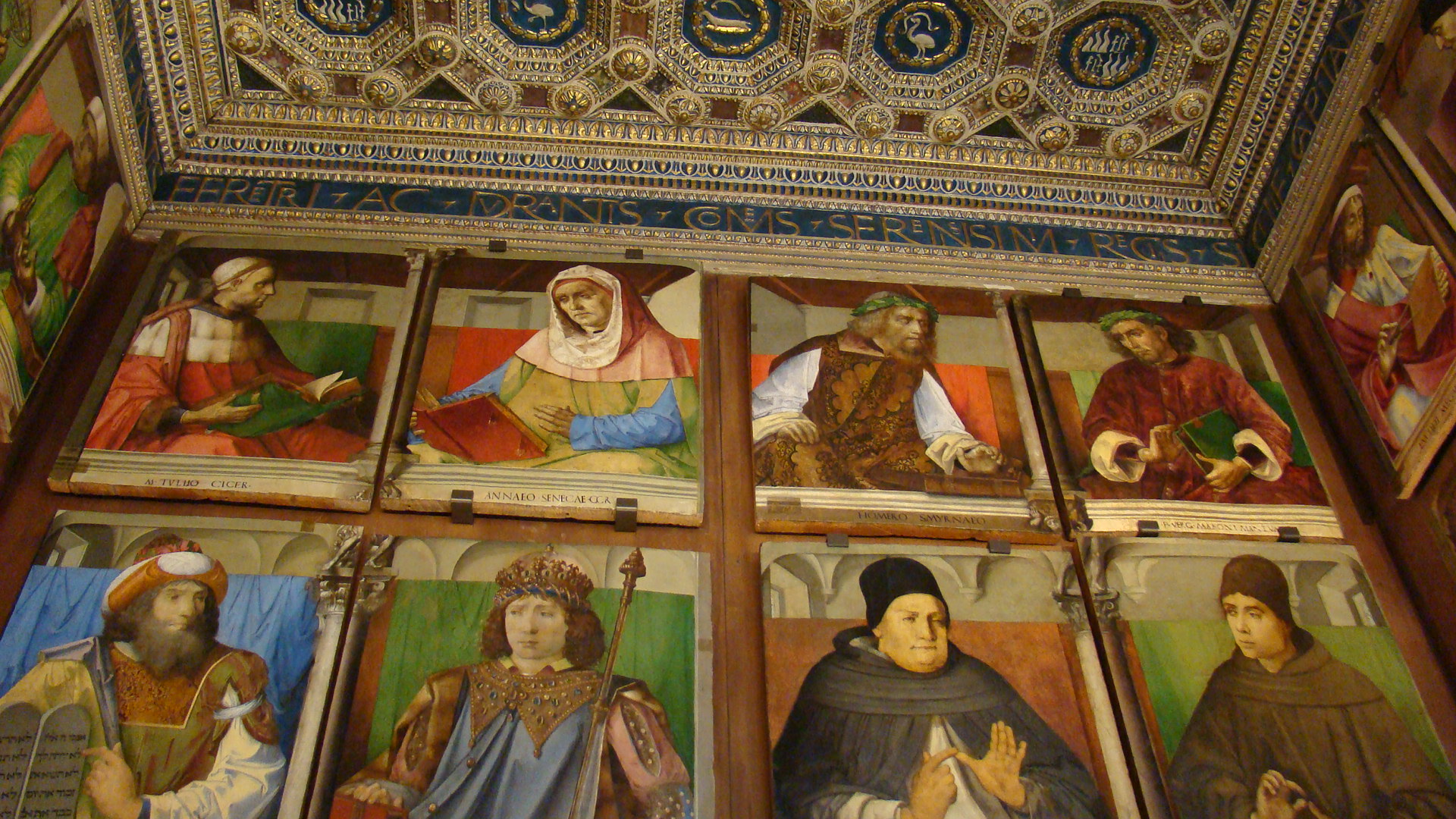
This is the ceiling and walls in the same room above the inlays. All the walls are inlaid in wood. It was the Duke’s study. Very beautiful

DSC04194

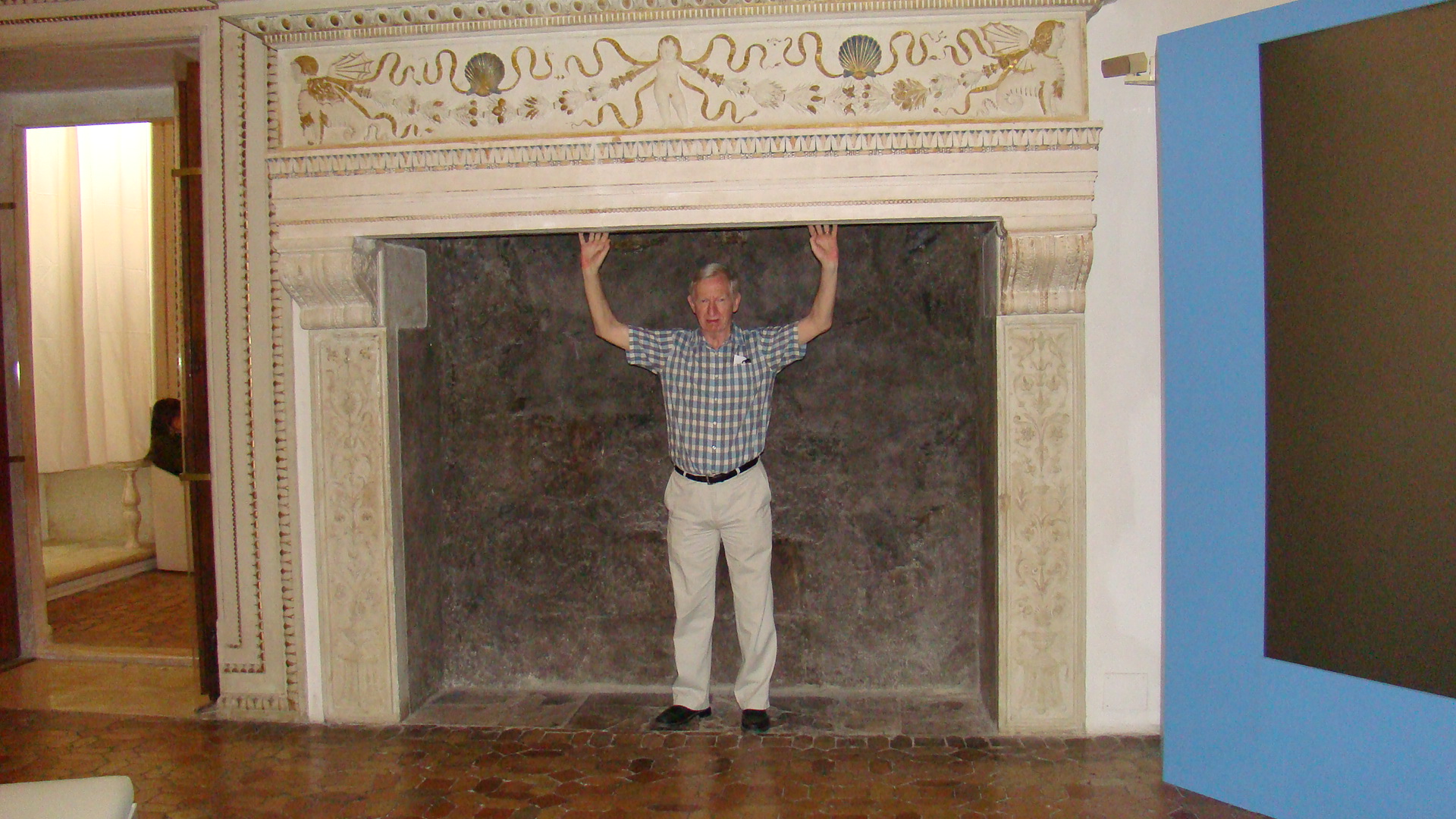
Luther standing in one of the gigantic fireplaces.

DSC04197

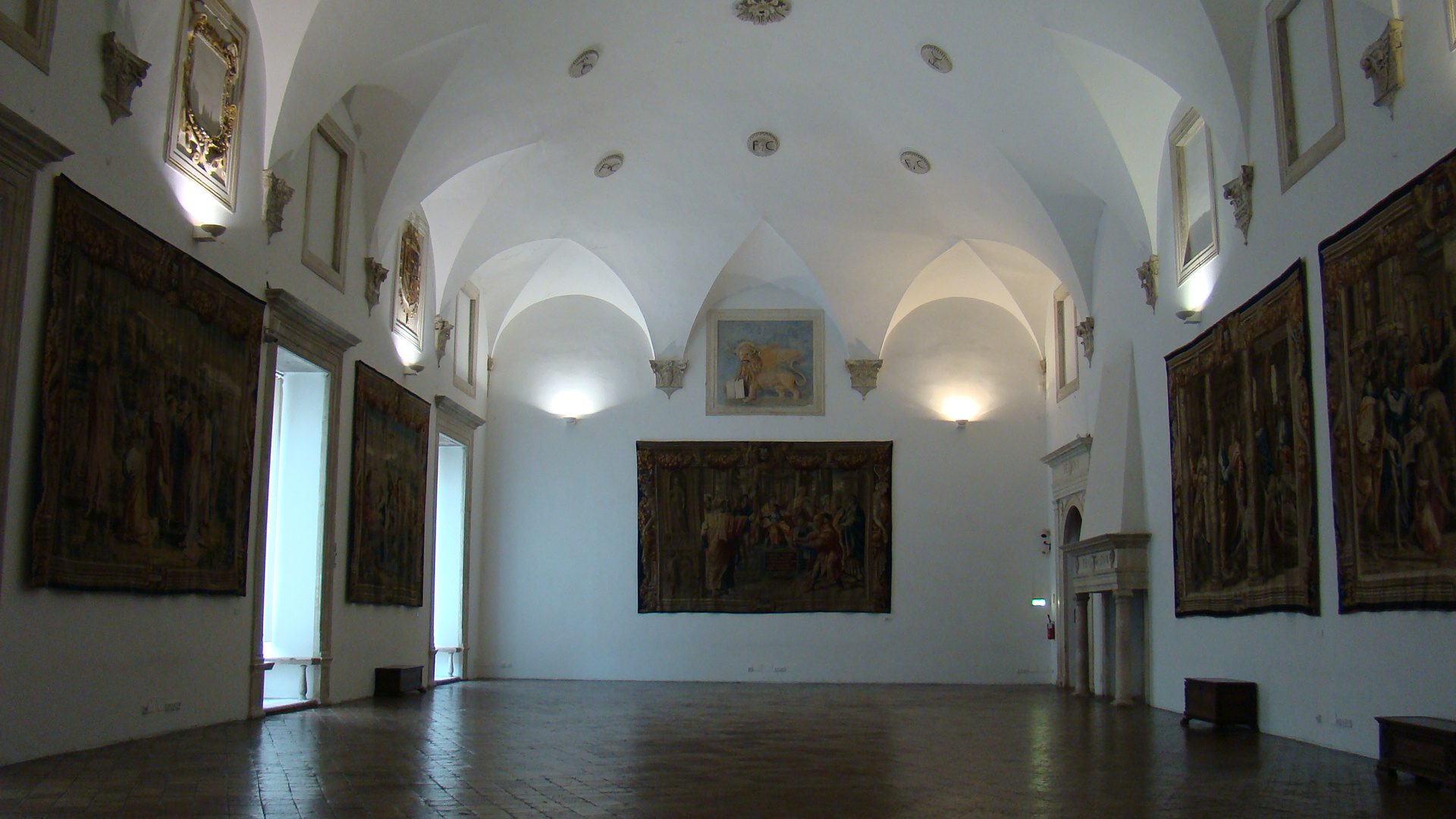
A huge reception room where the Duke did his work.

DSC04198

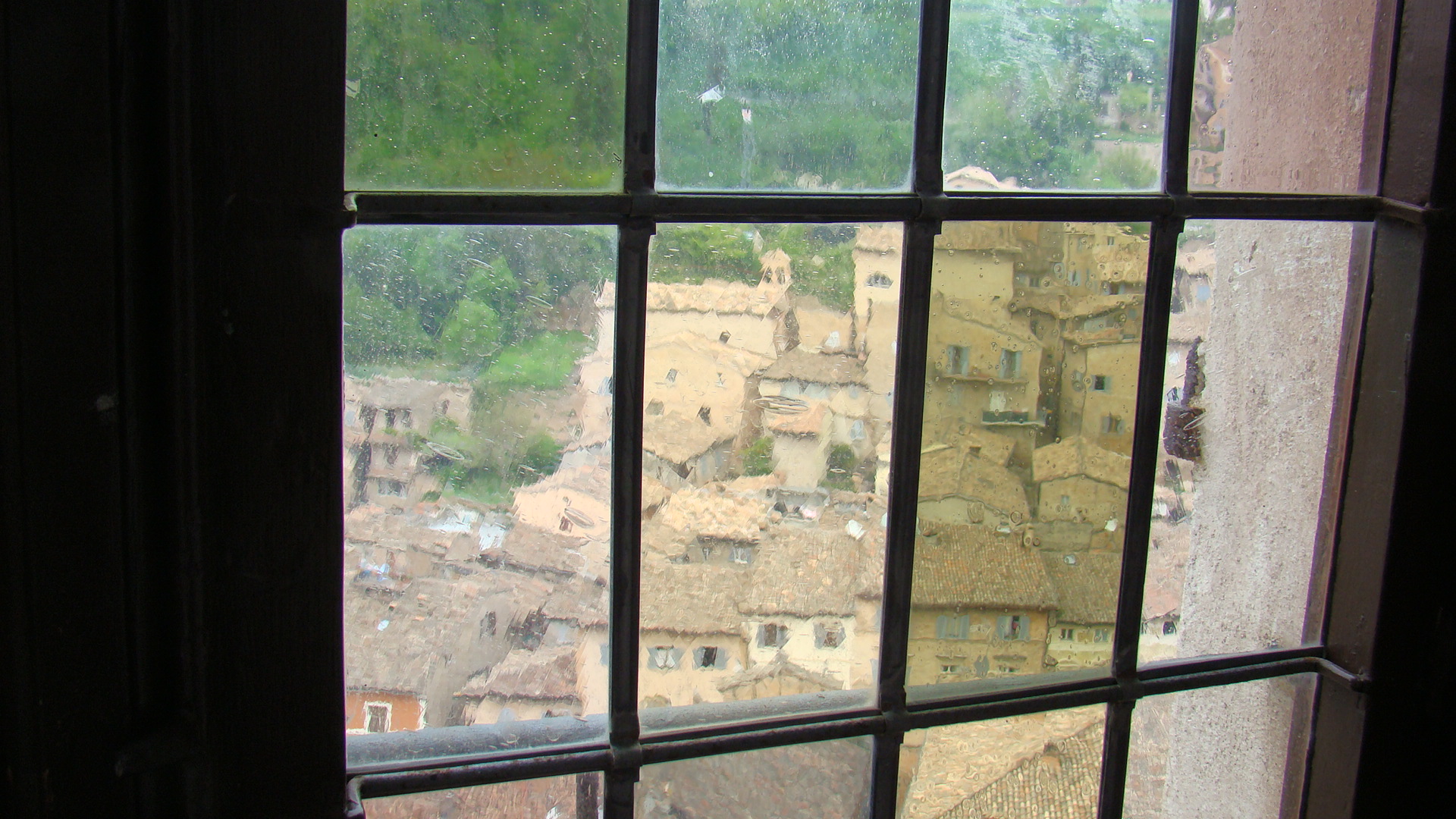
I loved the scene of lower Urbino viewed through a very old window with wavy glass. I thought it looked like a painting.

DSC04199

We left the palace and wandered the main Piazza. This is the student chapel; beautiful in it’s symmetry.

DSC04205

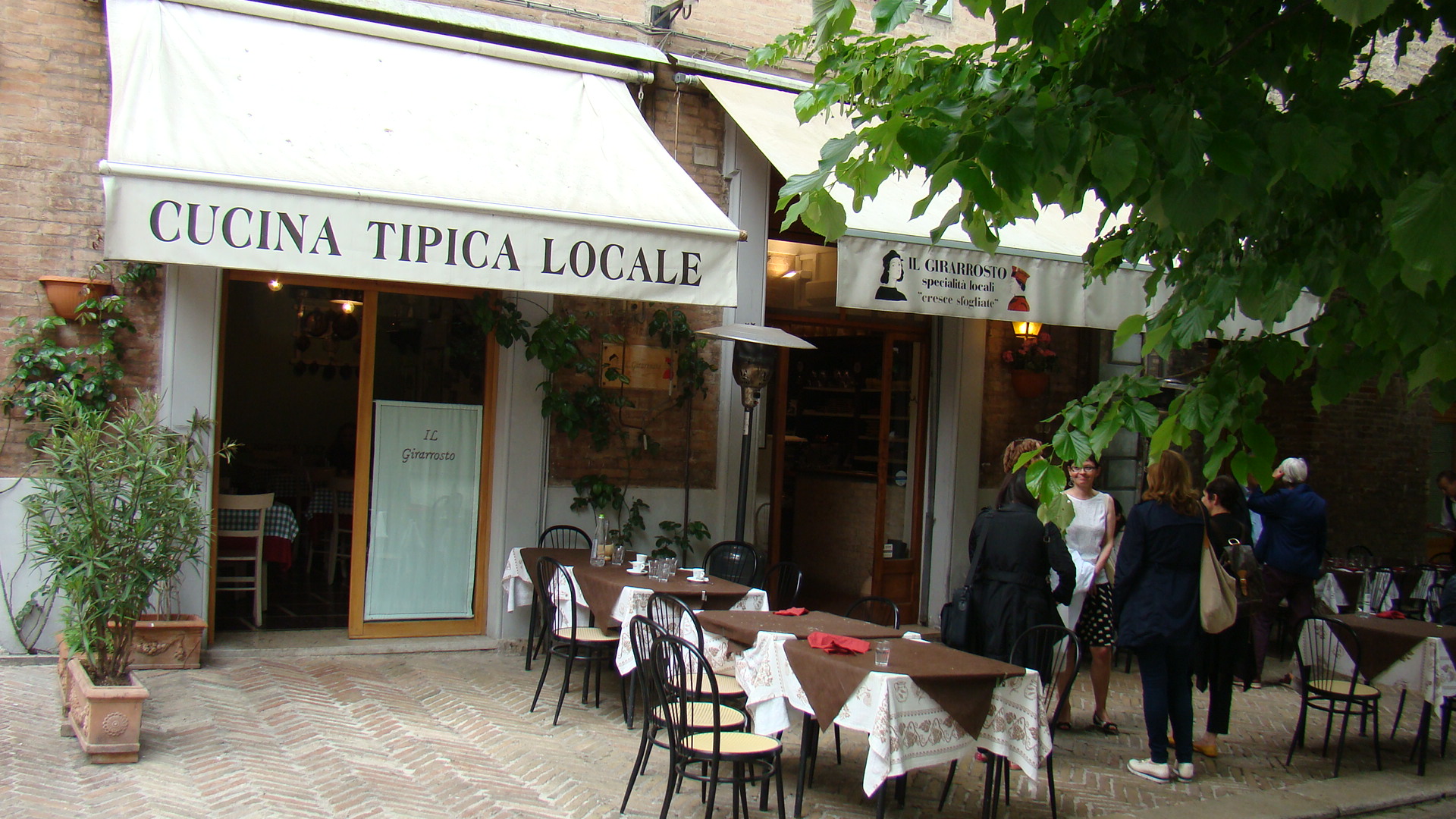
Now it was time for lunch. We had several places that we had researched but none worked out. We went to a place in the Piazza San Francesco in the center of town called Il Girarrosto. They had tables outside in the leafy, inviting square. Unfortunately we had to eat inside. It turned out to be just lovely. They made dishes of the region. We split a pasta with a local cheese that was very good. Different from Umbrian cheese. Kind of reminded me of cheddar. Then I had the grilled chicken diavalo and Luther had the beef. I went back to the facilities before we left and I was amazed at the large cooking fireplace that I had to pass on the way. So now I saw where our grilled meats were prepared. Here are two pictures. The top one is the fireplace. See the glowing coals at the back? It has an electric rotisserie and grilling racks over the coals they pull from the back. Other picture was taken outside. The weather was beautiful.

DSC04203 DSC04204

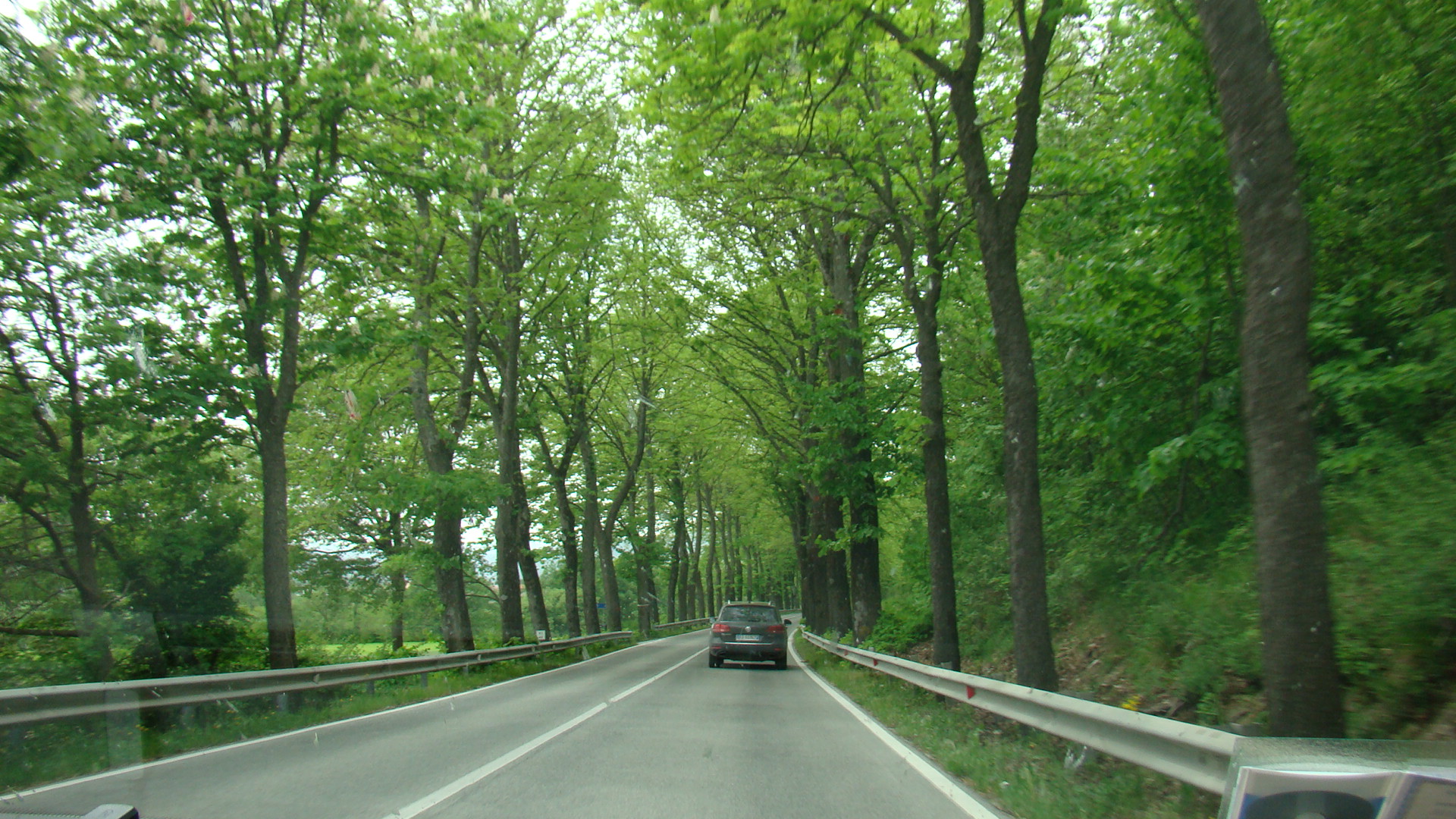
We drove back via a different route. It went north of the one we’d come over on through a lovely verdant valley and up up up into the mountains via a road full of switchbacks. There was hardly any traffic. We never came up on another car.

DSC04209 DSC04211

It came out in San Guistino north of Umbertide by about 20 miles or so. I liked that route better mainly because the southerly route is the main road. It is still mostly a two lane road and full of trucks all headed for the coast. A fun outing.