Category Archives: Umbria

Tasting the oil

On Saturday we drove over to Calagrana where Ely is being held hostage by her son who has broken out in Chicken Pox! She put some of the Olio Nuovo into two small tins for us to try.

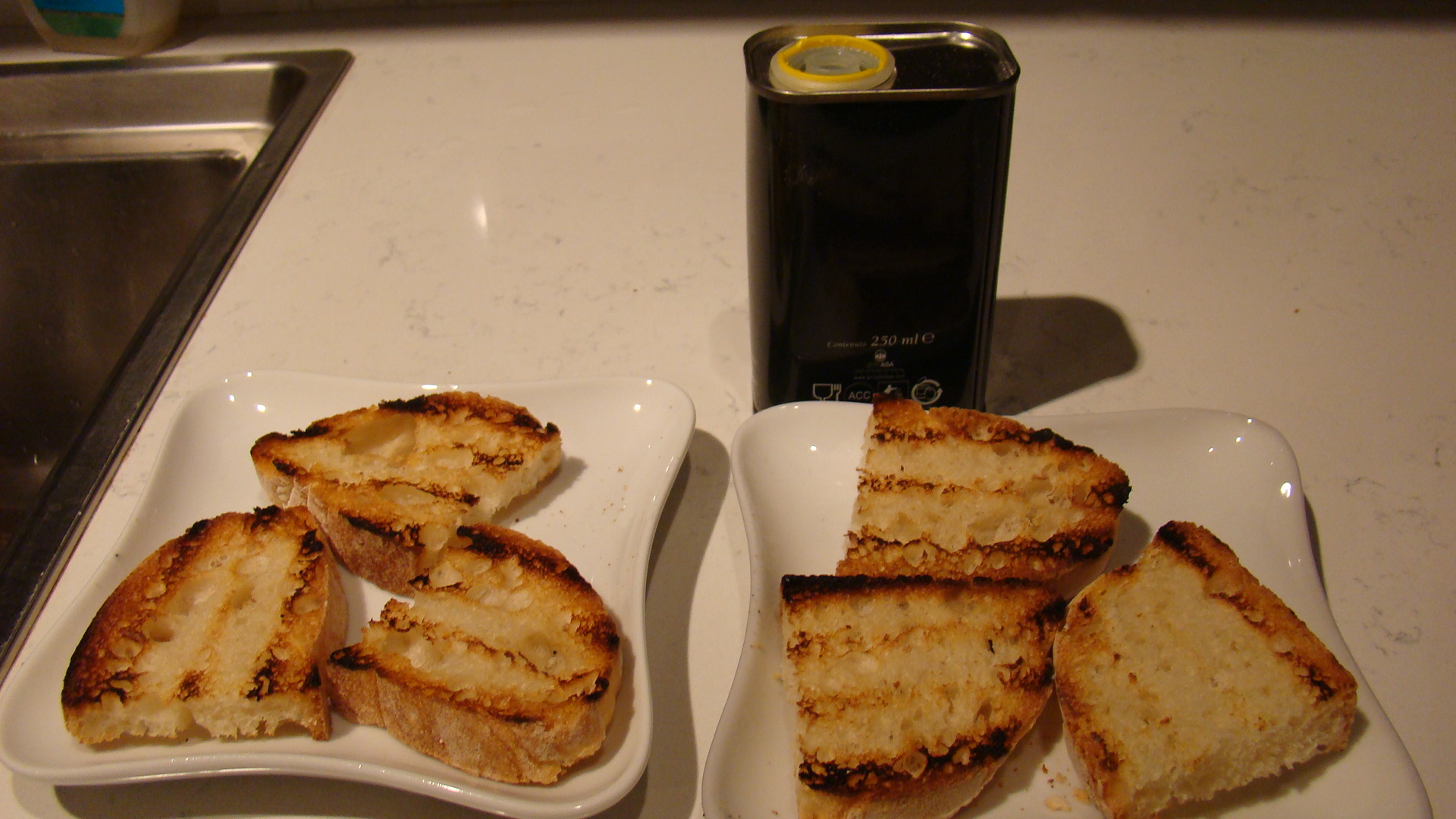
First I toasted the bread on the stovetop (wish I had had a fire to toast it over!) until it was nice and charred.
DSC05199

Next I drizzled the pretty green oil over it.DSC05200

My report. It was delizioso!! Peppery and acidic. Nothing like I have ever had in the U.S. Ely tells me it is best used for drizzling on bruschetta, soups, meats, or salads rather than using it for cooking.

We are enjoying a really, really beautiful November here. The temperatures are near 70F every day with bright blue skies. We are so lucky! It has been nothing like the last two years which, the locals say, were very uncommon.

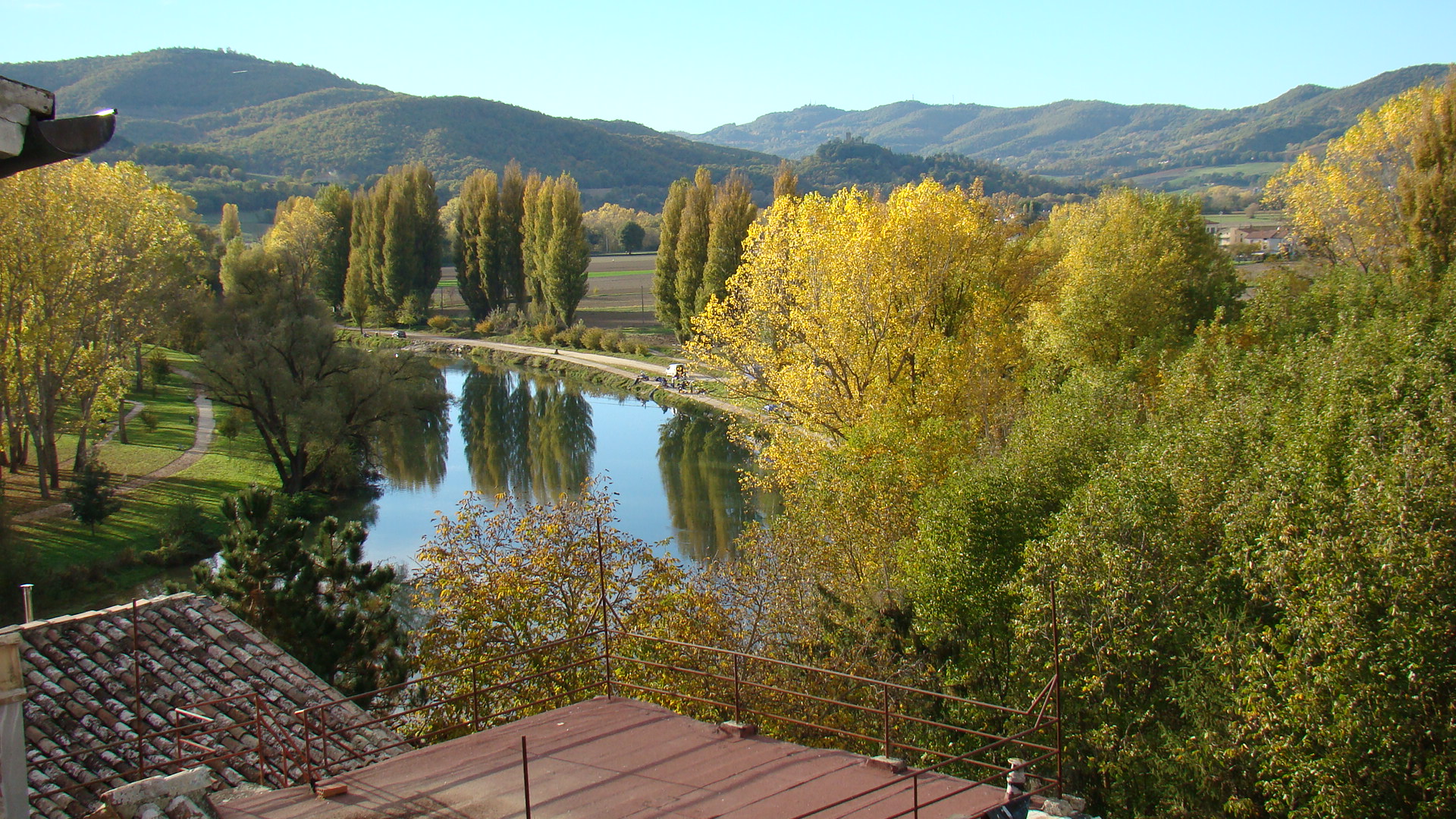
Here is the river with the changing trees.
DSC05192

Finishing the picking and our visit to the oil mill

What a day! We started out early to Calagrana to begin picking at 9AM. Ely had an appointment at the mill for between 2:00 and 2:30. There were seven trees left to pick. The crew was: us, Ely, Ely’s friend Catarina, one other woman and the gardener. We picked non-stop until around 1:00 when we were pretty well finished. We left Ely to load up two vans with the boxes of olives and we were to meet her and follow them down to the oil mill in Pierantonio, the next town down from Umbertide.

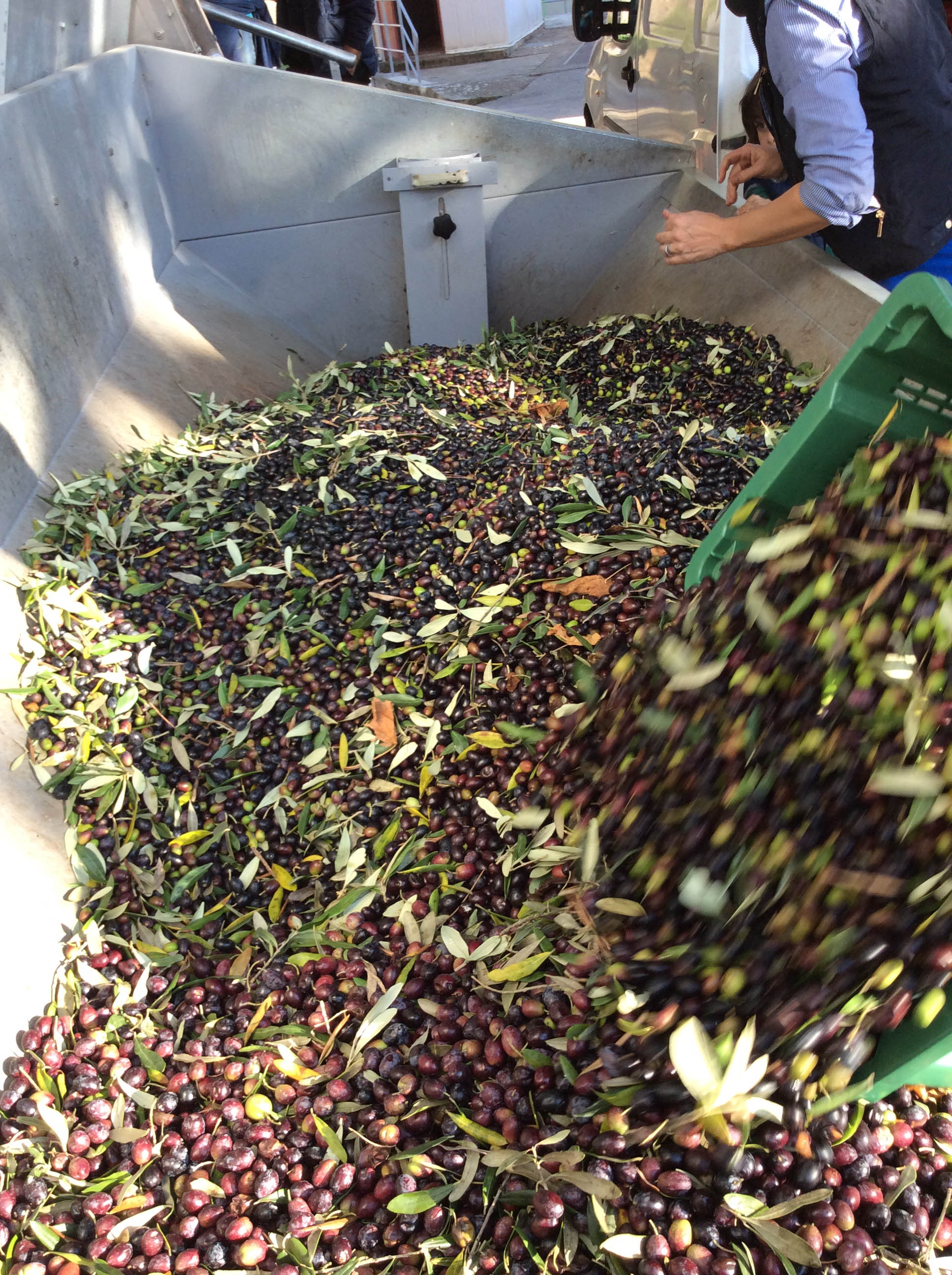
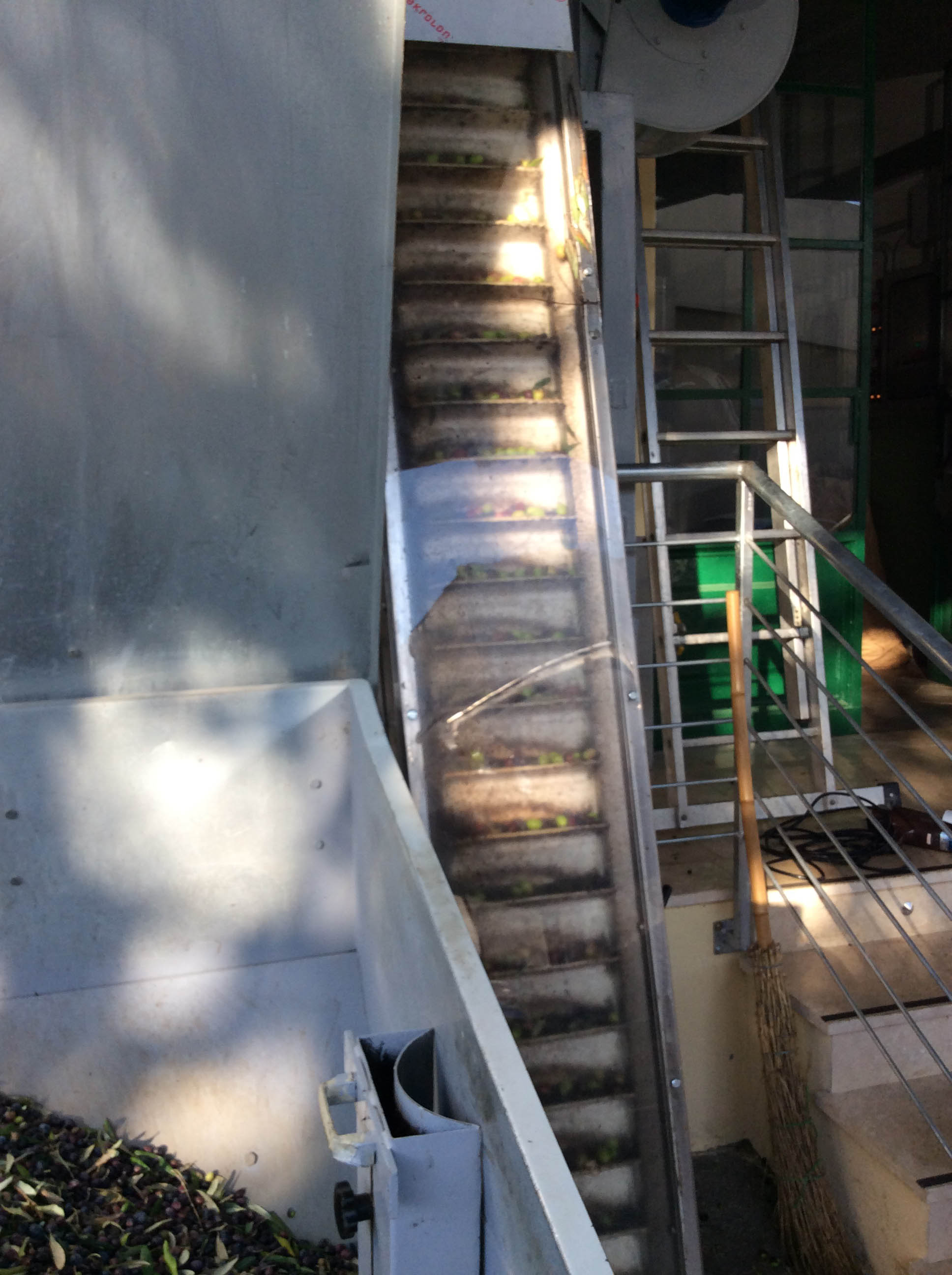
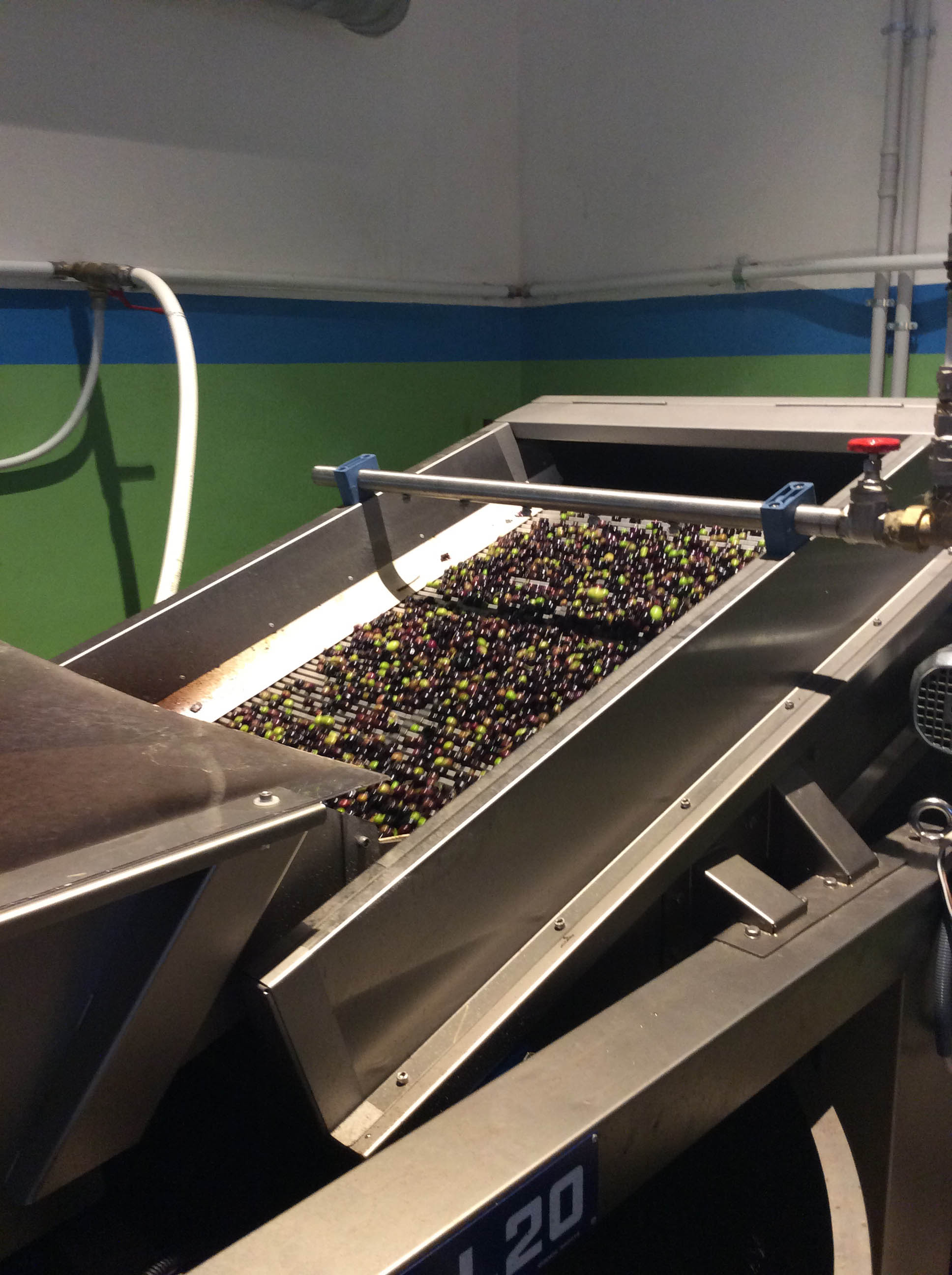
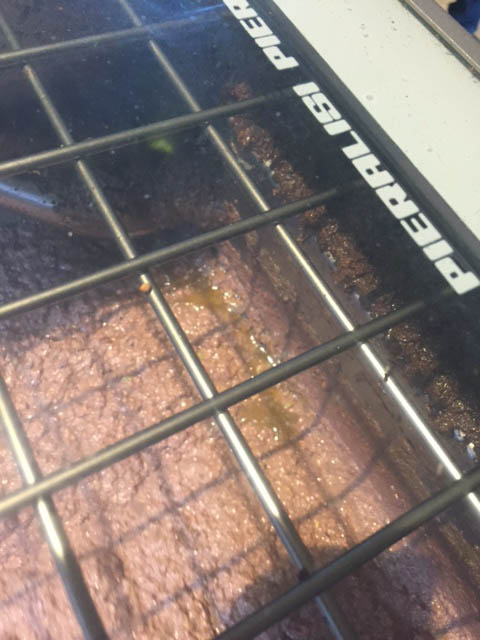
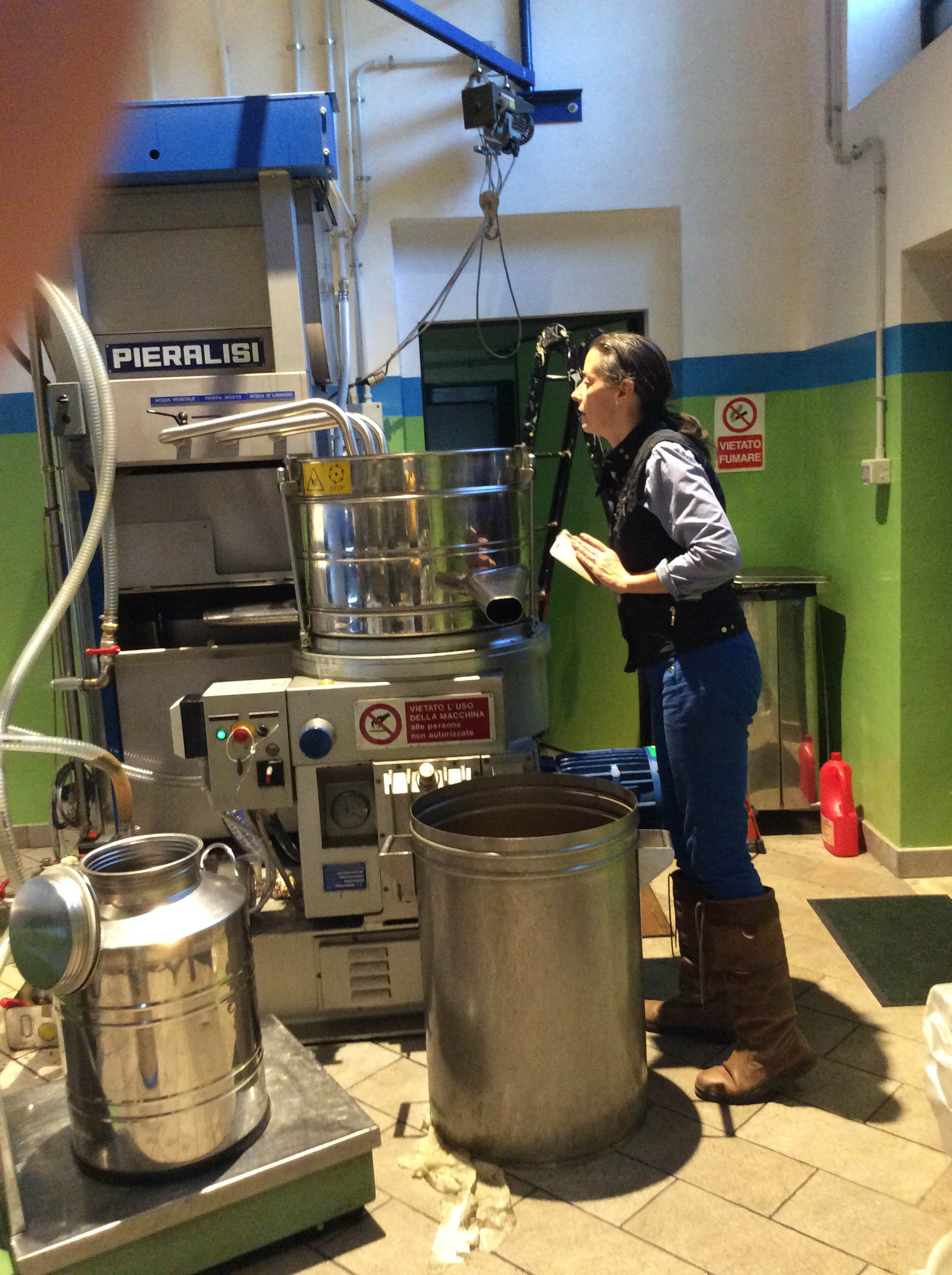
The mill was a busy place! It being all new to me I was fascinated. Ely and Catarina drove the vans onto the scale. They weighed them and then we unloaded the olives. Then they moved the vans back onto the scale to be weighed empty. Turns out we picked 700 kilos of olives! Next they load the olives into a giant vat and the olives are sucked down from the bottom where they climb a sort of ladder and blowers blast the leaves and stems away. Next they go into the washer and up a ramp and into the hoppers. There were essentially five hoppers so they could process five people’s olives at once, each in turn being finished into oil. In the hopper there were big, round blades that blended the olive paste for 45 minutes. While this was going on as each other hopper was ready they turned a handle and the paste drained out, under the floor, and was separated into the glop, the oil and the water. The oil then trickles out, through a filter and then into the containers.

It was fun watching the other people as they waited for their oil. Everyone was happy and smiling at everyone else. The olive harvest is a happy time! The work is done. The trees have done their work as have the harvesters. Happy customers carried heavy containers of oil to their vehicles. There was an amusing group of 5 “boys” (all looked to be in their 60s or 70s). They had a shared grove and they worked together to harvest it. Then they had to divide it up. It was amusing to see them watching that scale like hawks to be sure no one got more than anyone else!

The final numbers for Ely’s harvest were…700 kilos of olives, pressed into 88 liters of oil or about 12%. So 12% of the olives were oil and the rest – skins, pits and water. Ely was happy but not ecstatic. It was a good-ish year.

Here is the off-loading of the fruit from the vans into the big vat.
IMG_0038

The vat filled up with “our” olives.
IMG_0040

The ladder where the leaves are blown off.
IMG_0051

The washed, de-leafed and de-stemmed olives.
IMG_0058

The hopper full of our olive paste. This was after about 45 minutes. You can see the pooled up oil on the right of the container.
IMG_1990

Anticipation!
IMG_0079

Here it comes!
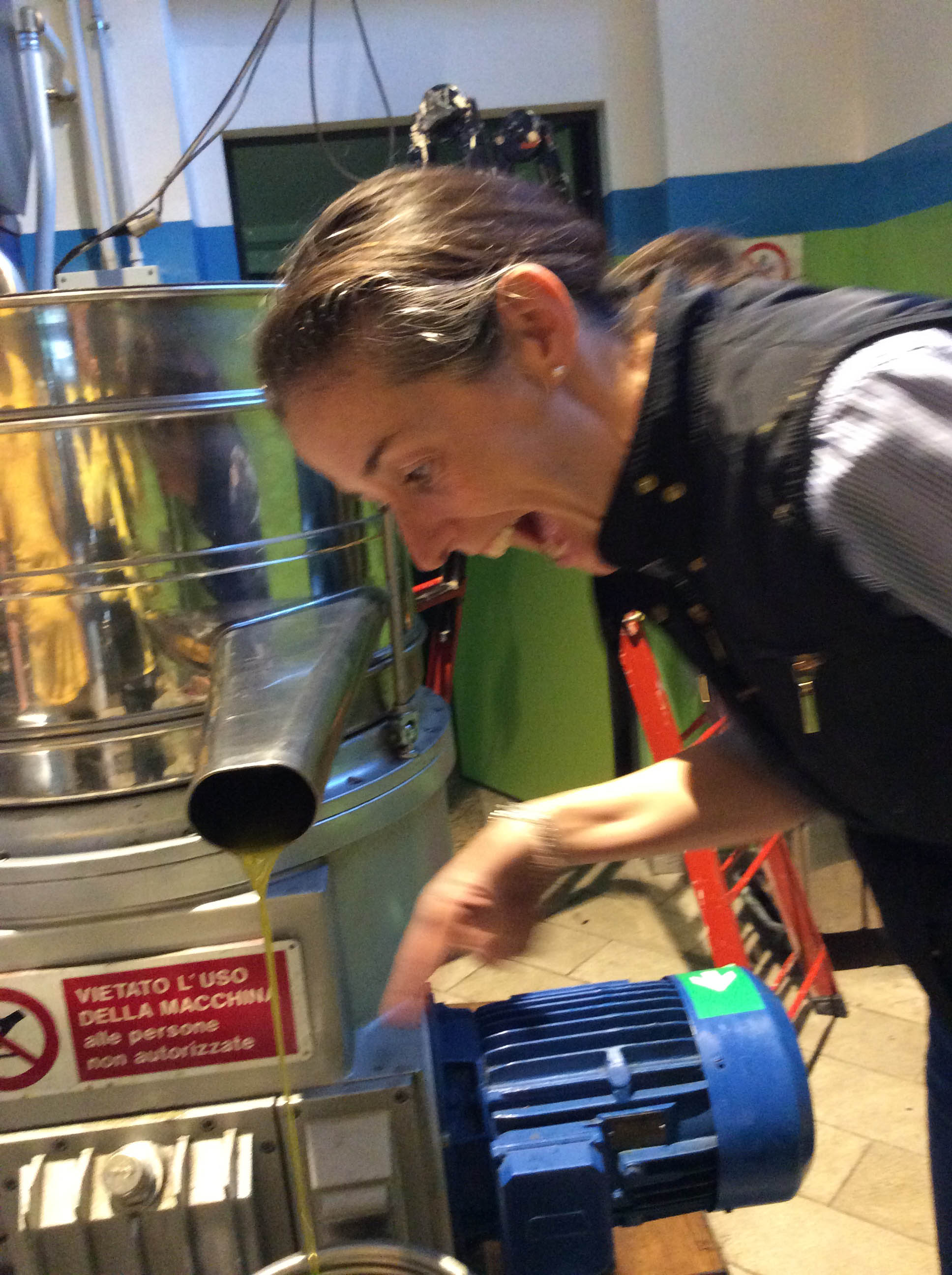
IMG_0089

Liquid gold. So fine!
IMG_0096

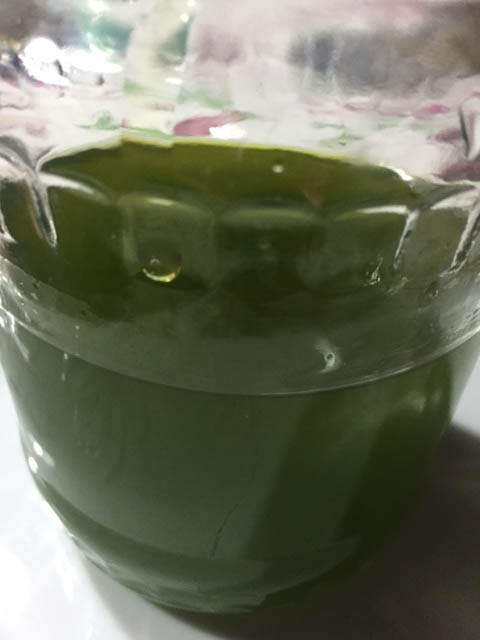
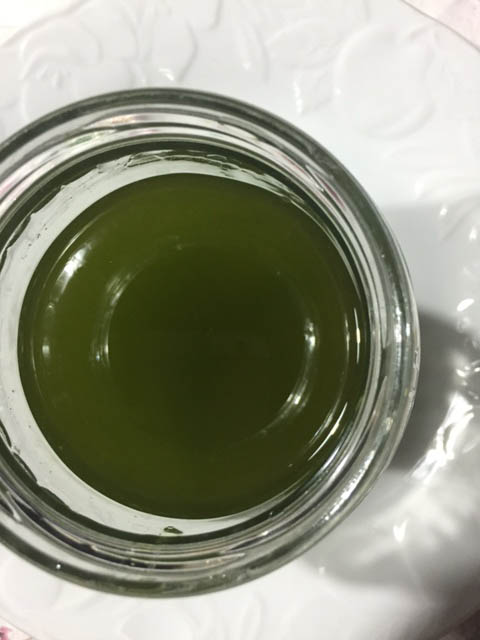
Finally, after Ely got home she drained a little into a glass jar for me. I will pick that up tomorrow and we will have some bruschetta. I’ll report on that next.
IMG_2014

IMG_2015

Helping with the harvest!

I was so excited to find out our friend who owns Calagrana was harvesting her olives and needed help. I had a couple of reservations as to whether I could hold up to the physical effort (not as young as I used to be!) but thought the opportunity was too good to pass up.

We didn’t leave Umbertide until around 11AM so they had been working a couple of hours. The olive grove is way up on top of the mountain spread out around a lovely casale (big farm house) owned by Ely’s English friend. Ely and Alberto tend to the trees and manage the harvest and production and share some of the oil with her. A win-win situation. She had a neighbor helping her plus a couple of other pickers and the gardeners of the grounds. Her neighbor had brought what Ely called a basher. It had long tines which vibrated in different directions. You lifted it up into the tree to get at the high branches and it shook the olives down.

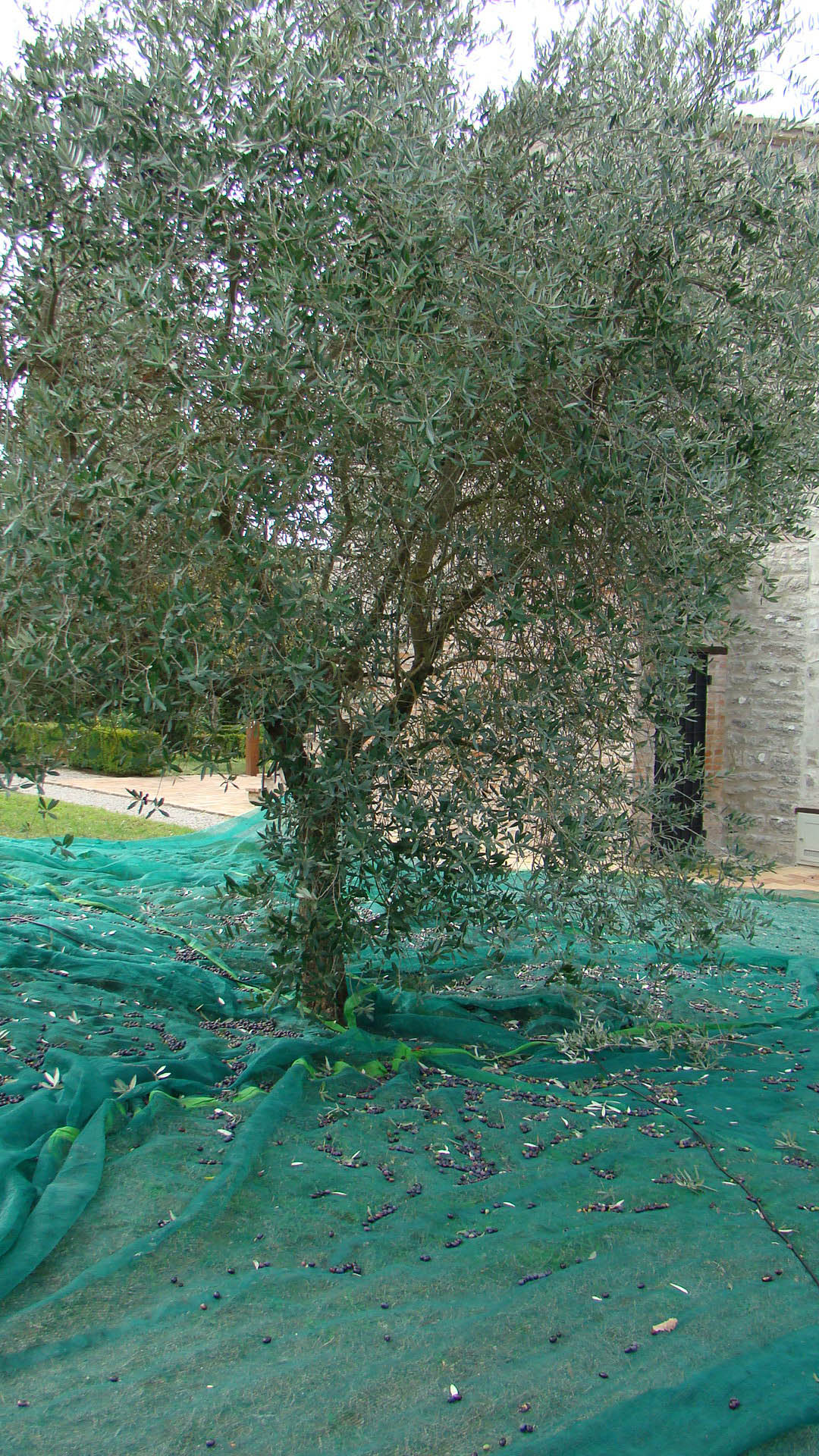
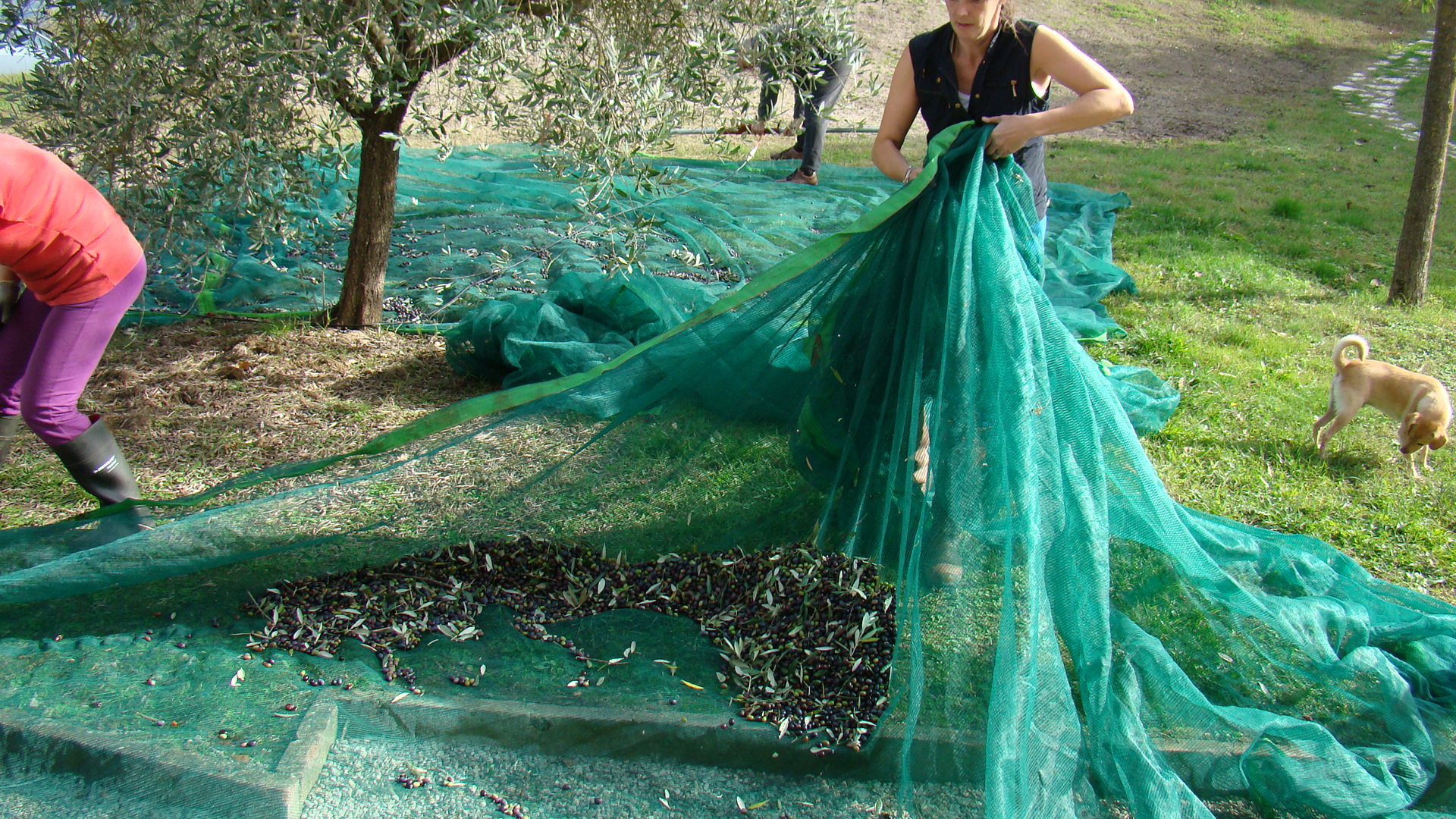
We helped spread the big, green nets to catch the olives and put up stakes to hold up the down-hill side so the olives wouldn’t roll off. We hand harvested the lower branches. There was a mixture of black, fully ripe ones and green ones. The mixture makes the oil more flavorful. We worked until about 1:30 and had to leave because my Italian class was at 2:30. Also we discovered that you must dress in layers as the morning is very cold and by noon it is hot in the sun while working (we were baking). Dress like an onion, Ely said. We told Ely we’d come back tomorrow (properly dressed this time) to help finish up and accompany the fruit to the mill for the crush. Here are some pictures:

Luther managing the nets.
DSC05187

Tree partly harvested.
DSC05186

You place the metal stakes at the downhill side to catch the rolling olives.
DSC05190

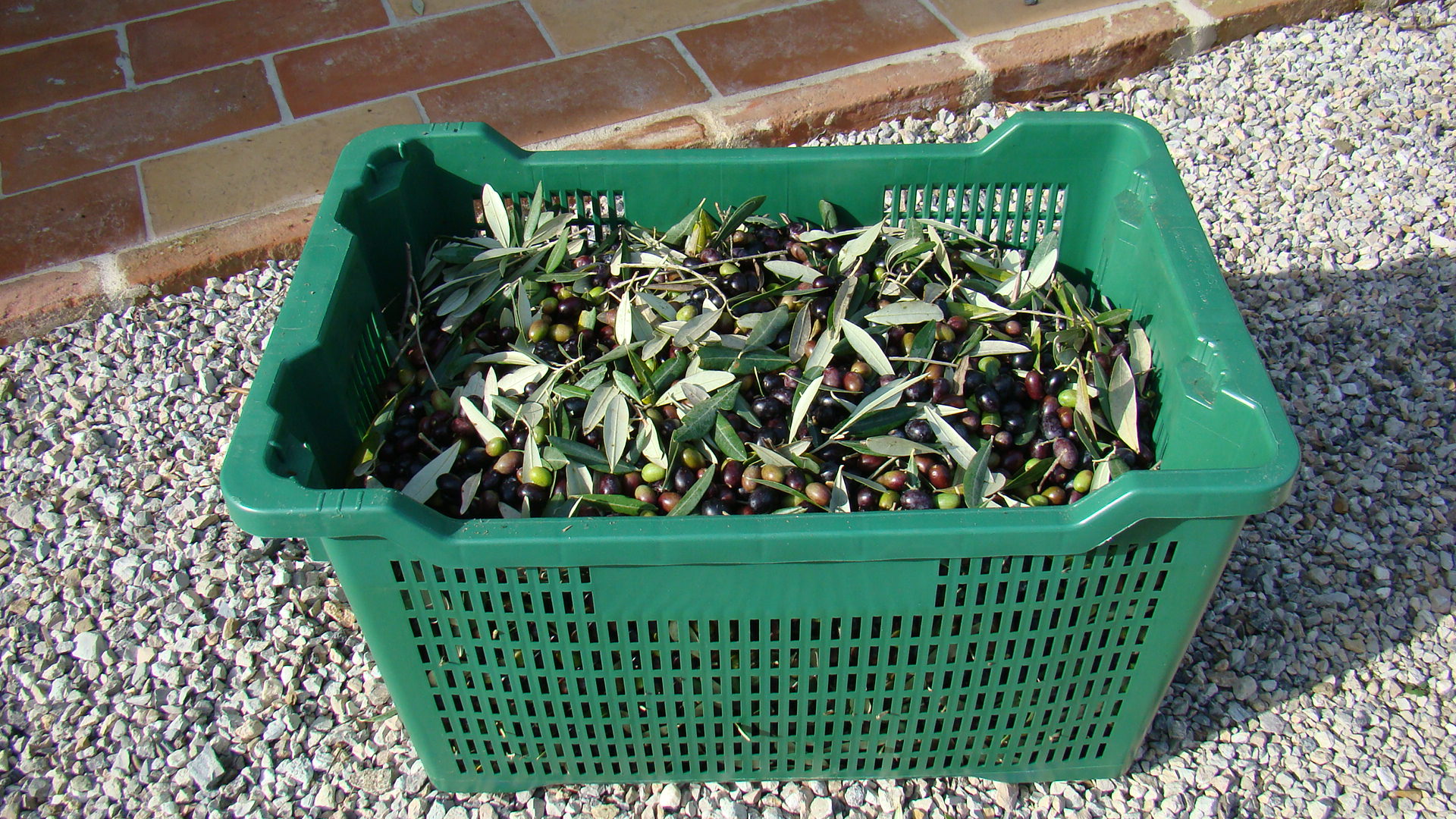
Bin full of olives. The leaves need to be mostly removed from the box.
DSC05189

After you knock them all off the nets are gathered and the olives are rolled into one spot, then dumped into the crates.
DSC05188

Olives ready to be harvested.
DSC05185

Ely and Luther hand picking while Catarina works the “basher” on the opposite side.
DSC05184

My visit to the Italian Dottoressa

Well I couldn’t put off visiting my doctor any longer so I steeled myself to do it last week. The way the Italian health care works is like this. You go to the Sanitario office at the beginning of each year. I wrote about that experience earlier this year in this blog. At this time they assign a doctor. I was assigned to a woman doctor who was an OB/GYN as well but she would be my primary care doctor. I had gotten her name from friends who had been through a lot of health care issues and had finally found her. We all speak some Italian but when dealing with something like your health you want to get it right. You don’t want to misunderstand.

I had looked my Dottoressa up on the internet and had her hours. Off I went. After a little trouble I found her office but her hours were completely different than the site said. Dutifully I wrote down the hours that were posted on the door. Rats. So yesterday I went back arriving just before the opening time to find several people there ahead of me. I noted my place and after about 30 minutes I went in. I introduced myself in my best Italian and then politely asked if she spoke English. And she did, and it was good. I had checked my blood pressure myself and it was somewhat high so this was my primary reason to go. She agreed to put me on some medicine for it. She commented that she had not seen me in any of the bars and did I only associate with other English speakers. I got the feeling she didn’t like the expat community. She said she would speak to me in English but if she met me somewhere else she would speak to me in Italian. Fair enough!

As we talked I was surprised at how, how to say it…maybe unprofessional… she was at least when compared to a US doctor. She asked if my husband came to her and I said no he went to a different doctor. When I told her his name she snorted in derision. I asked her if she did not like him and she replied, “have you met him?”  I don’t think a US doctor would do that to a colleague. We talked about her daughter who has several degrees. I commented that she should be proud. She talked about the person who headed the Umbria Sanitario office who had “only a high school degree!!” and SHE was trying to tell the doctors what to do, how to save money… I commented she must know people in high places. She replied she was F***ing everyone! OKAY then. So this was my first visit to the Dottoressa.

Weather is a-changing
Fall is here. The temperatures have been quite cool but nice. The morning fog is again enveloping the big city. It usually burns off by mid-morning. The farmers are bringing in the biggest cash crop around here right now – tobacco. Everywhere are tractors with trailers full of the bright yellow leaves. Sprinkled throughout the countryside are tobacco drying buildings with ovens to partially dry the leaves before shipping to the big tobacco companies. Umbria is famous for it’s tobacco, primarily for cigarettes.

The sunflower fields are now just stubble. The corn is mostly harvested. And so are the grapes. It was purportedly a good year for the wine. Happy happy for the vintners after such a poor year in 2014. Next we hold our breath to see if the olive crop is OK this year. Last year it was devastated by an insect because the winter had been too warm to kill them off. Last year would have been my first olive harvest season. So I am eagerly looking forward to this years harvest and the production of the Olio Nuovo or New Oil. Umbrian oil is particularly peppery and grassy and brilliant green. So good on toasted bruschetta. Can’t wait.

Yesterday we had a gentleman named Marco come and take a look at our big fireplace in the kitchen. We are going to have him make glass and steel doors that fold back for it. He “said” he could get it to us by November. It is Italy after all…Our friend Vera just said to him “before Natale?” (Christmas) He laughed and said November! We shall see… Maybe I will be able to try it out this winter.

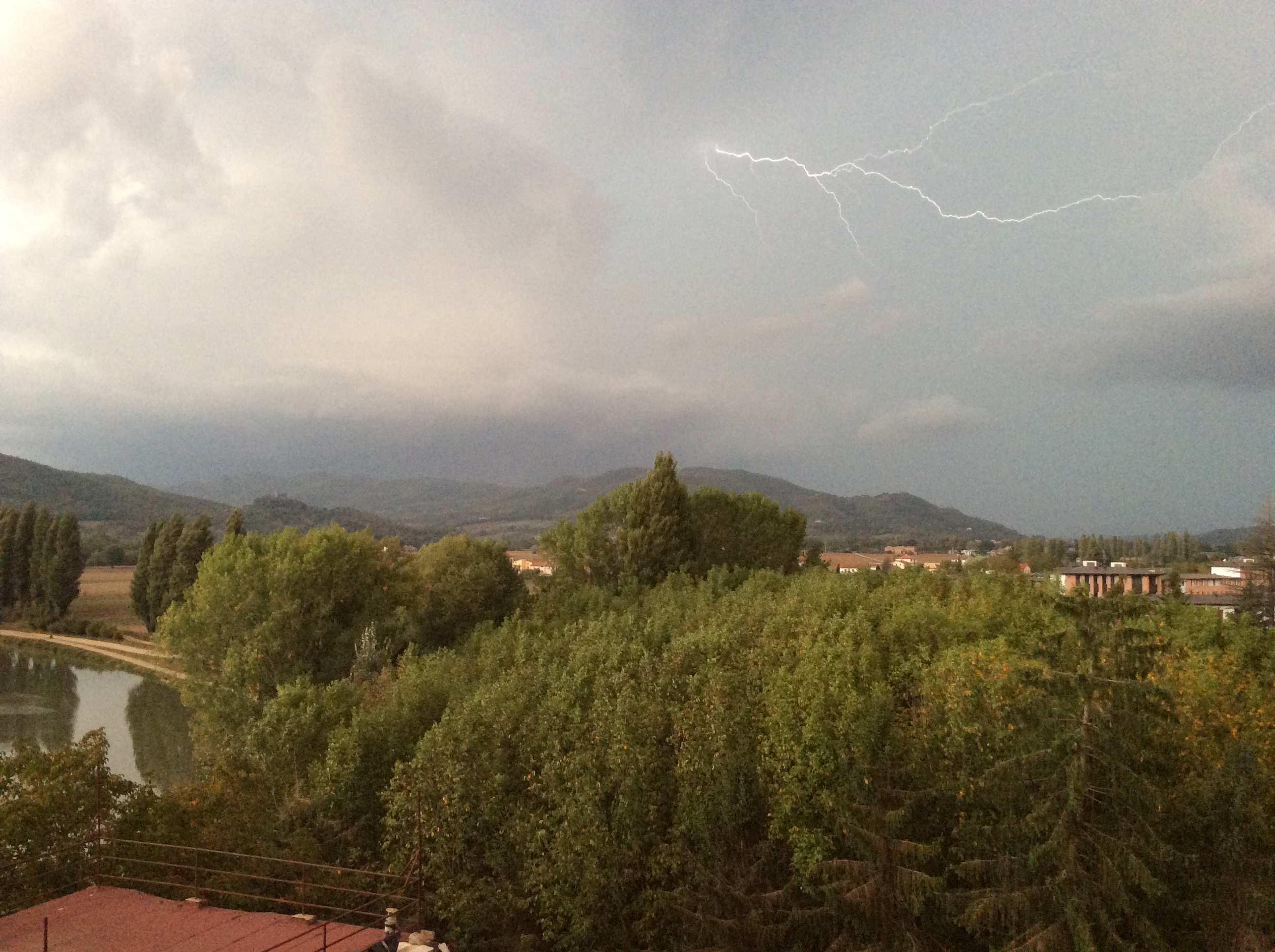
This week we have had a lot of storms rolling through. A lot of times they stay west of us, behind the mountains. The Tiber river tells the tale of what is happening up-stream. It is brown with mud and very high. I must have taken 100 pictures to get this one picture of the light show we were having.
IMG_0375

Another post from the Wine Guy! Romanelli Vineyards

Montepulciano was an interesting location, but it’s time to get back to Umbria. Today, we’re going to visit the Romanelli vineyards, which lies 1000 feet up on the Colle San Clemente, one of the northern slopes leading to Montefalco with a lovely view of Assisi and its surrounding hill towns in the distance.

Monte Subasio rising up behind Assisi.
IMG_0122

The cantina sits just above the vineyards abutting Montefalco in what appears on approach to be a neighborhood, but quickly turns into rolling fields of grapes and olive trees an you descend from the road into the property itself. For anyone wishing to follow our footsteps, I would recommend an excellent GPS–which we did not have–or good eyesight and luck. The signs to the vineyard are very small and seemingly placed at random. We required a quick trip into Montefalco for directions; fortunately the property is well known and we had no problems after that.

At the Romanelli cantina we were greeted by Devis(!), the Romanelli family member in charge of all matters related to wine. As you might imagine, we were rather struck by the name. It turns out that it was somewhat a fad in Montefalco some thirty years or so ago, and there are, in fact, three other men named Devis in Montefalco. Not bad for a town with 5,800 inhabitants!

IMG_0109

Having straightened out the matter of his name, Devis proceeded to give us an overview of the family and its property. The Romanellis have owned the property in Montefalco since 1978, when Davis’s father and grandfather purchased it and split it into olive trees (34 acres) and vines (16 acres). The vineyards themselves are somewhat sheltered from the prevailing winds by the hills themselves and are in a clay soil rich in lime. Today, the property is managed between Devis and Fabio, who handles the olive oil side of the business. Devis is quite the jack of all trades, handling the management of the vineyards, the winemaking tasks and sales.

We started our tasting with a Grechetto 2014. It was striking, exhibiting considerably more body and varietal character than we expected from the workhorse of the Umbrian whites. Its characteristic minerality was well balanced by a lightly floral bouquet and a touch of fruitiness that I found unusual. Given that 2014 was an unusually cool, wet year in Umbria, I was very interested in discussing the wine with Devis. He told me that the sheltered location of the vineyards protected them from the unusually wet weather last year and enabled him to harvest in late September, two to three weeks later than most vineyards bring in grechetto. In addition, the wine underwnt a long, slow fermentation at 15 degrees Centigrade followed by six months in stainless steel tanks. The wine undergoes a further two months of repose after bottling to bring out the maximum from the Grechetto. A hit, this one.

grechetto dei colli martani

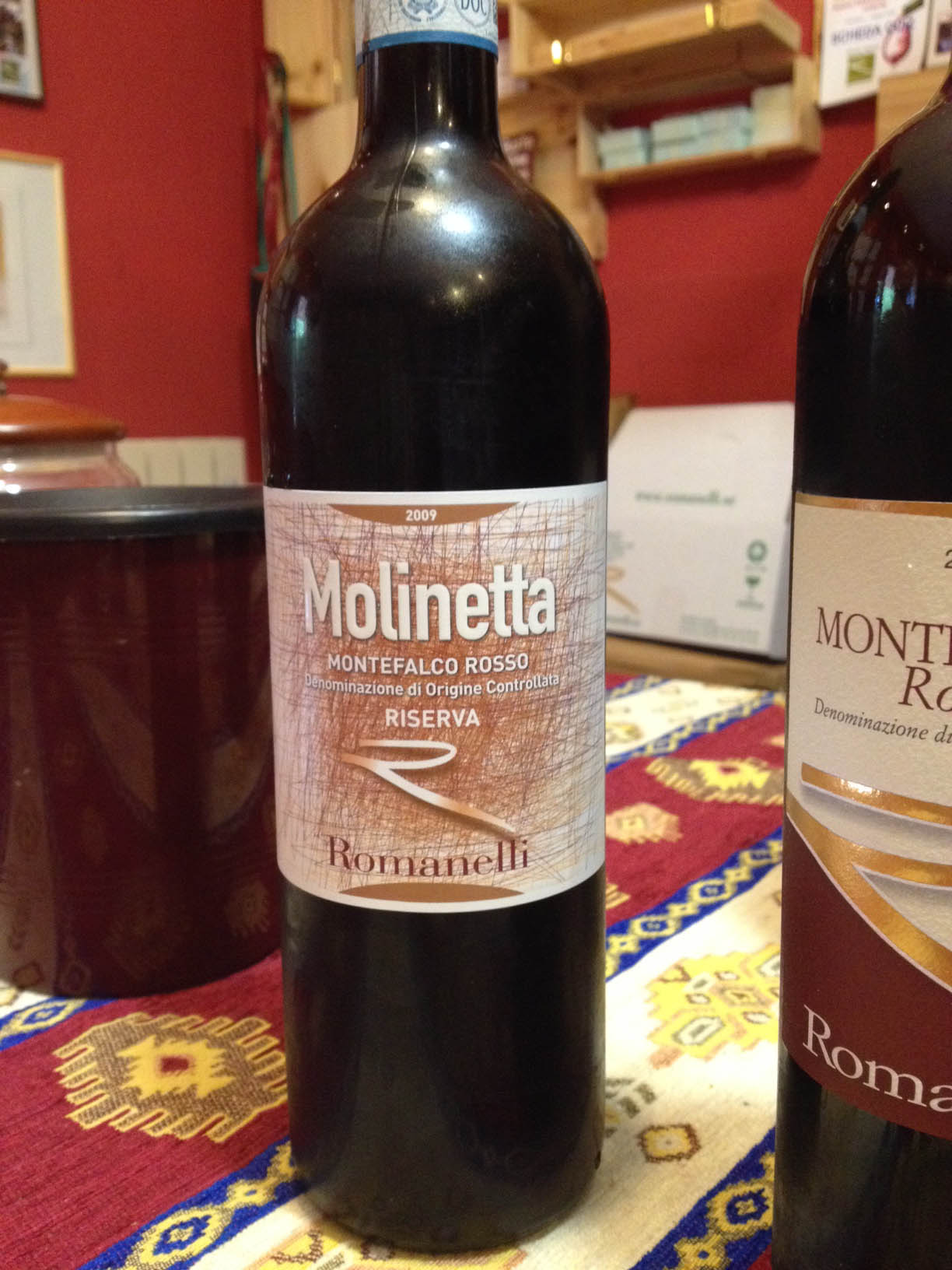
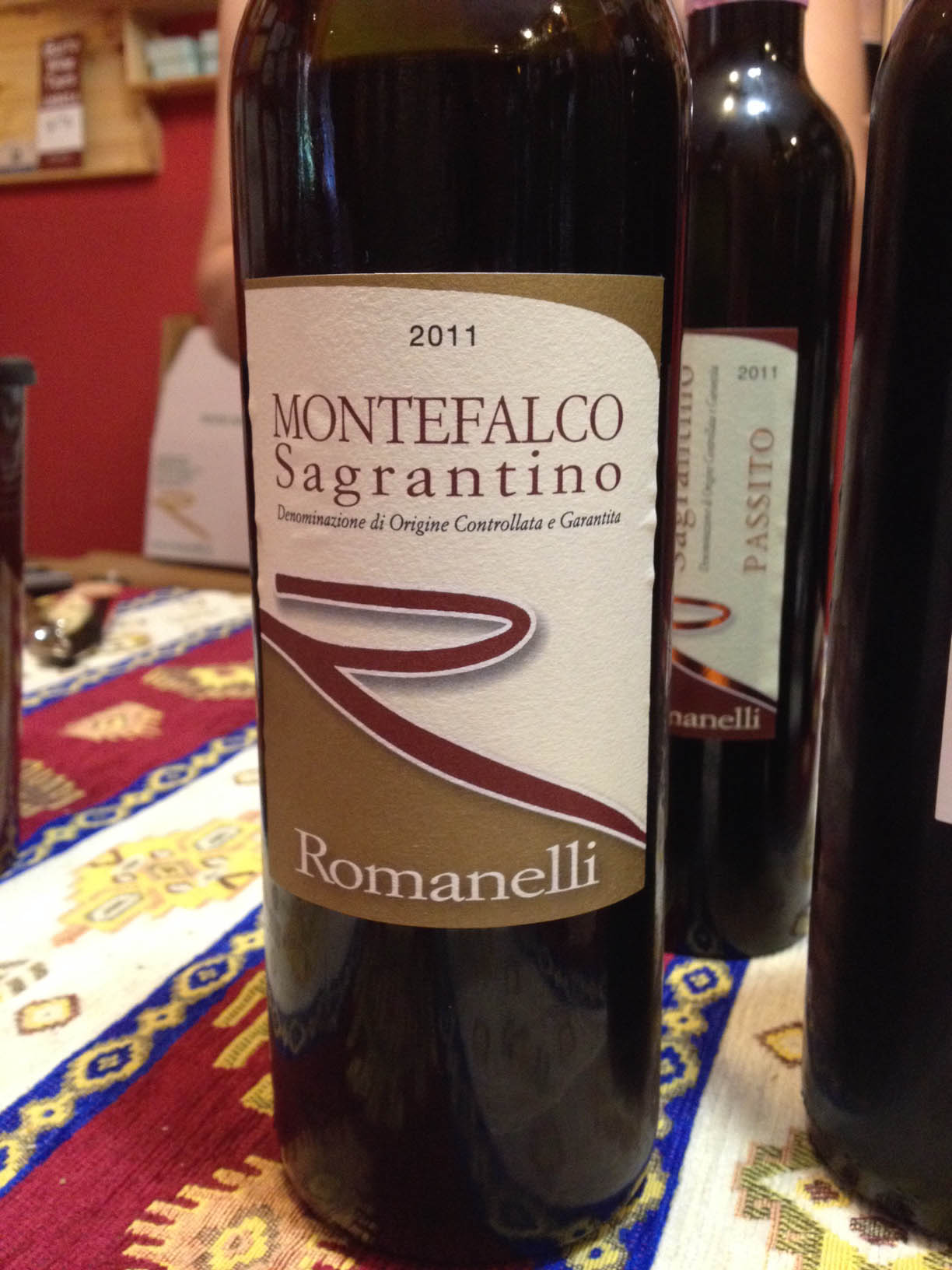
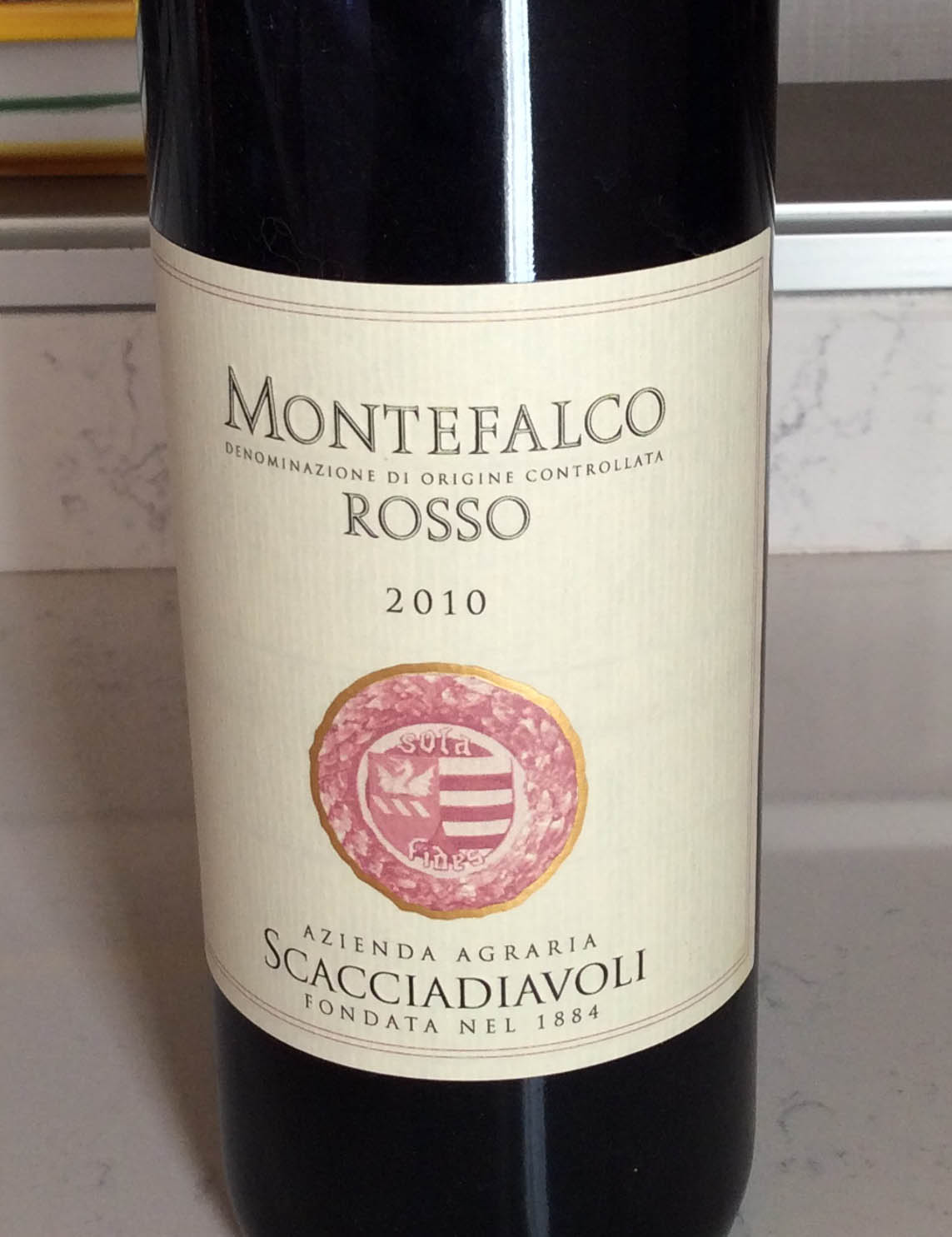
Now it was time for the reds (Romanelli, like most producers around Montefalco, is largely dedicated to red wines). Devis first produced a Montefalco Rosso Riserva 2010. This Rosso, as with any DOCG Montefalco Rosso, is mostly Sangiovese (65%) and Sagrantino (15%), but also includes contributions of Merlot (10%) and Cabernet Sauvignon (10%). As with all his wines, the grapes in this one were harvested relatively late (mid to late October), given 45 days of maceration on the skins and plenty of barrel aging in both small (225 liter) and large (2500 liter) French oak barrels. This produces a monster Montefalco Rosso, by far the biggest I’ve ever tried. The fruitiness of the Sangiovese and the Merlot is exquisitely balanced by the somewhat more austere and tannic Cabernet and Sagrantino. It was very full in the mouth, with cherry notes, with a long, very smooth finish. Devis told me that because he prefers to extensively age his Montefalco Rossos, he produces only a Riserva. Instead of producing a regular Montefalco Rosso, which would require less aging, he prefers to produce a non-oaked wine for everyday drinking, called Predara, Sangiovese (80%) with Sagrantino (12%) and Merlot (8%). It sounds intriguing, but it was all gone. Something for later.

montefalco rosso

This being Montefalco, the 2010 Sagrantino was rolled out with considerable ceremony including changing the glasses, pouring a small bit of wine in each glass and spinning it in order to coat the inside and a bit of inhaling and sighing (It’s great to see the winemakers doing what they like). The Sagrantino used in this wine is hand-selected from the entire crop, the rest going to the Montefalco Rosso (also hand-selected) and the Predara. As with his other wines, this one received extensive maceration (45-60 days) on the skins to extract the maximum character to the wine, and then spent 18 months in a variety of large and small French oak barrels. After this aging process, the wine spent 10 months in the bottle before being released to the public. This, too, was a blockbuster. Tremendously perfumed, with an earthy, tobacco-like character underneath. The tannins have been tamed and the wine is possessed of a full body and roundness with fruity notes. The finish here was also excellent. I’m sure it could go longer in the bottle, but it’s drinking fabulously now.

montefalco sagrantino

We followed the Sagrantino up with its passito version. As you probably remember, passito is the traditional style of winemaking in Montefalco, where the grapes are laid out in a sheltered area and allowed to dry for several months, the wine being produced normally around Easter time after a short stay in oak barrels. The wine is usually made very dry, as was this one, and I can only compare it to a vintage–not a ruby or a tawny–port. It has a strong character of the grape, but almost no sweetness. I find it a bit too subtle, but the Umbrians love it and almost every producer makes one. If you’re interested, you’ll definitely have to come to Umbria to try this one. I don’t think much gets past the Umbrian border.

Devis rounded the tasting out with Romanelli’s 2013 olive oil on slices of toasted bread. Heavenly. The oil was a greenish-gold with a strong hint of straw and a vegetal note that was just right. Although Romanelli is justifiably well known for its wines, it is also a major, prize-winning producer of olive oil. The weather last year was so bad that the entire crop was wiped out. Devis assured us that this year, which has been hot and very dry, the prospects of an successful season are very high. Nancy was very enthused. She has already planned a visit for us in November, when the new oil comes out. Details at that time.

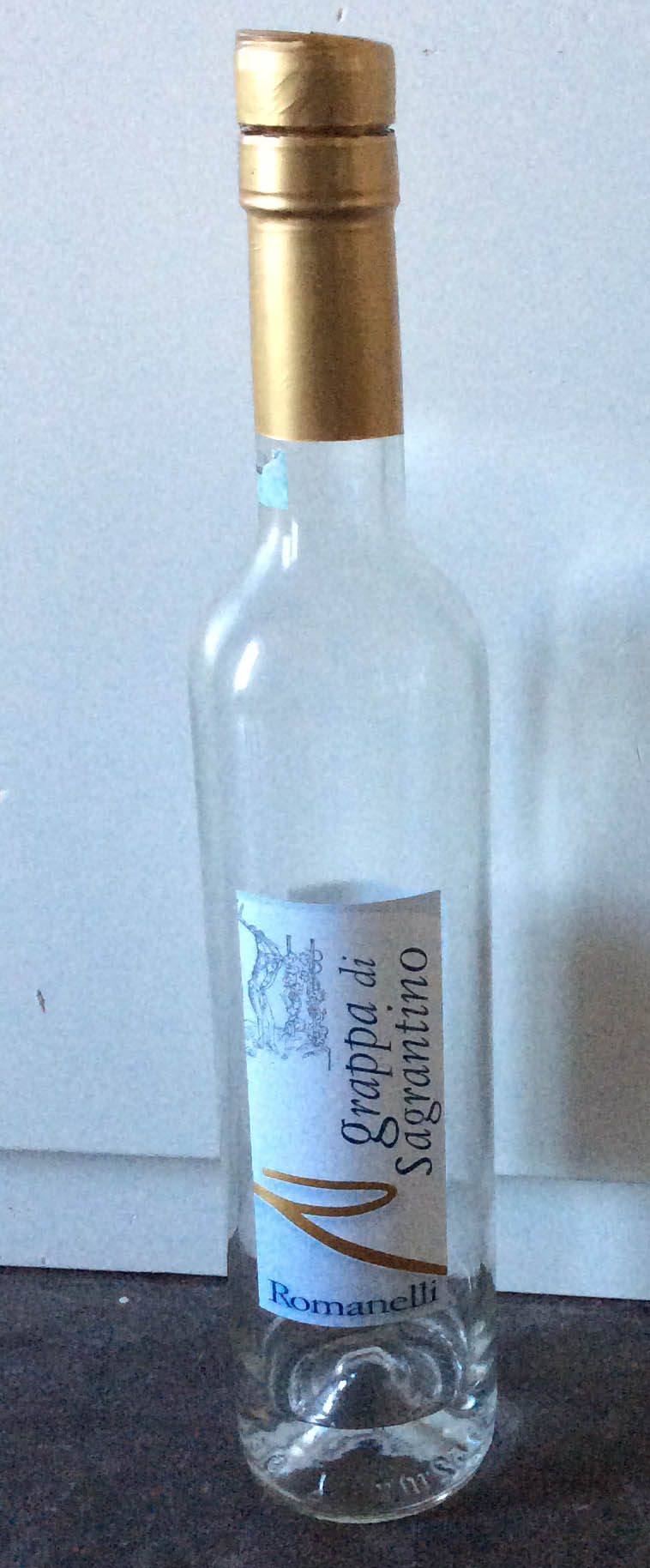
Finally, a short note for my grappa-loving friends. Romanetti makes a Grappa di Sagrantino that is one of the best grappas I have ever tasted. It was unusually smooth with a magnificent finish, completely lacking the sometimes oily character and schnapps-like bite that grappas can have. Grappa production by vineyards was hampered for many years by Italian laws forbidding winemakers to sell distilled spirits, effectively separating the wine business from anything to do with grappa. Those days are fortunately over now, and vineyards such as Romanelli are working hard to produce grappas of an equal quality to the wines they make. Lucky for us!

Almost all gone…
grappa di sagrantino

Rockin’ Umbertide

We saw our most recent guests off yesterday. Ron and Linda live in Florence. We picked them up at the train station. It was a spectacular day. We headed to Castiglione del Lago for lunch at the Monna Lisa restaurant. We sat outside. The food was good and we enjoyed watching the piazza. We headed back to Umbertide over the mountain pass above the lake.
DSC04792

The next day we went to Gubbio. Again a spectacular day. Ron and Linda travel by trains and busses and Gubbio is darn near impossible to reach that way. Here are a few pictures in Gubbio. It was such a perfect day I snapped quite a few.
DSC04797

DSC04796

DSC04793

DSC04802

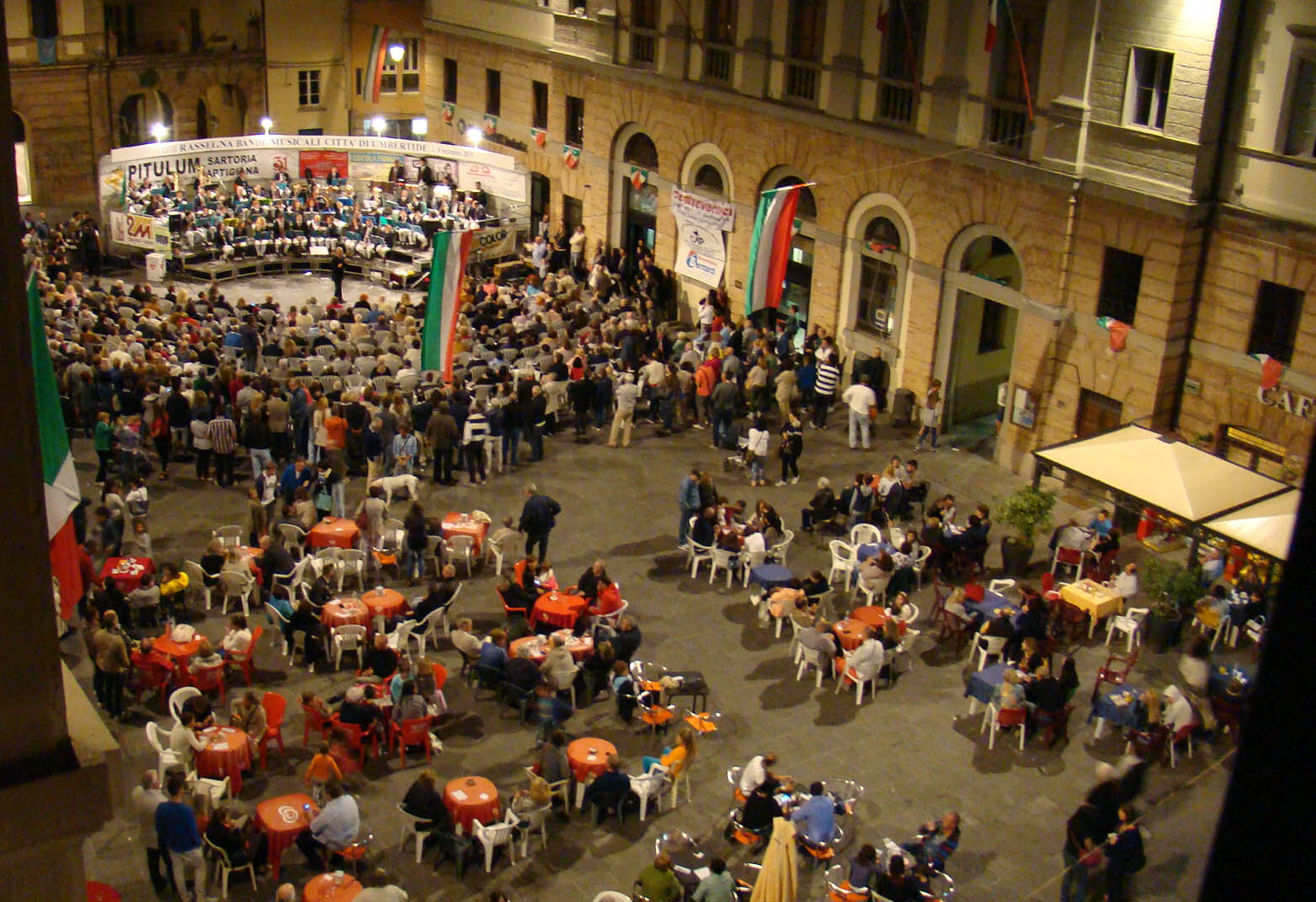
The night before our guests left we were treated to a concert.
DSC04807
Friday was the beginning of the annual Otto Cento celebration in Umbertide. (last year Otto Cento post) Preparations had begun…
DSC04813

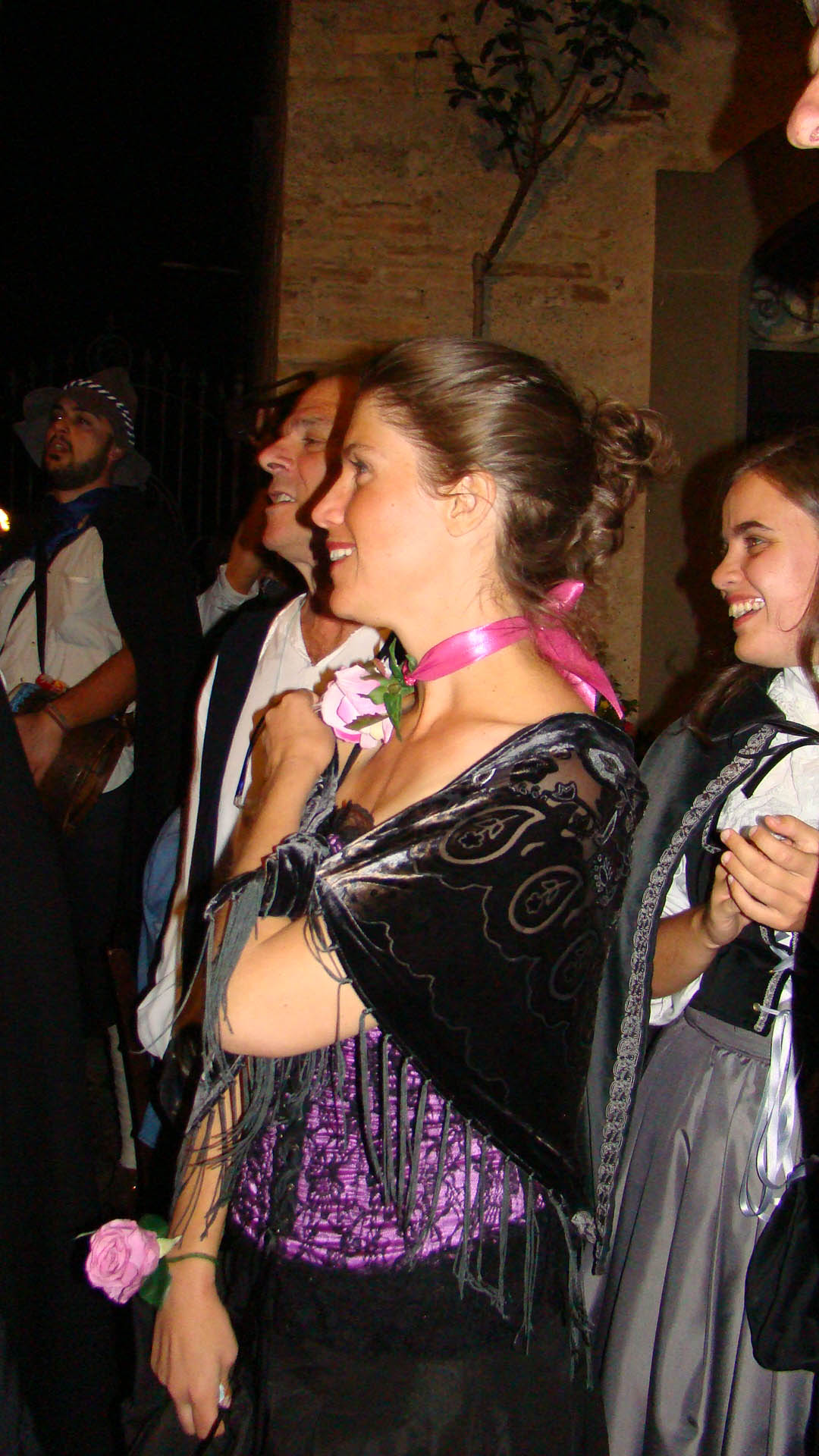
The town was really rocking last night! Our friend Michelle volunteered to be a “lady of the night” at the Bordello. She was cute in her bustier and flowers at her throat and wrists.
DSC04823

More to come… Otto Cento is four days long.
American guest

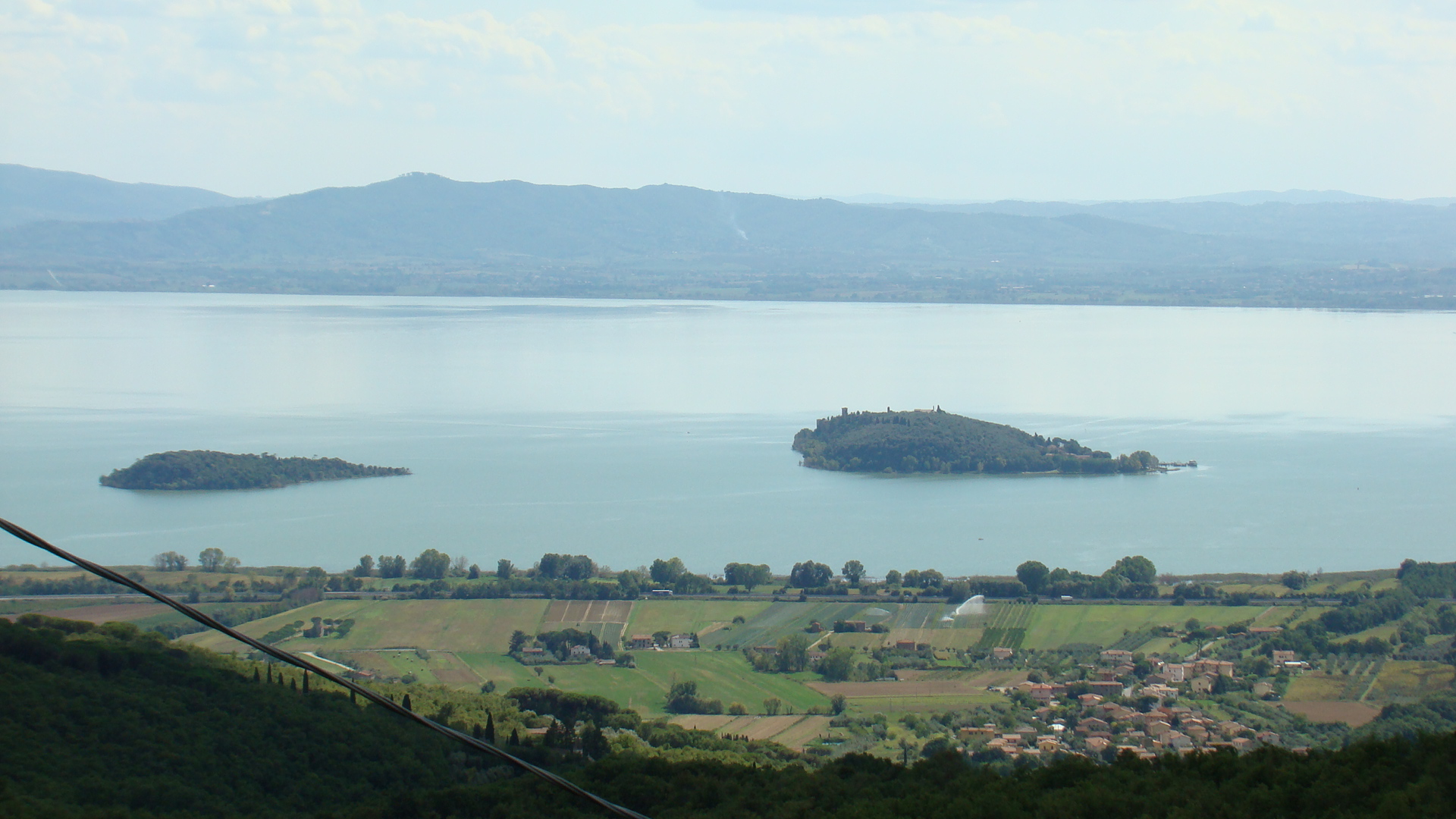
I know I have been quiet but we have had some company. His name is Gene and he stayed for about a week. We went to Assisi, Perugia, wine tasting and Bevagna for lunch and Luther took him by train to (very crowded) Florence. I am glad I opted out of the later! We also took a trip to Isola di Maggiori in Lago Trasemeno. This last was a first for us. We had been meaning to go for some time. It is a nice, down kind of day after a lot of climbing up and down hill-towns. We had lunch at Da Sauro on the porch. The food was not notable. Still a nice day trip

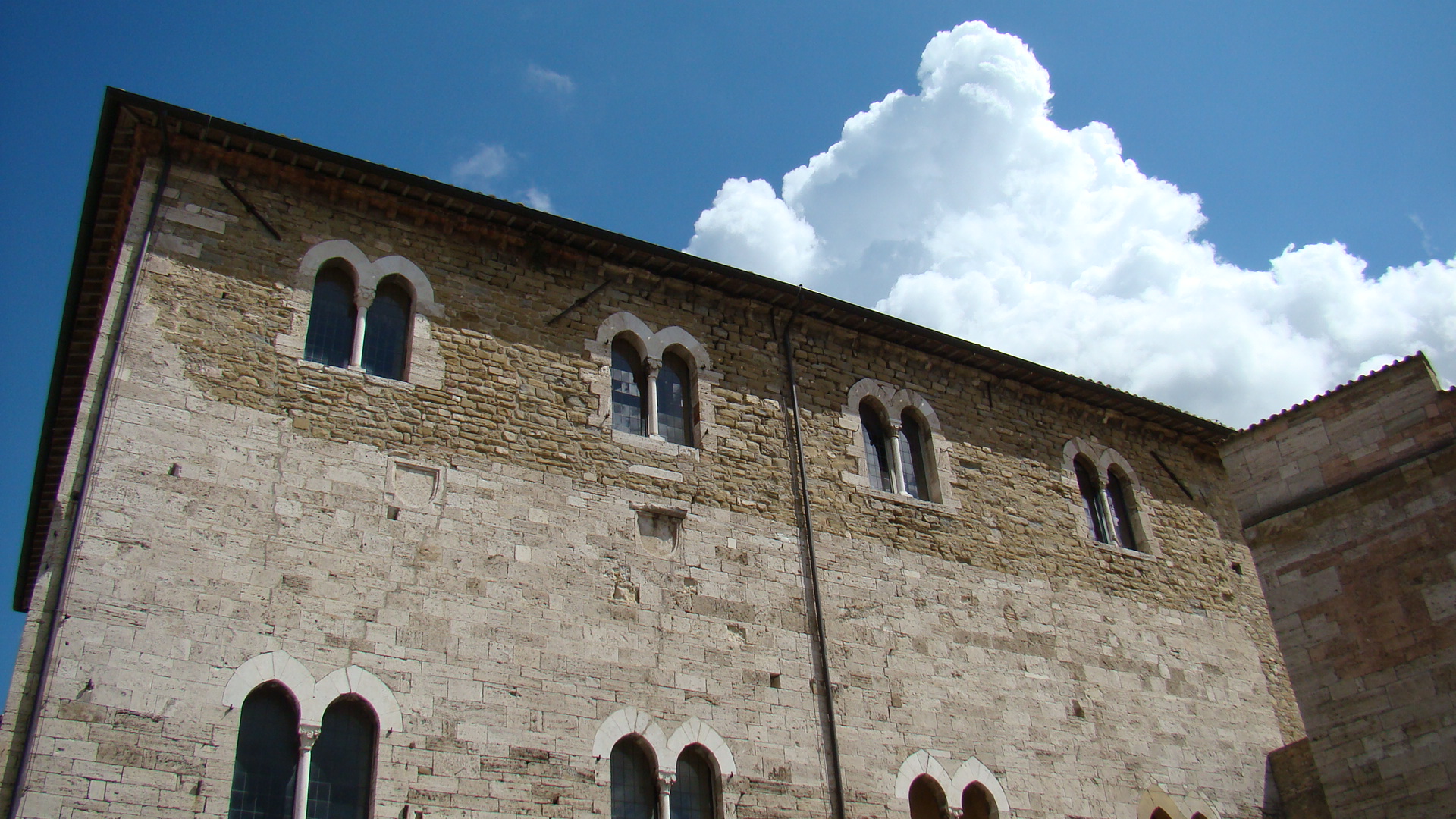
This is a picture of Bevagna. I was liking how blue the sky was and the big white cloud.
DSC04734

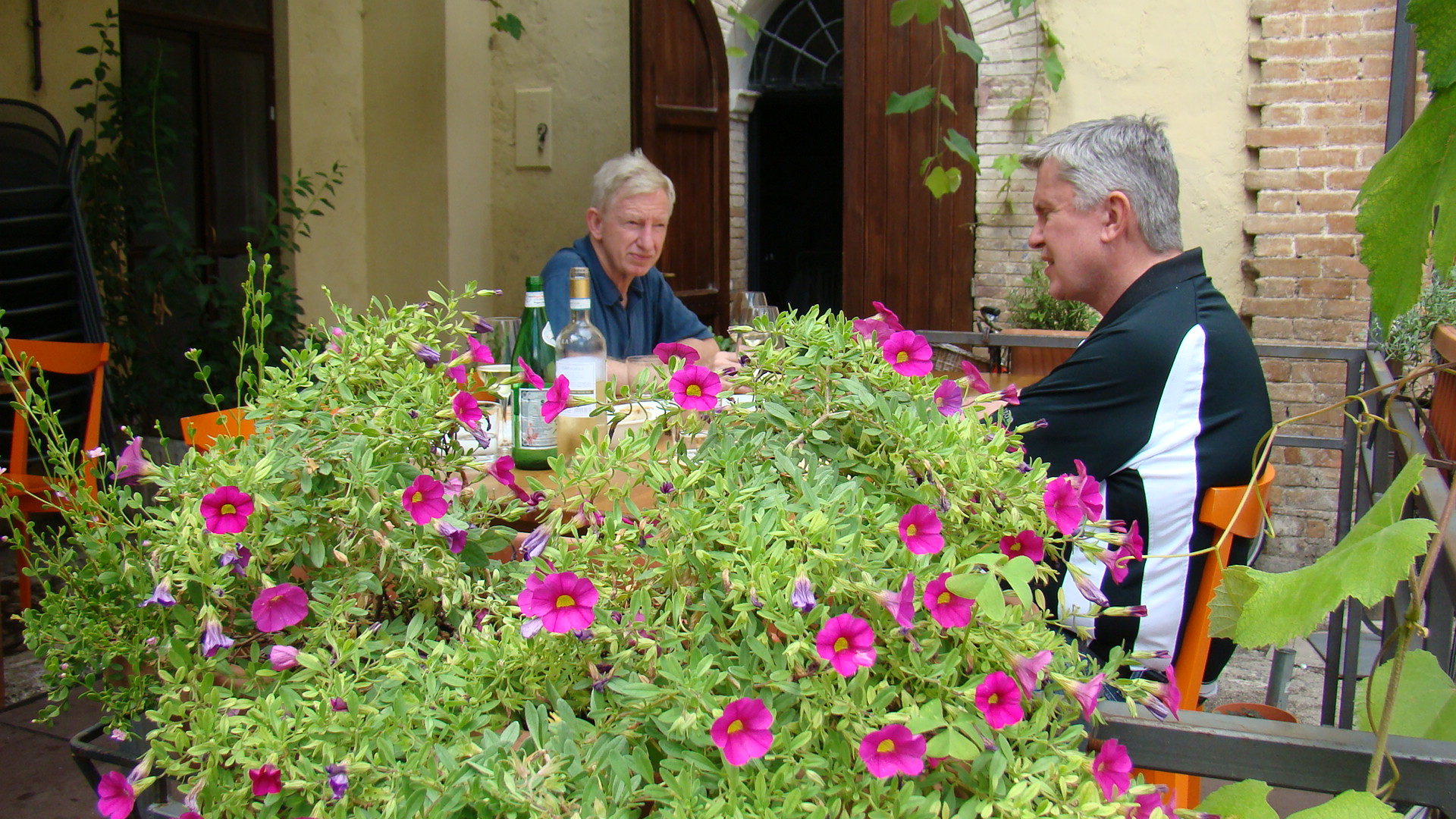
Lunch at Trattoria Oscar. They have a nice terrace. Gene and Luther.
DSC04732

I couldn’t resist taking a picture of my Gaspacho (italian spelling). It was sooo beautiful and cool.
DSC04733

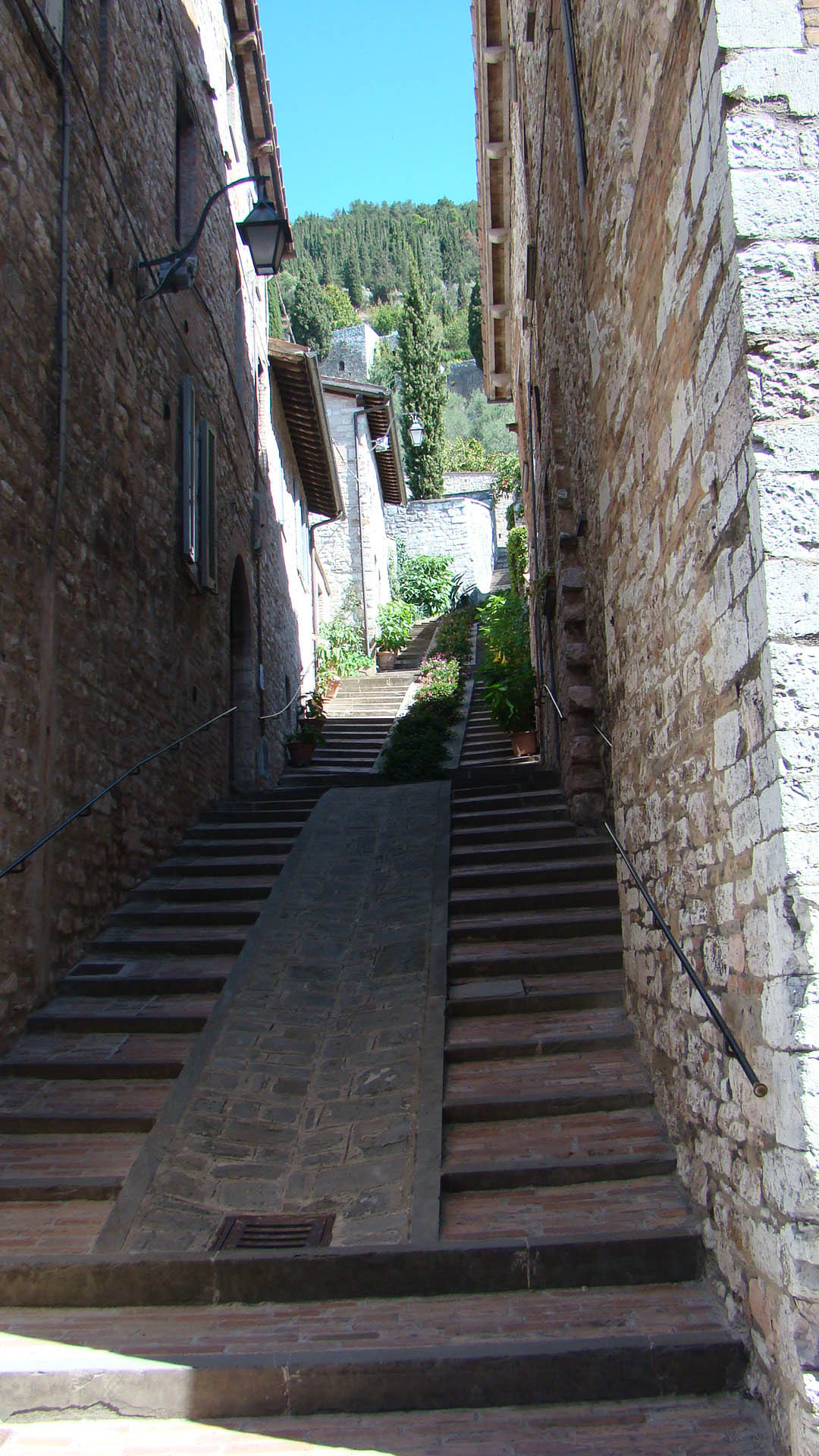
Stairway in Bevagna
DSC04727

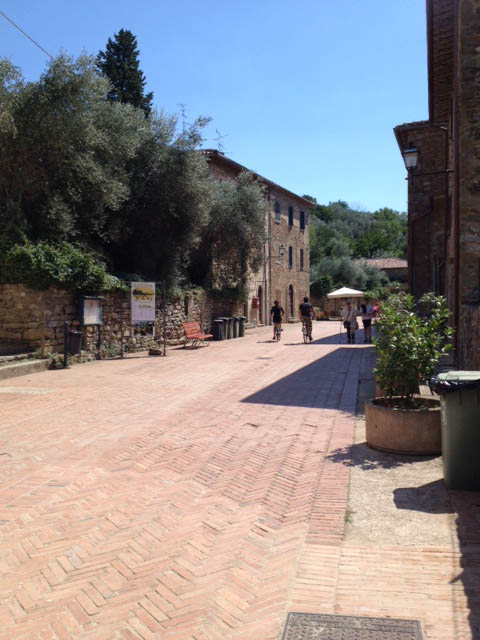
Here are a couple of pictures from our excursion to Isola di Maggiori. First a couple of the main (and only) street.
IMG_0132

IMG_0133

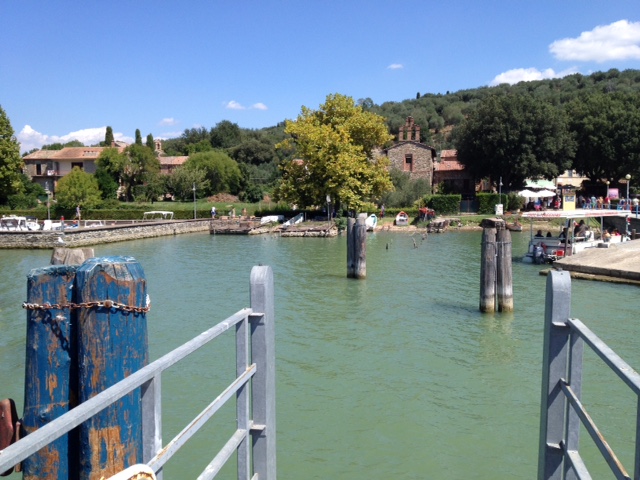
View of the town from ferry pier. It is a 10 minute ride from Tuoro.
IMG_0140

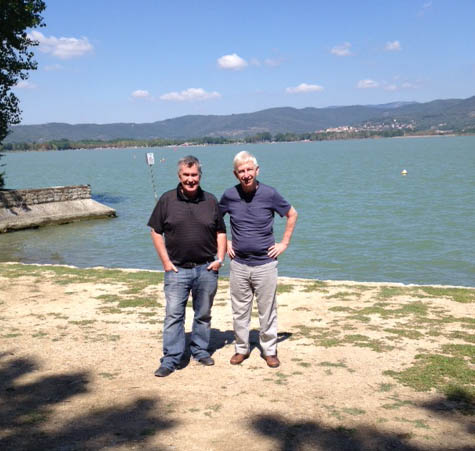
You can walk a good distance around the island, but not all the way. Here are Gene and Luther during our walk.
IMG_0130

We said Ciao to Gene on Sunday.

Yesterday we visited a winery. The Wine Guy is getting backed up on his posts so be patient. This winery also offered many other products like sausage and prosciutto, and olive oil. I visited the future prosciutti housed nearby.
DSC04737

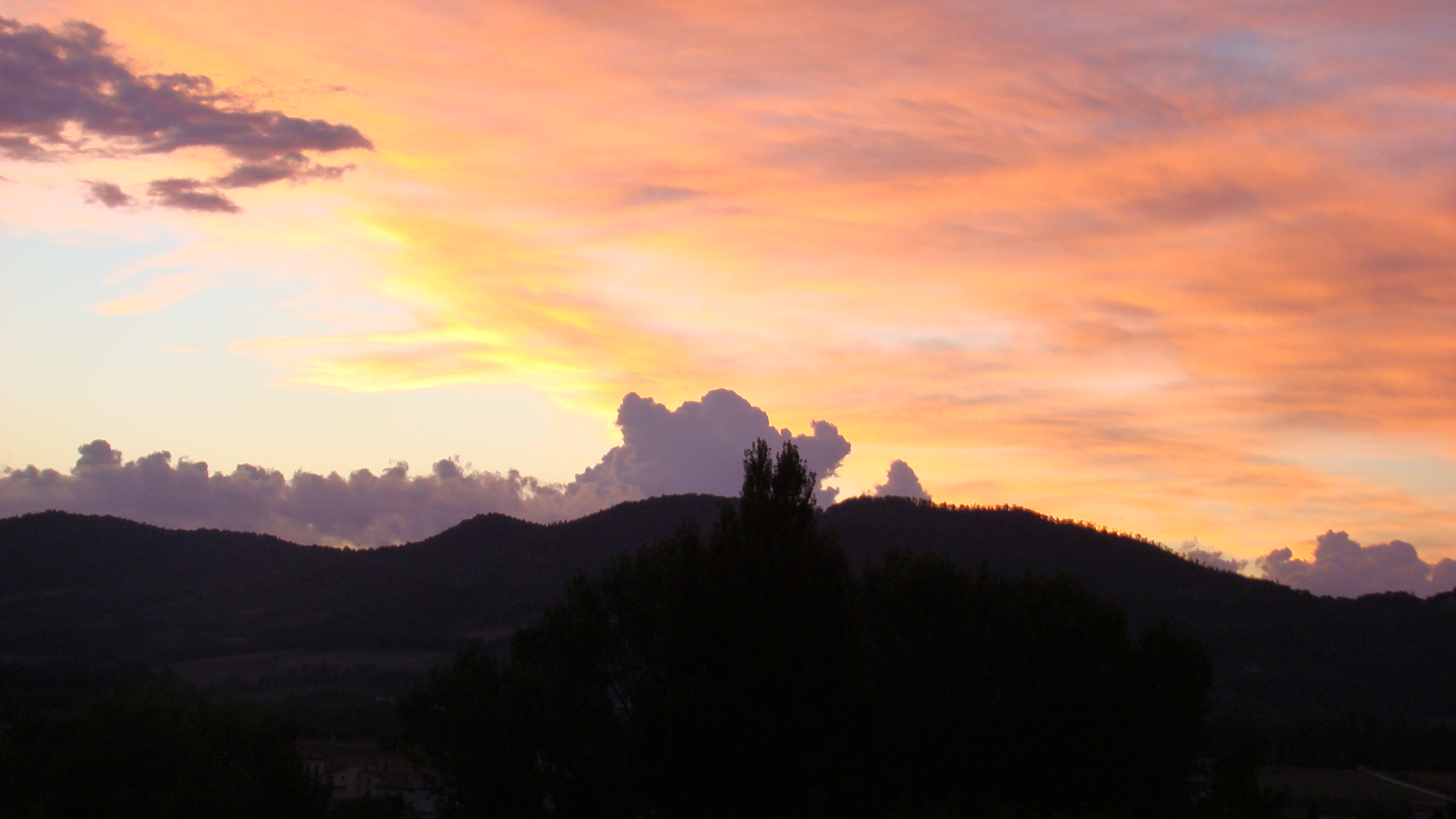
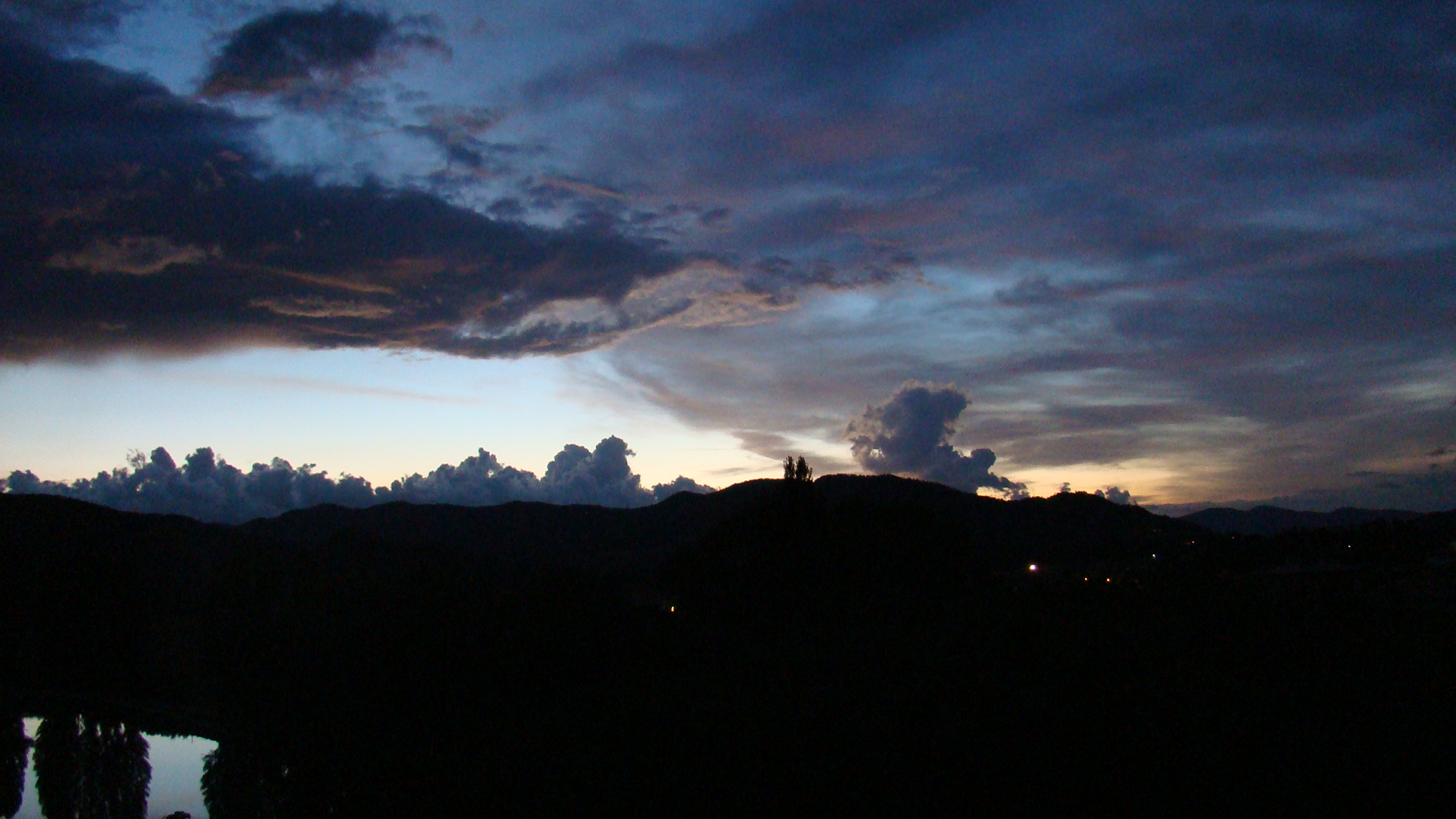
Finally two in a series of another sunset. Sometimes they can be pretty spectacular.
DSC04723

DSC04725

We are getting ready for another set of visitors from Australia so I will be writing about that soon.

A nice break in the weather

On Tuesday we took the injured Porsche to the dealer so we could find out what that pothole did to it. Sadly, it took out both of the wheels on the right side. This is not a minor thing. We don’t yet know what the cost of repairs will be.

Yesterday the wind came up and the heat went down (some). It was so refreshing. Overnight we left all the windows open and it was nice and cool. Today we decided to go somewhere since it was such a nice day. The wind had blown the haze away too!

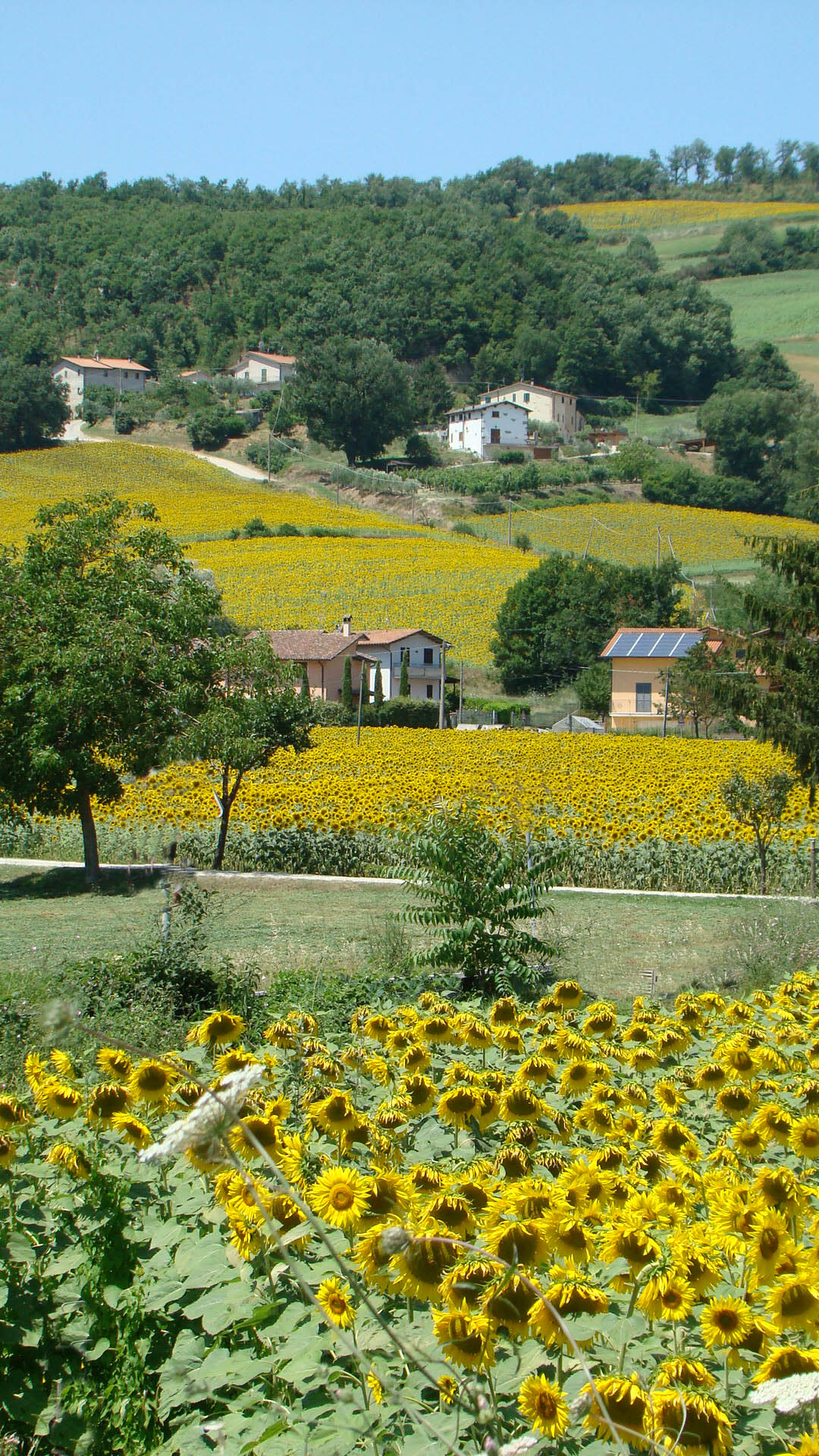
We had read about a ceramics exposition in the town of Cessena north of us. We tootled on up and parked outside of the town. On the way, I spied three of the big glass amphorae beside a dumpster! I have one and it is so pretty so I decided to stop on the way home and get another. As you know the sunflowers are all blooming and I got Luther to stop so I could get a shot. They are just so pretty and these were so abundant I couldn’t resist. I like that there are four or five fields going up the hill.
DSC04643
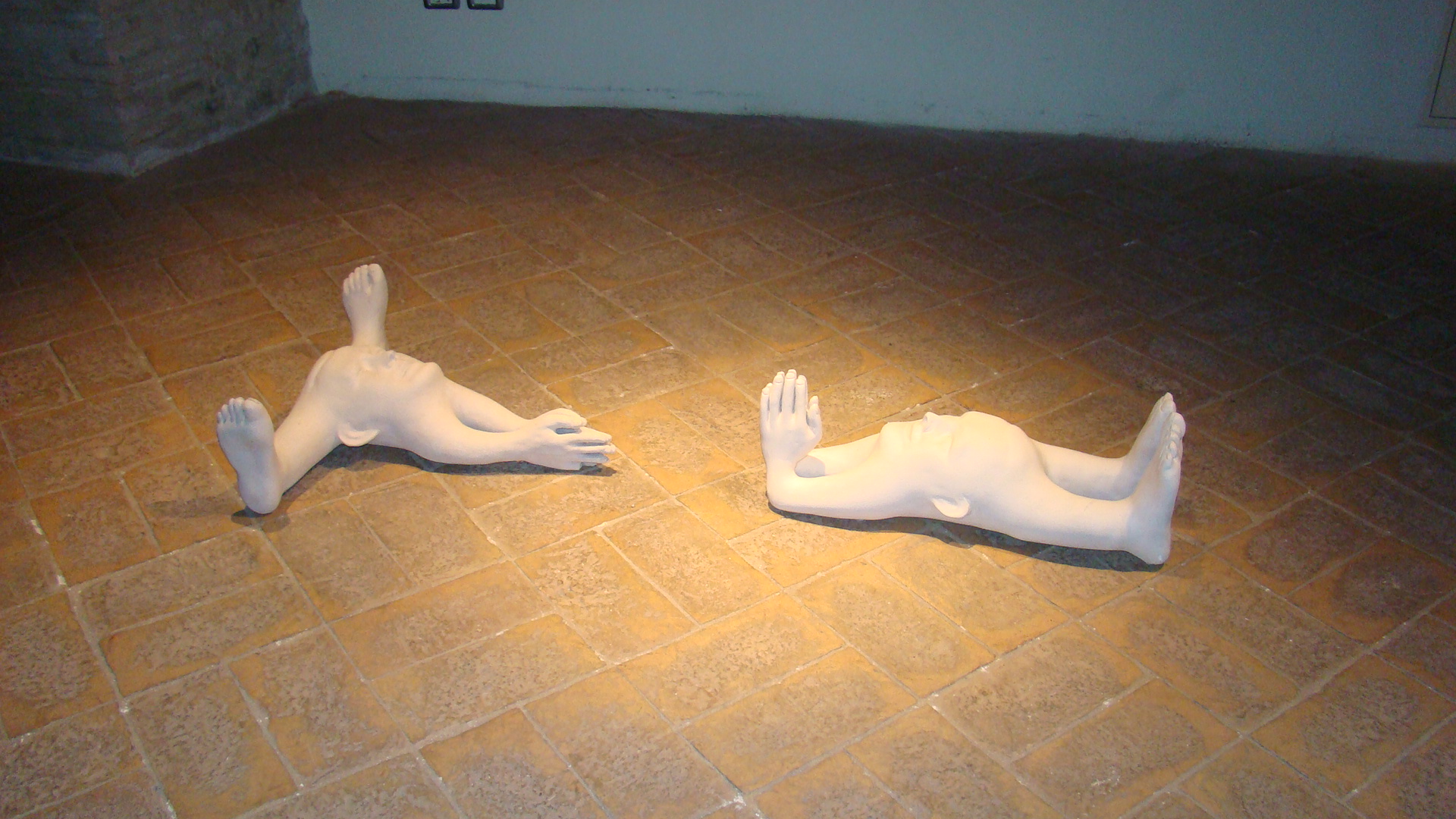
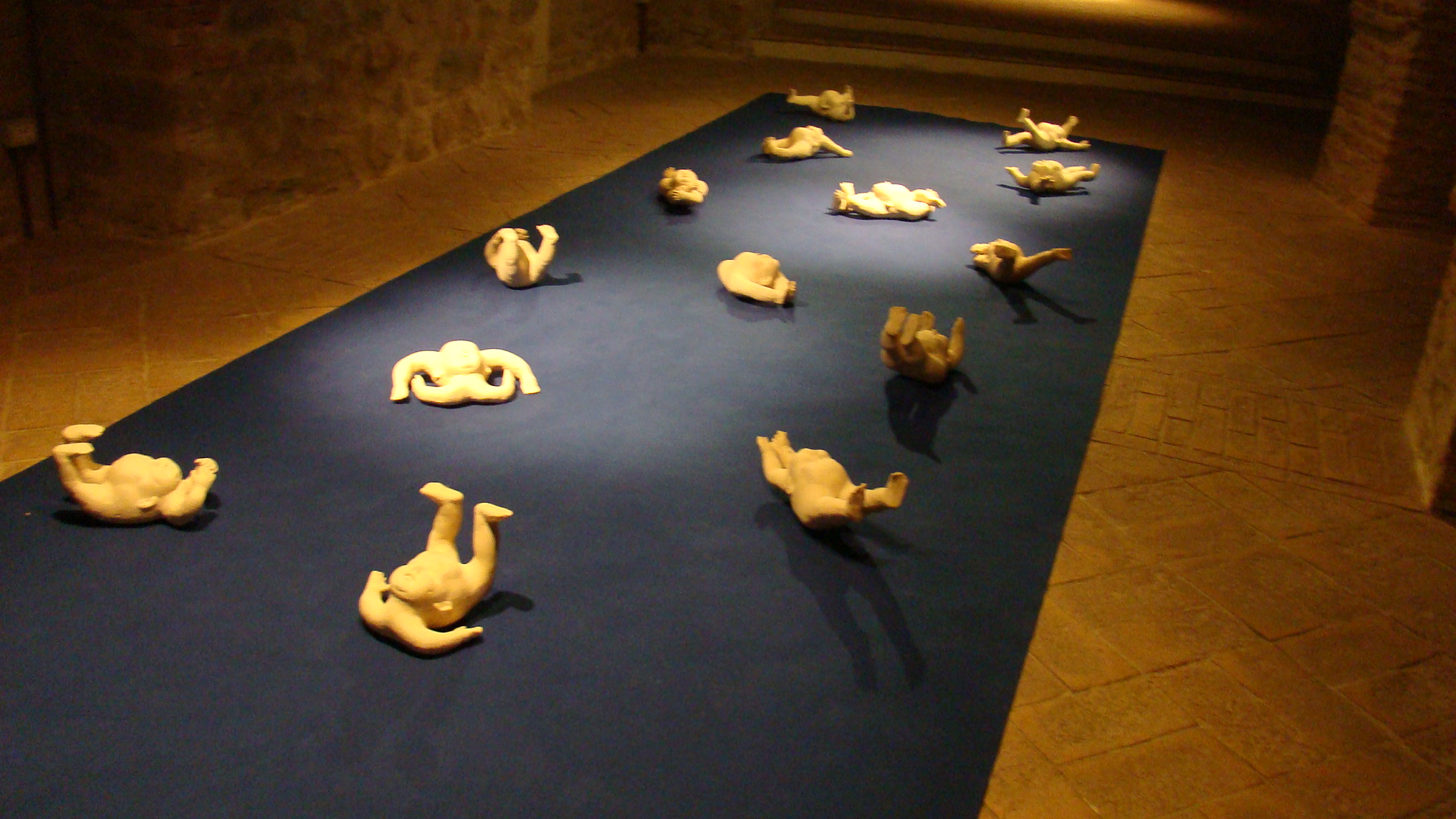
The ceramics exhibition turned out to be a one man show. Here are a couple of his sculptures. Strange but interesting.

DSC04635

DSC04634

DSC04632

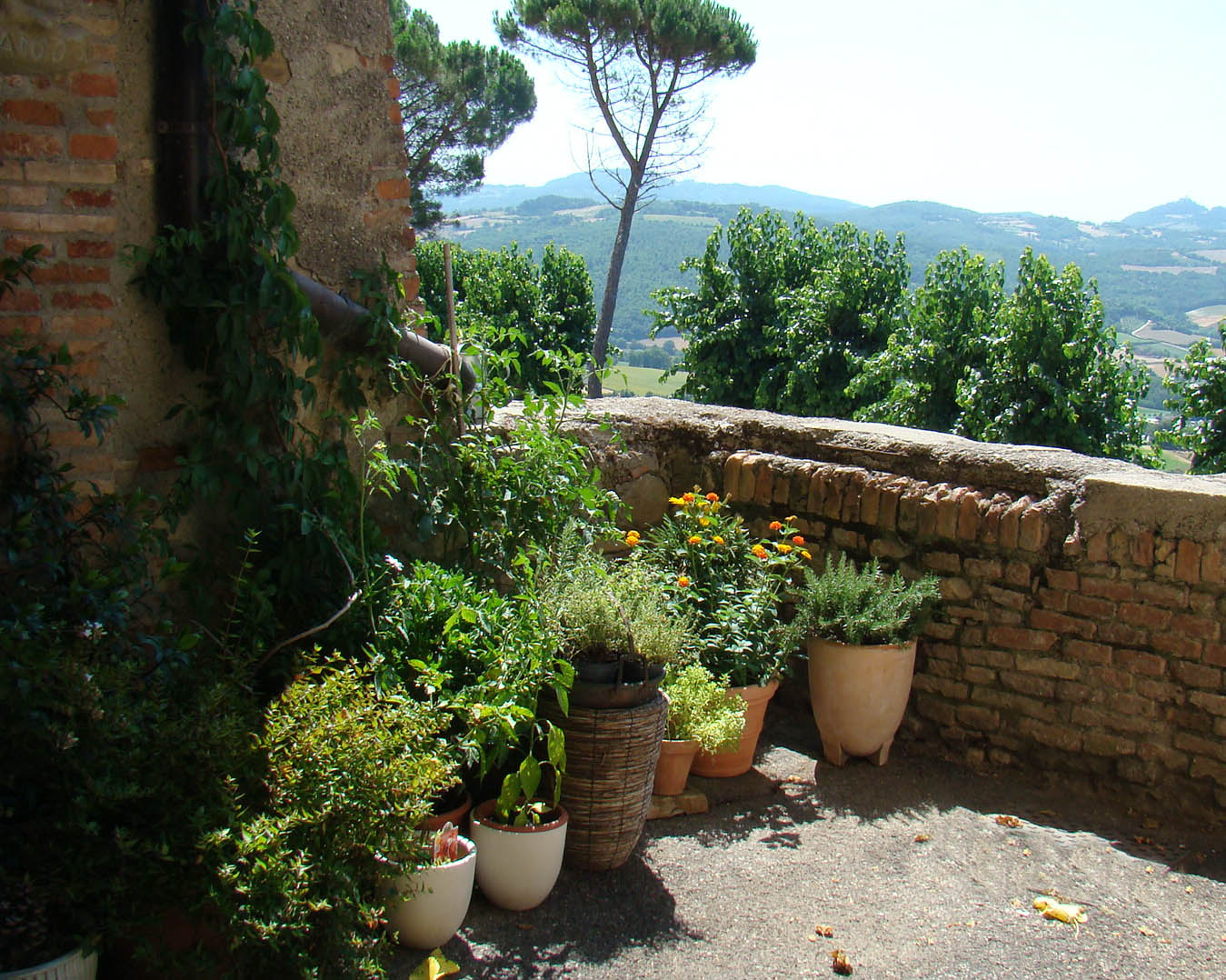
The town of Cessena is a walled hilltop town. We entered it through a tunnel that goes into the old cisterns from which it gets it’s name. Just beside the entrance was this pretty group of flowers with the view behind them.
DSC04640

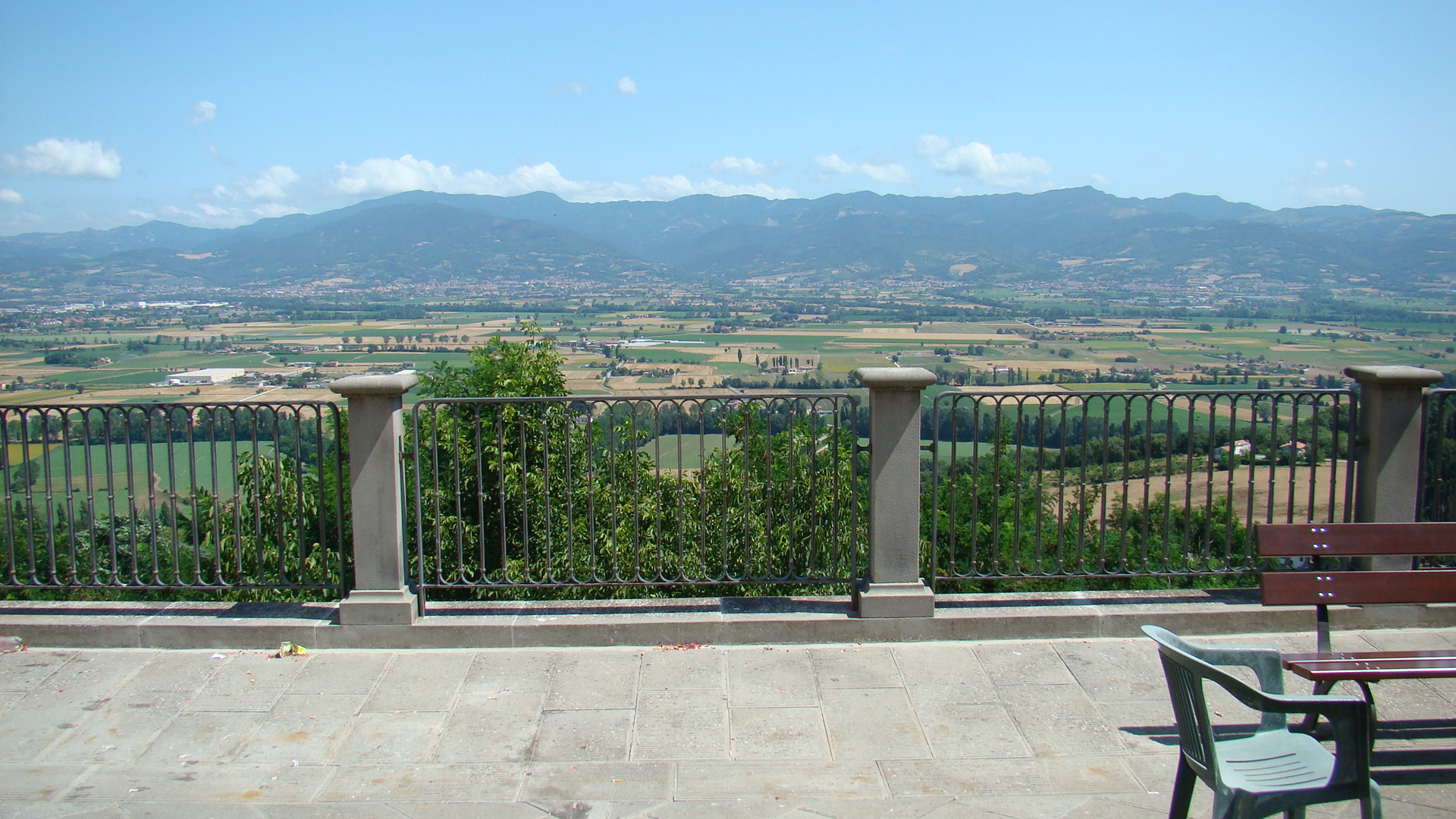
View from the town across the Tiber valley.
DSC04636

We checked out another town supposed to be famous for it’s ceramics due to the fact that they have some of the most pure clay in the world. The town name was Fighille. I must do some more research as we found no one selling or exhibiting ceramics.

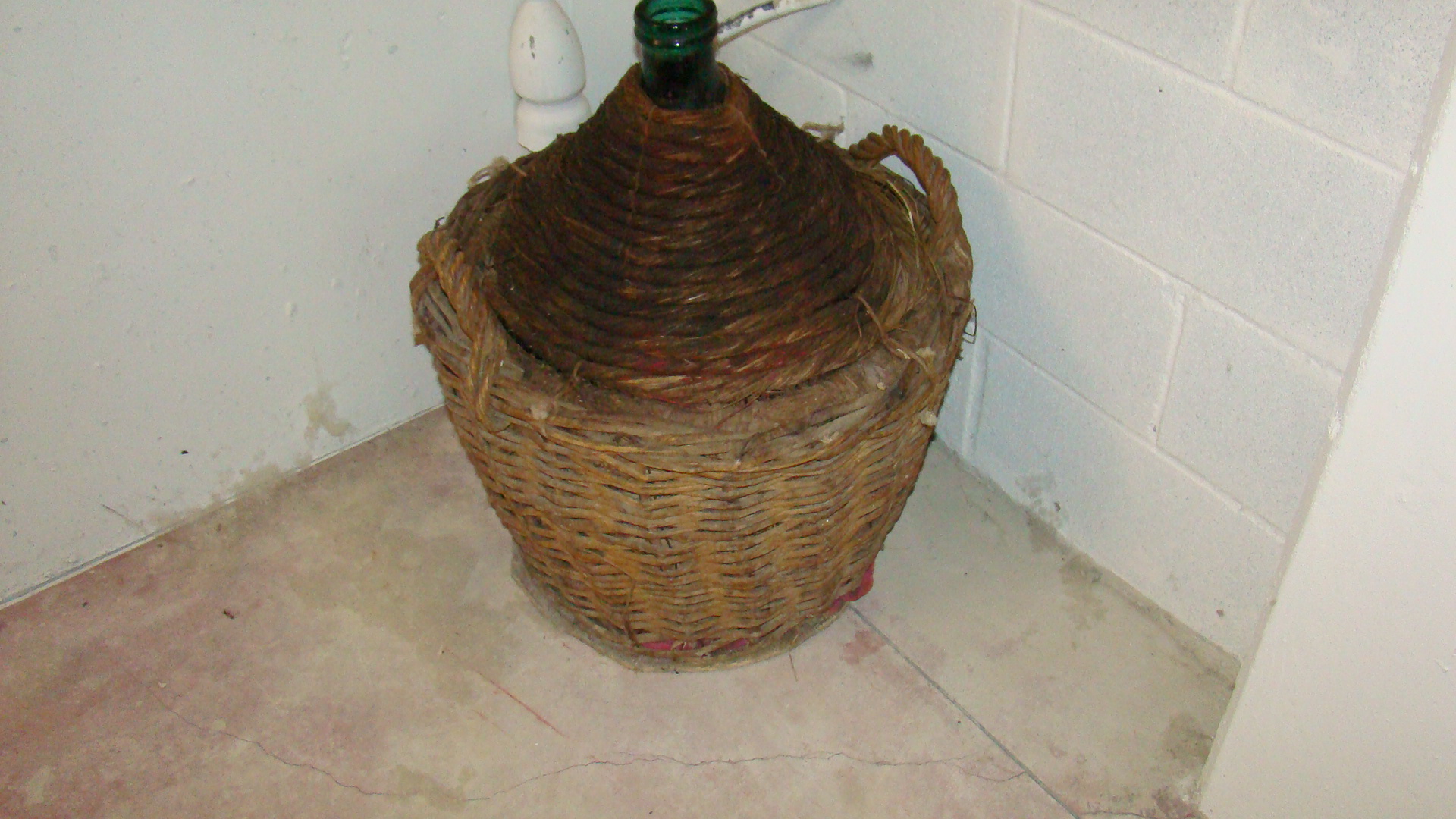
I stopped and picked up the Amphora. I got it in the trunk just barely. Now I have to figure out how to get that wrapping stuff off.
DSC04645

Castello Bufalini, San Giustino

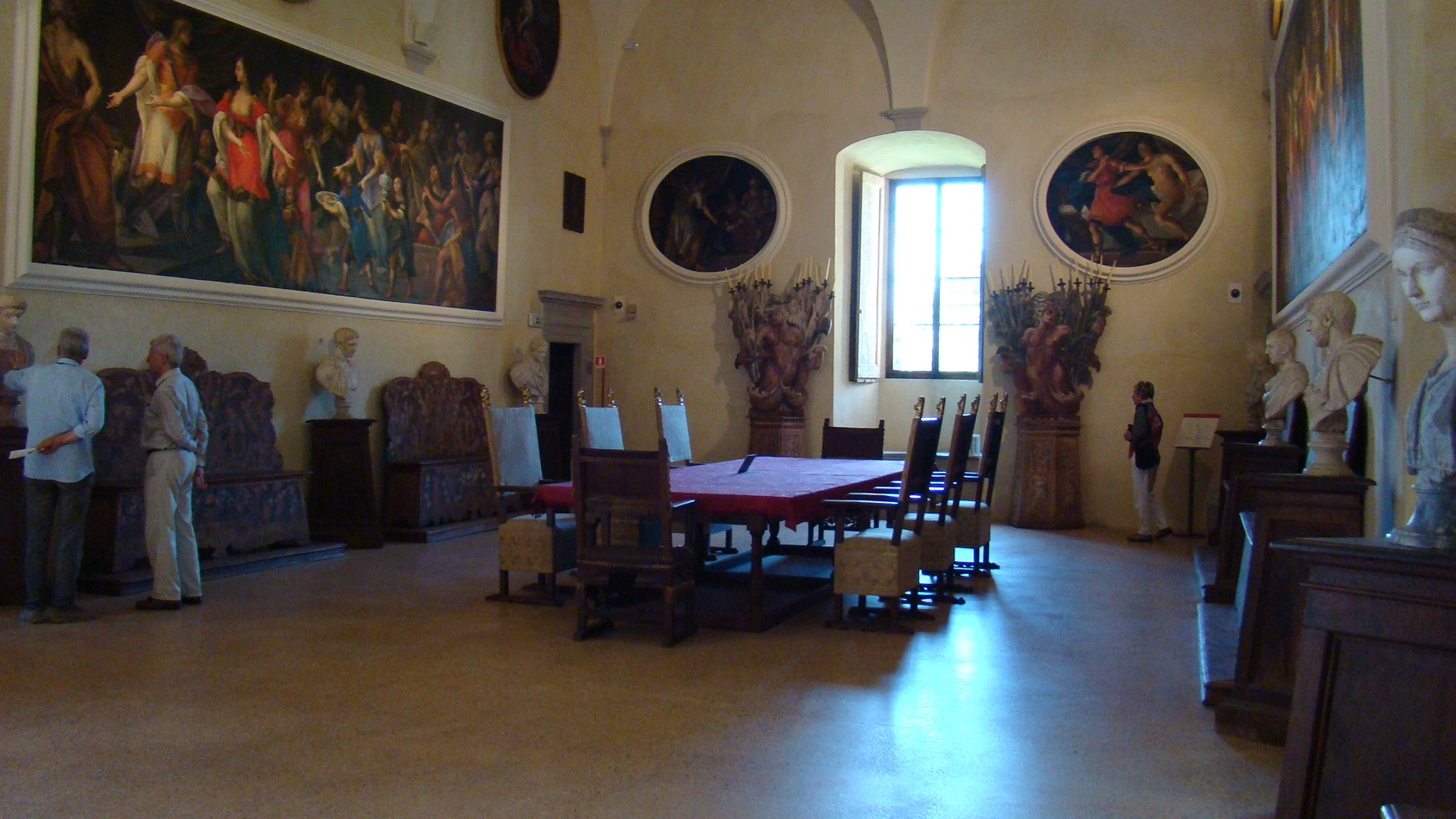
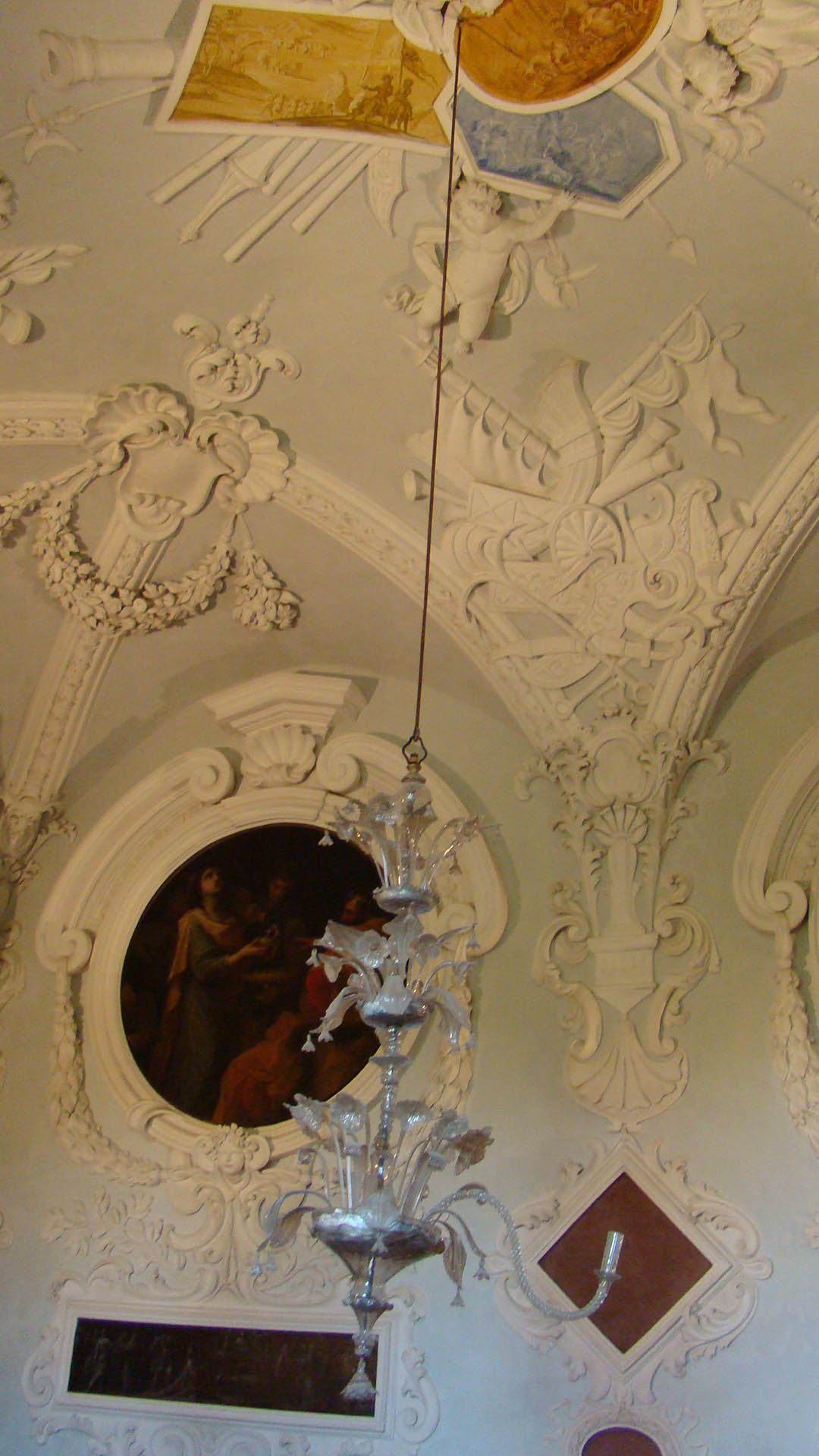
We have visitors for a couple of days so we thought we would visit a place nearby that is only open on Sundays. It was built in 1487 and continuously occupied by the Bufalini family until 1979 when the last family member died. They kept meticulous records of the farming operation from 1473 to 1979 which are important to historians and chronicle the activities of the estate, harvests, cattle breeding, milling and changing practices of agriculture through the centuries. They spared no expense with frescos painted on the walls and ceilings, Murano glass chandeliers, and extensive stucco decorations. Here are some pictures.

This first one is from a room called the chamber of Pagan delights.
DSC04283
This is the grand reception room.
DSC04284
Statue of the Medusa
DSC04288

Stucco decorations by artisans in Citta di Castello.
DSC04287

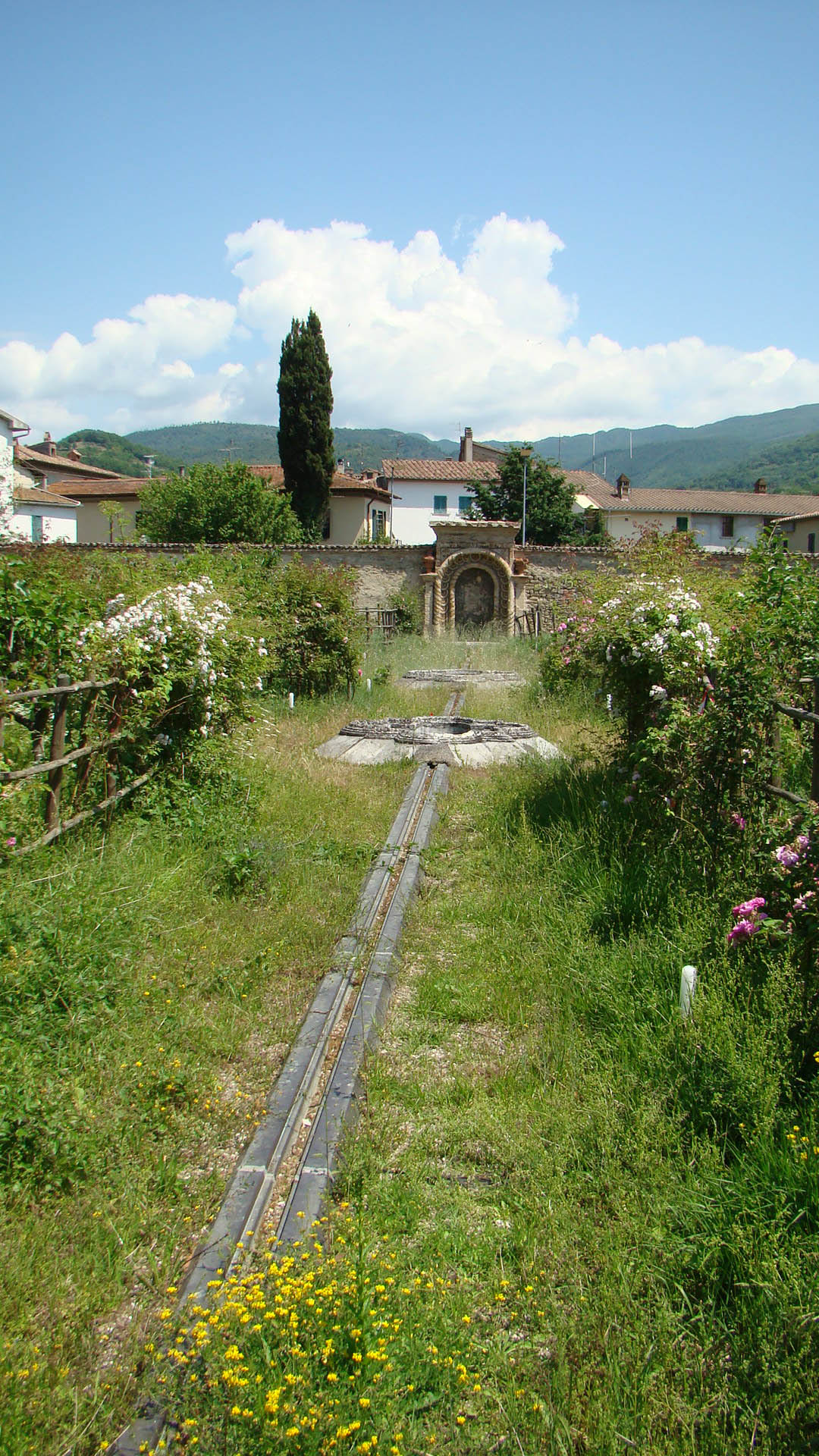
The famous gardens now, sadly, run-down.
DSC04294

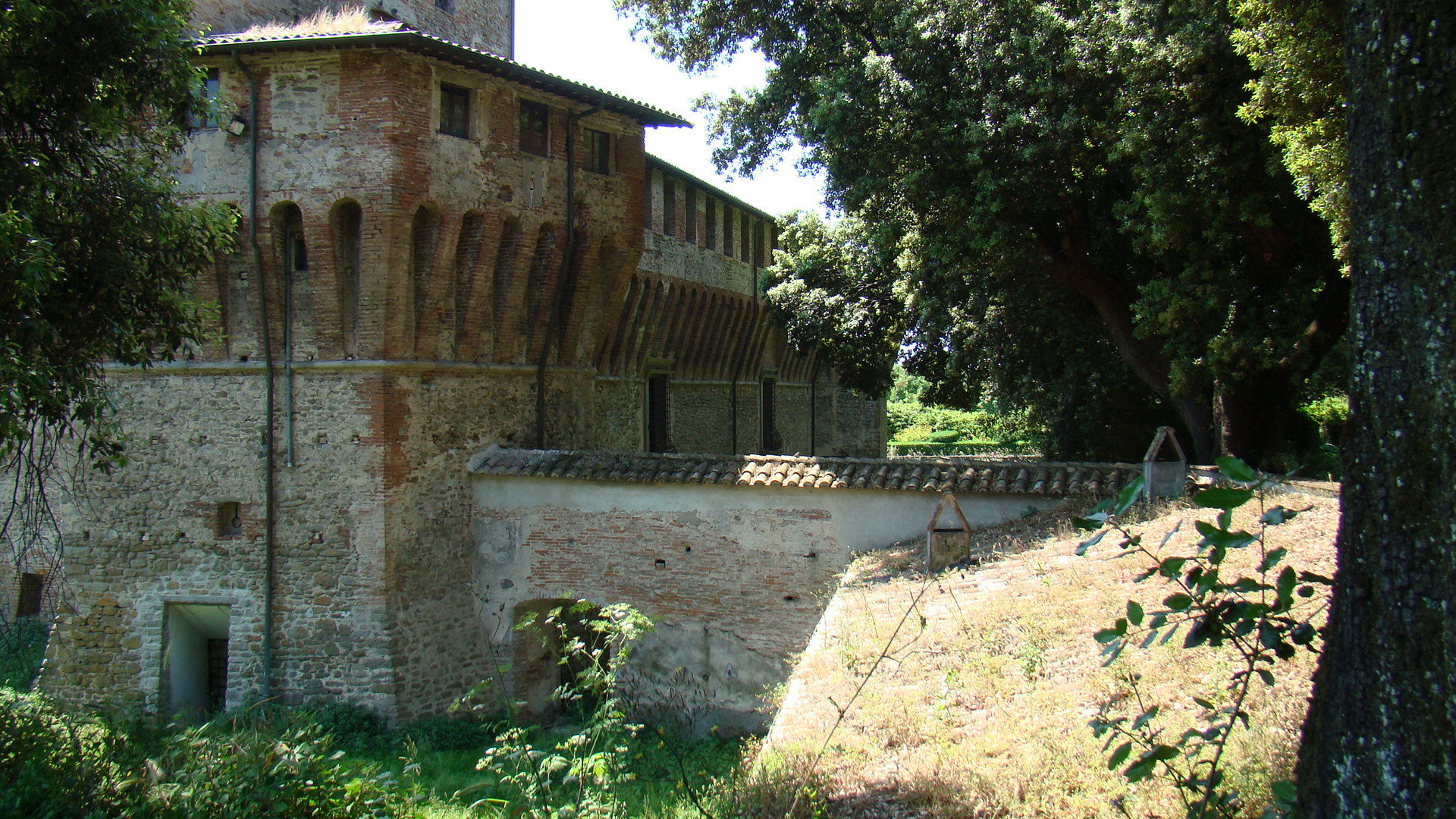
Exterior of the castello which suffered great damage in the 1789 earthquake necessitating the addition of structural buttresses.
DSC04296

It was a marvelous day and we had lunch reservations at Calagrana. It was Frank’s (one of our guests) birthday celebration. The meal was, as always, wonderful.

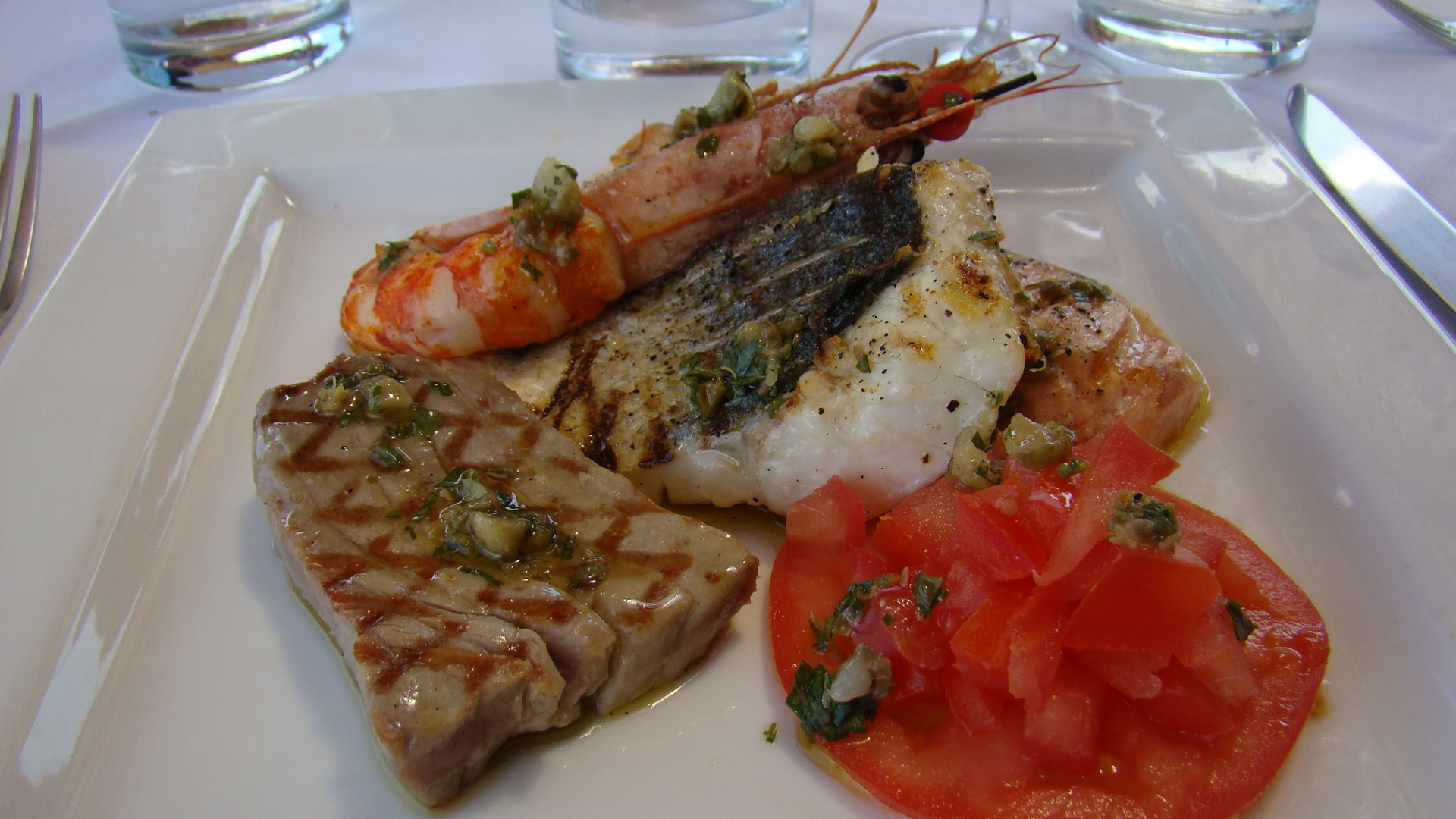
My secondi – mixed grilled fish to include tuna, salmon and sea bass.
DSC04300

We also had our first experiences at the Pronto Soccorso or emergency room, here in Umbertide. Frank had scratched his cornea and it was really bothering him. We visited the PS and they flushed his eye, put numbing drops in and told him to come back Monday to see the doctor. By that afternoon he was all better. They charged him 25 Euro. Not bad!

Today is the Day of the Republic and a national holiday. Out in our piazza they have erected 3 what I would have to call pens. They have Royal Canin plastic on them. This clues us in that it must have something to do with animals. I will report back after we figure it out. Stay tuned!

Wine guy – Part 2

Another guest post from Luther the Wine Guy. WOW that was fast!


Whoops! I got sidetracked with all that DOC stuff and forgot to talk about the Umbrian red grapes, so let’s do that now…
Umbrian Grapes Redux
Sagrantino is Umbria’s gift to the red wine world. It is a monster, being considered one of the most tannic grapes in the world. Its production is extremely limited, as there are only about 100 hectares (about 240 acres) in the entire area. It produces a dense, dark wine capable of up to 16%(!) alcohol content that requires considerable aging just to get under control. The sagrantino area centers around Montefalco and Bevana, reaching southwest to Todi northwest to Perugia.

Sagrantino has been cultivated for hundreds of years in and around Montefalco, but was used strictly to make dessert and sacramental wines. (I’m told that “sagrantino” is dialect for sanctified). These wines were made in a style called passito wherein the grapes are not immediately crushed, but are allowed to dry out, increasing the concentration of the juice. This technique, which is similar to those used to make dessert wines in France and other Italian areas, is modified in Umbria in that the wine made is dry or almost nearly so. Wine made in this passito style remains popular in Umbria. I find it a little bit strange. It has the body and appearance of a port, but it lacks the sweetness. Some adventurous producers have experimented with stopping the fermentation process early, leaving a considerable amount of residual sugar. This makes a much more satisfying desert wine, which I would be proud to pour in place of an Late Bottled Vintage port, for example.

Fortunately for us big red wine fans, in the mid-seventies several sagrantino producers started to experiment with making a dry red wine from the grape. Because of the high level of tannin in the juice, the wine that comes out is almost undrinkable at first–think a zinfandel that shrinks your tongue to a sliver from its runaway tannins. But, unlike zinfandel, if you’re willing to age this stuff properly, it is fantastic. The Italian DOC requires that wines labeled “DOCG Sagrantino” be aged for a minimum of 29 months. What comes out in my opinion is still pretty raw. I have tasted these young ones. The fruit is there, but the body lacks substance and the tannins are still screaming away. After another three or four years, things are starting to smooth out and the result is, for me, like a very fine cabernet, but with a touch more fruit and less of that austerity that cabernet frequently exhibits. For those with less patience, most producers also offer a Riserva that undergoes several years additional barrel aging. Be aware though that there is no “Sagrantino Riserva” DOCG and so “Riserva” means whatever the producer says it means–it’s not a well defined turn. Nancy and I have been drinking the 2007 Adanti Sagrantino di Montefalco “Adanti” and it is fantastic. Better still, it’s sold in the USA, so you might be able to find some. Give it a go and let us know. Here is the half bottle of passito and the Adanti next to it.

IMG_0256

Although sagrantino is the big dog in the Umbrian kennel, the most ubiquitous red grape in Umbria, indeed in just about all of central Italy, is sangiovese. Most folks know sangiovese from the red wines of Tuscany, some which are exclusively sangiovese (Brunello di Montalcino, the Cadillac of traditional Tuscan winemaking), or the backbone of a blend of wines such as Chianti or Vino Nobile di Monepulciano. In most of Umbria, sangiovese is used to make round, juicy, fruit-forward wines that are a pleasure at a fairly early age. Most sangiovese sees very little barrel aging and is blended with local Umbrian grapes such as canaiolo and colorino, two grapes also used to make Chianti.

Sangiovese comes to the rescue of impatient sagrantino fans who just can’t let those bottles sit around the house that long. It is used to blend out a bit of the blast of young sagrantino and is usually blended about 60% sangiovese and 15% sagrantino with other grapes, primarily merlot to make Montefalco Rosso. There are two DOCs for Montefalco Rosso: the DOC Montefalco Rosso calls for a minimum of 18 months barrel aging, the DOC Montefalco Rosso Riserva requires a minimum of 30 months.

I am a huge fan of Montefalco Rosso. It is a remarkable red with excellent aging potential but without the tannin explosion associated with sagrantino. The Montefalco Rosso DOC is an excellent food wine at a ridculously reasonable price–we usually pay about 8 – 10 Euros a bottle for it ($9 – $11). With 30 months in the bottle, the riserva is a noble wine all by itself. Because I like my wines huge and with some fruit–I am a major zinfandel fan–the sagrantino rates tops for me. But some folks prefer a wine a little more austere and elegant, and the riserva nails this. It is probably Umbria’s best wine value.

IMG_0258

There are excellent producers of sangiovese-based wines across Umbria, but the most famous has got to be Lungarotti, based in the town of Torgiano, just a few miles south of Perugia. Lungarotti owns hundreds of acres of vineyards all over Umbria, with by far the major proportion around Torgiano. Lugarotti is huge, producing over 2.5 million bottles a year: almost triple the next major producer. Lungarotti’s sangioveses are considered so good that they have their own DOC, Rubesco di Torgiano and DOCG, Rubesco di Torgiano Riserva. Like the Rosso di Montefalco, the DOC Rubesco is a blend of sangiovese (75%) and the local grapes cannaiolo and colorino I mentioned earlier. It gets a year of barrel aging and another year in the bottle before release. The riserva requires four years in wood and comes exclusively from a single 120 acre property named (oddly enough), Rubesco. (For those trivia followers, Rubesco is an invention based on the latin word rubescare, to blush) I first sampled Rubesco maybe twenty years ago and I have loved it ever since. It used to be very widespread in the states. I could still find it in the Washington DC area if I looked, but it’s not as available as it used to be. Get some: you’ll like it.

All right. That’s enough of the tutorial. In the next segment I’ll talk about some of our field trips.


I hope you all enjoyed the second segment about Umbrian wines. I myself, am looking forward to doing some field testing for future articles!