Dog show

So how else would you celebrate the day Italy became Italy? Of COURSE! A dog show!

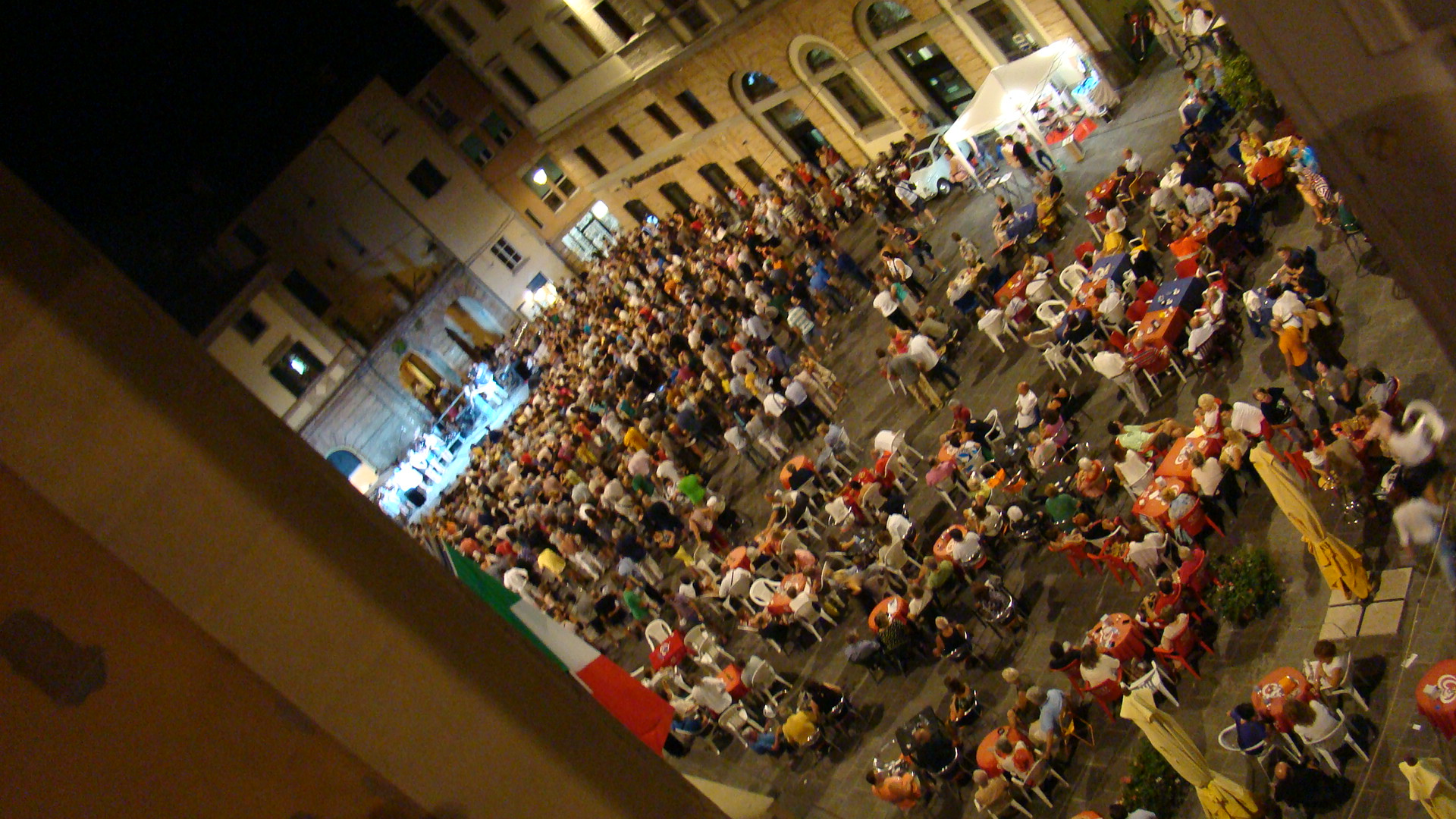
I was right. The pens I saw were for the different categories of dogs to be judged. We visited among the dogs and I took a couple of pictures from our window. The show went on the entire day! From about 9AM until 6PM. Pictures were taken, ribbons were won! Everyone had fun.

DSC04301

DSC04317

DSC04311

DSC04307

DSC04308

And this is relatively disgusting. Luther went for pizza last night and bought this. Look closely. Yes, those are hot dog slices and actual french fries on there. Ugh.

DSC04318


Castello Bufalini, San Giustino

We have visitors for a couple of days so we thought we would visit a place nearby that is only open on Sundays. It was built in 1487 and continuously occupied by the Bufalini family until 1979 when the last family member died. They kept meticulous records of the farming operation from 1473 to 1979 which are important to historians and chronicle the activities of the estate, harvests, cattle breeding, milling and changing practices of agriculture through the centuries. They spared no expense with frescos painted on the walls and ceilings, Murano glass chandeliers, and extensive stucco decorations. Here are some pictures.

This first one is from a room called the chamber of Pagan delights.
DSC04283
This is the grand reception room.
DSC04284
Statue of the Medusa
DSC04288

Stucco decorations by artisans in Citta di Castello.
DSC04287

The famous gardens now, sadly, run-down.
DSC04294

Exterior of the castello which suffered great damage in the 1789 earthquake necessitating the addition of structural buttresses.
DSC04296

It was a marvelous day and we had lunch reservations at Calagrana. It was Frank’s (one of our guests) birthday celebration. The meal was, as always, wonderful.

My secondi – mixed grilled fish to include tuna, salmon and sea bass.
DSC04300

We also had our first experiences at the Pronto Soccorso or emergency room, here in Umbertide. Frank had scratched his cornea and it was really bothering him. We visited the PS and they flushed his eye, put numbing drops in and told him to come back Monday to see the doctor. By that afternoon he was all better. They charged him 25 Euro. Not bad!

Today is the Day of the Republic and a national holiday. Out in our piazza they have erected 3 what I would have to call pens. They have Royal Canin plastic on them. This clues us in that it must have something to do with animals. I will report back after we figure it out. Stay tuned!

Wine guy – Part 2

Another guest post from Luther the Wine Guy. WOW that was fast!


Whoops! I got sidetracked with all that DOC stuff and forgot to talk about the Umbrian red grapes, so let’s do that now…

Umbrian Grapes Redux
Sagrantino is Umbria’s gift to the red wine world. It is a monster, being considered one of the most tannic grapes in the world. Its production is extremely limited, as there are only about 100 hectares (about 240 acres) in the entire area. It produces a dense, dark wine capable of up to 16%(!) alcohol content that requires considerable aging just to get under control. The sagrantino area centers around Montefalco and Bevana, reaching southwest to Todi northwest to Perugia.

Sagrantino has been cultivated for hundreds of years in and around Montefalco, but was used strictly to make dessert and sacramental wines. (I’m told that “sagrantino” is dialect for sanctified). These wines were made in a style called passito wherein the grapes are not immediately crushed, but are allowed to dry out, increasing the concentration of the juice. This technique, which is similar to those used to make dessert wines in France and other Italian areas, is modified in Umbria in that the wine made is dry or almost nearly so. Wine made in this passito style remains popular in Umbria. I find it a little bit strange. It has the body and appearance of a port, but it lacks the sweetness. Some adventurous producers have experimented with stopping the fermentation process early, leaving a considerable amount of residual sugar. This makes a much more satisfying desert wine, which I would be proud to pour in place of an Late Bottled Vintage port, for example.

Fortunately for us big red wine fans, in the mid-seventies several sagrantino producers started to experiment with making a dry red wine from the grape. Because of the high level of tannin in the juice, the wine that comes out is almost undrinkable at first–think a zinfandel that shrinks your tongue to a sliver from its runaway tannins. But, unlike zinfandel, if you’re willing to age this stuff properly, it is fantastic. The Italian DOC requires that wines labeled “DOCG Sagrantino” be aged for a minimum of 29 months. What comes out in my opinion is still pretty raw. I have tasted these young ones. The fruit is there, but the body lacks substance and the tannins are still screaming away. After another three or four years, things are starting to smooth out and the result is, for me, like a very fine cabernet, but with a touch more fruit and less of that austerity that cabernet frequently exhibits. For those with less patience, most producers also offer a Riserva that undergoes several years additional barrel aging. Be aware though that there is no “Sagrantino Riserva” DOCG and so “Riserva” means whatever the producer says it means–it’s not a well defined turn. Nancy and I have been drinking the 2007 Adanti Sagrantino di Montefalco “Adanti” and it is fantastic. Better still, it’s sold in the USA, so you might be able to find some. Give it a go and let us know. Here is the half bottle of passito and the Adanti next to it.

IMG_0256

Although sagrantino is the big dog in the Umbrian kennel, the most ubiquitous red grape in Umbria, indeed in just about all of central Italy, is sangiovese. Most folks know sangiovese from the red wines of Tuscany, some which are exclusively sangiovese (Brunello di Montalcino, the Cadillac of traditional Tuscan winemaking), or the backbone of a blend of wines such as Chianti or Vino Nobile di Monepulciano. In most of Umbria, sangiovese is used to make round, juicy, fruit-forward wines that are a pleasure at a fairly early age. Most sangiovese sees very little barrel aging and is blended with local Umbrian grapes such as canaiolo and colorino, two grapes also used to make Chianti.

Sangiovese comes to the rescue of impatient sagrantino fans who just can’t let those bottles sit around the house that long. It is used to blend out a bit of the blast of young sagrantino and is usually blended about 60% sangiovese and 15% sagrantino with other grapes, primarily merlot to make Montefalco Rosso. There are two DOCs for Montefalco Rosso: the DOC Montefalco Rosso calls for a minimum of 18 months barrel aging, the DOC Montefalco Rosso Riserva requires a minimum of 30 months.

I am a huge fan of Montefalco Rosso. It is a remarkable red with excellent aging potential but without the tannin explosion associated with sagrantino. The Montefalco Rosso DOC is an excellent food wine at a ridculously reasonable price–we usually pay about 8 – 10 Euros a bottle for it ($9 – $11). With 30 months in the bottle, the riserva is a noble wine all by itself. Because I like my wines huge and with some fruit–I am a major zinfandel fan–the sagrantino rates tops for me. But some folks prefer a wine a little more austere and elegant, and the riserva nails this. It is probably Umbria’s best wine value.

IMG_0258

There are excellent producers of sangiovese-based wines across Umbria, but the most famous has got to be Lungarotti, based in the town of Torgiano, just a few miles south of Perugia. Lungarotti owns hundreds of acres of vineyards all over Umbria, with by far the major proportion around Torgiano. Lugarotti is huge, producing over 2.5 million bottles a year: almost triple the next major producer. Lungarotti’s sangioveses are considered so good that they have their own DOC, Rubesco di Torgiano and DOCG, Rubesco di Torgiano Riserva. Like the Rosso di Montefalco, the DOC Rubesco is a blend of sangiovese (75%) and the local grapes cannaiolo and colorino I mentioned earlier. It gets a year of barrel aging and another year in the bottle before release. The riserva requires four years in wood and comes exclusively from a single 120 acre property named (oddly enough), Rubesco. (For those trivia followers, Rubesco is an invention based on the latin word rubescare, to blush) I first sampled Rubesco maybe twenty years ago and I have loved it ever since. It used to be very widespread in the states. I could still find it in the Washington DC area if I looked, but it’s not as available as it used to be. Get some: you’ll like it.

All right. That’s enough of the tutorial. In the next segment I’ll talk about some of our field trips.


I hope you all enjoyed the second segment about Umbrian wines. I myself, am looking forward to doing some field testing for future articles!

Guest post from Luther the wine guy

People have been asking for a post about the wines around here. Luther has worked a WHOLE year on this and here is part one…


Wines of Umbria

Alright, already! I’ll write something now that I’ve had enough time to make a basic study.
Before we dive into the visits, here’s a bit of an introduction to Umbria and it’s wines. Geography lesson first.

Umbria
Here’s a map of Umbria. Like every other province in Italy, Umbria produces an ocean of wine, from the really good stuff to the ho-hum. Most of the really good stuff comes from a band stretching from Montefalco in the east to Orvieto in the west.

umbria_map

Montefalco and the area around it specializes in red wines, although plenty of white is made there too. The production slowly switches to white as you cross to Orvieto, although Orvieto also makes some very nice red wines. There’s a lot of wine made in Umbertide, our neck of the woods, but as you can see, we’re a bit north of the big leagues. For the curious, Tuscany with its Chiantis, Brunellos and Montepucianos lies just to the west of Umbria. To the east, you’ll find the Marche, which is known primarily for the white Verdicchio grape and the red wines from around Ascoli Piceno. If you’re wondering about the green part, Umbria has two provinces, Perugia and Terni. I’ll leave it to the reader to figure out which is which.

Umbrian Grapes
That’s enough geography for now, let’s talk grapes: There are four major grape types cultivated in Umbria: Sagrantino (red), Sangiovese (red), Grechetto (white) and Trebbiano (white). The DOC laws (more on this later) governing Italian wines require that these grapes form the majority of all red and white wines getting the DOC pedigree in Umbria. Lots of other grapes are allowed: in particular, merlot, cabernet sauvignon, chardonnay and sauvignon blanc. There are some adventurous winemakers, particularly in the southwest, who are making excellent wines based on Chardonnay, Cabernet and Merlot in particular and we will visit several, but let’s stick to the big boys for now.

DSC04280

Grechetto is the main white grape of Umbria and has been here since grapes and olives originally came to Umbria with the first Greek traders, who brought them from the colonies in the south of Italy in the 7th century BC. Grechetto has a deep straw color and has a minerality that I find particularly refreshing. It provides structure to any blend due to its relatively high alcohol content. Grechetto is the primary slamming down white of Umbria. You can get it out of wine shops by pump–yes, just like a gas pump–at about $1.50 a liter. When grechetto is made from older vineyards and the grapes are carefully selected, it makes excellent varietal wines, both alone or blended with other variatals. Grechetto ain’t Chambertin, but it can be quite tasty and is never particularily expensive. Very nice grechettos can be had here for about $5.00 a bottle.

Trebbiano is the other main wine grape of Umbria. It is fresh and fruity, with low acidity and a yellow color. Trebbiano goes back to Roman times and is one of the most widely planted grapes in the world, appearing in everything from balsamic vinegar (good!) to cognac (very good!) to industrial alcohol (unfortunate). Outside Italy, most trebbiano is undistingished and usually blended or distilled. In Italy, however, trebbiano can be a heavy hitter, appearing in Italy’s admittedly rather small list of really interesting white wines. Umbria boasts two excellent versions of trebbiano: Trebbiano spolentino, which (they tell me) is a unique form of the grape native to the area around Spello but present across southern Umbria and procanico, another unique (they tell me) Umbrian native version of trebbiano. These two, along with grechetto, form the basis for the wines known as Orvieto.

Wine Labeling
Years ago the Italians realized that if we foreigners keep associating Italian wines with the crap that appears in those straw covered bottles labelled “Chianti” they are never going to sell anything but their cheap sludge outside the country. To ensure that buyers didn’t feel like they needed to try the wine first on an unwanted family pet, the Italian government adopted a set of labelling standards known as the Denominazione di Origine Controllata (DOC). Each DOC governs a particular geographic region. In order to receive the DOC label for a region, the wine inside must adhere to government-defined quality standards for wines of region that specify: the origin of the grapes used (no sneaking stuff in from other places); the types of grapes that can be used (no slipping the cheap grapes in with the good stuff); the yields per acre (minimizing the juice from younger vines, which tend to yield higher, but poorer quality, wines than older vines); the percentages of allowed grape types in the wine, ensuring that blending wines stay blending wines, not the dominant grape in the bottle; and a whole bunch of other quality factors. DOC wines have the phrase Denominazione di Origine Controllata on the front and back labels and the name of the actual DOC. The presence of a DOC on a lable doesn’t guarantee a good wine, but it does indicate that the wine has been made from known components in a quality fashion. If you find yourself having to guess about a wine, you really can’t go wrong by opting for one with a DOC label on it.

DSC04282

So you know where they are, here’s a map of Umbria with its DOCs.

DOC_wines

The DOC has been such a success in establishing Italy as a maker of quality wines commanding corresponding prices that the Italian government has upped the ante, introducing a much more exacting standard, the DOCG (Denominazione di Origine Controllata e Garantita). This term is for the wine regions or types considered particularily fine and adds further restrictions to the DOC standards. In addition to passing the more stringent standards, wines receiving the DOCG are rigorously tested during prooduction and submitted to a panel of tasters. There are a very limited number of DOCGs. Umbria, for example, has only three. As above, when faced with unknowns, go for the DOCG, if available. It will cost a bit more, but it figures to be extremely well made.

DSC04279

At this point you might be saying to yourself: Wow, I can become an afficionado just by knowing how to read the labels. Well, yes and no. The DOC/DOCGs are based on traditional Italian winemaking. For example, most traditionally great red wines from Tuscany are based primarily on the sangiovese grape, and to receive the DOC/DOCG, most DOC/DOCG red wines must be mostly, if not entirely, sangiovese based. In the last thirty years, winemakers have discovered that french grapes such as cabernet sauvignon and merlot also do very well in Tuscany and make tremendous wines, the so-called Supertuscans. Under the DOC/DOCG rules, these wines don’t qualify and in the past the winemakers were forced to lable these wines “Vino di Tavolo”, i.e., table wine. Not what you expect to see on the lable of a $100+ wine at all. To provide a little official cover for these winemakers, the label was borrowed from the food producers–it is used to indicate a local product of particular quality and shows up on things such as sunflower oil.

End of Guest Post


There will be a part 2. I hope it doesn’t take another year!

Ravenna in the rain

We drove the hour and a half north to Ravenna on Friday morning. The super strada goes through the rugged Apennine mountains. It is quite the feat of engineering soaring in the air above the old Roman road. It rained steadily but as we approached the coast it really picked up. Our GPS got us into a couple of sticky situations but we finally found the Hotel Diana. It is in the old town, the people were nice, it was not luxury but comfortable.

Off we went for a beer and then to get our ticket that includes the top four sights. It was raining steadily.

FIrst up was the Battistero degli Ortodossi (O Neoniano)

DSC04244

DSC04246

DSC04248

Then we visited Capella di Sant’ Angrea but no pictures were allowed. It was really a museum. After that we let our stomach do the walking to Ca’ de’ Vén, a ennotecca not far away. Did I mention it was raining?

Inside were a number of rooms all different, most in vaulted rooms, some with beautiful ceilings seen below. We sat at long tables.

DSC04243

I had the local spaghetti type pasta similar to the Umbrian Stringozzi but much fatter. It was served with new peas and sausage in a cream sauce. Quite light and perfect for a lunch when a dinner is planned for later.

DSC04241

Luther got the chicken and rabbit with potatoes on a hot stone. They really got the chicken perfect, the rabbit was a little dry but the potatoes were perfect! The meats were flavored with rosemary and garlic. Too much food he said.

DSC04242

We left and it was raining… we visited Basilica di Sant Vitale which was breathtaking.
DSC04250

DSC04255

DSC04256

DSC04257

We retreated in the rain for showers and to recharge for dinner at L’Acciuga Osteria. Named after anchovies. And they DID have anchovies which we felt compelled to order. They came in a tin! With bread and butter. It was good but it was….anchovies. (my sister would have loved them!) They were from Spain and very expensive. We split them. Wouldn’t re-order them.
DSC04259

DSC04261

Luther had the sea bass which he loved. It was topped with a squash blossom.

DSC04262

I had the shrimp with asparagus.

DSC04263

We had a lovely local red wine. It was a San Giovesi. Then we walked back to our hotel…in the rain.

DSC04264

We had a good sleep and breakfast – checked out and headed for the last of the four main tourist sights – the Basilica di Sant Apollinare Nuovo. It was built in the 400s. Yep. Old. In fact Ravenna has a fascinating history. Now Ravenna is the capital city of the Province of Ravenna, in the Emilia-Romagna region of Italy. Earlier it was the capital city of the Western Roman Empire from 402 until that empire collapsed in 476. It was the port for the Roman Imperial fleet. Then it became the capital of the Kingdom of the Ostrogoths until it was re-conquered in 540 by the Eastern Roman Byzantine Empire. Afterwards, the city formed the center of the Byzantine Exarchate of Ravenna until the invasion of the Franks in 751, after which it became the seat of the Kingdom of the Lombards. To cut it short it was also variously ruled by the French, the Venetians, Germans, the Pope, etc. etc. During World War II two troops of the British 27th Lancers entered and occupied Ravenna on 5 December 1944. The town suffered very little damage.

Here are some pictures of he Basilica di Sant Apollinare Nuovo.

DSC04270 DSC04272 DSC04276 DSC04275Almost all of the churches we saw had magnificent mosaics. Beautiful. We headed back to Umbertide in another very difficult rain storm. It got so bad that the road was flooded with so many puddles we had to slow to a crawl – plus the road just outside of Ravenna and Forli was crumbling. Italians need to do something!

Near Umbertide the rain slowed and stopped. It was quite cool and cloudy though, much different than the recent weather.

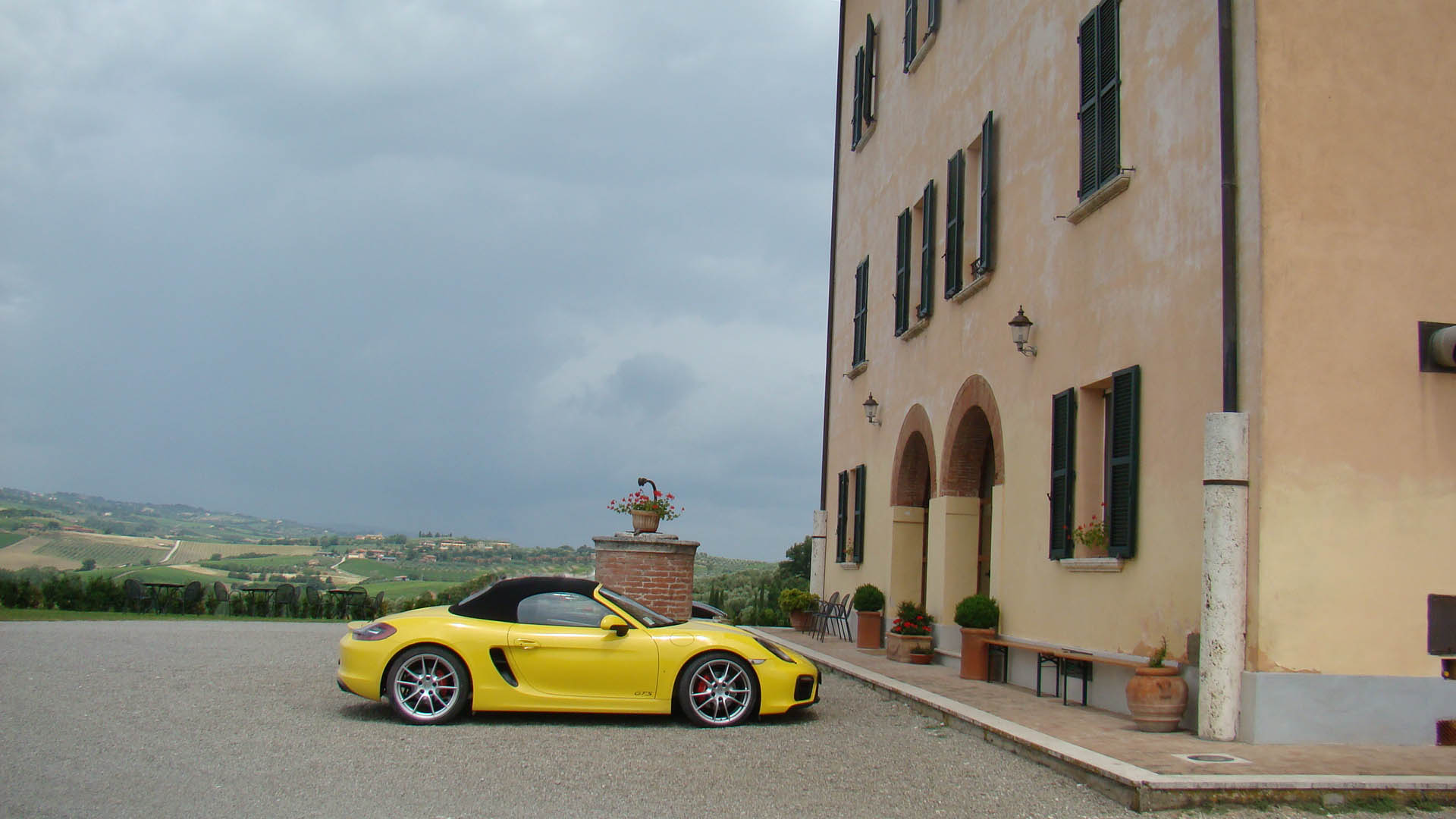
Big day tomorrow… we pickup our Porsche Boxter which we ordered 5 months ago!

New food – Agretti aka Roscano.

So, I have been seeing a vegetable unknown to me called Roscano here in our markets in Umbria. It looked a lot like chives with its roots but with the texture almost like a rosemary leaf. Finally, curious I grabbed a bunch and looked on-line for recipes. Here is what it looks like. (photo from wikipedia I forgot to take one before I used it!)

220px-Salsola_soda

…and from the food network.

DSC_0171

Also, during my exploration on-line I find that there are food fights going on in England over this stuff. Who knew what I was missing?!

As for my preparation. You can just saute it in butter or oil with lemon and garlic as a side dish. Or you can make a pasta, which is what I did. It was a little tedious to clean but then you just blanch it in boiling water for a couple of minutes and add it to your pasta sauce. My sauce also had fresh fava beans, lemon, garlic and toasted walnuts. I liked it. The Agretti was grassy and unlike anything I’ve had before. I would do it again. I hope the season is not over yet!

DSC04238


It’s GELATO time!

We decided today was the day to have our first gelato. We can get gelato at any bar nearby but we opted to walk the few blocks to the shop that is ONLY dedicated to gelato.They have all sorts of interesting flavors. I think they make it there. It does stand shoulders above the others. I decided to break away from my normal favorites and try a new flavor every time. Today it was Migliafolia. Chunks of chocolate and flaky bits of pastry in vanilla ice cream. Very satisfactory for my first gelato.

DSC04232

We also just got our recently ordered divani letto or sofa bed. It adds a new place to sit in the house and uses the office more fully and makes an extra double bed for guests. I like it.

DSC04234

And finally, a solution to our big window. I love this window and the view but it faces west and steadily the sun has been working its way along the horizon and is pouring into the living room by afternoon. When it’s hotter I figured it would add significantly to the heat in the room. It took a bit but we managed to explain what I wanted to Mr. Tiziano first by a visit then by sending pictures via email.  He came and measured and, voila! a white translucent shade that disappears up to the ceiling when not in use.

DSC04236

Tomorrow we are off to Ravena for an overnight. It is only about an hour and a half away. Unfortunately it is supposed to rain both days. Boo. We’ll still have fun I am sure.

Accessing “foreign” sites from Italy

I think people are sometimes surprised that they can’t access a site that they used to get from their house in the US. For instance, Netflix. They do not yet have an agreement in Italy so if I try to watch a movie, their server detects from my IP address that I am in Italy and says, “sorry Netflix is not in your part of the world yet”. Most annoying since I am paying for the service.

To overcome this there are websites that, when you become a member, allow you to “hide or change” your location. When I want to watch a Netflix movie, I “move” myself to the US. Right now this computer is in Miami FL. Or, sometimes when I try to watch a YouTube video in, say, England, it says sorry we do not serve people in your country. SO I just put myself in London! Easy peasy!

The service we use is Hide My Ass – hidemyass.com – There is also one called unblock-me. Both charge a monthly fee of between $5.00 and $10.00. I am sure there are others. It is well worth the cost to access American TV, Hulu, and my Netflix account from Italy. That said, if you plan to move to Italy, keep your account with digital Netflix. You must have an American credit card and an American mailing address to subscribe to it.

Cedro

Today was market day. We went out to purchase our fruits and vegetables as usual. Today the woman that we usually buy our vegetables from showed us an unusual citrus fruit. It was about the size of a grapefruit but she said it was between a lemon and an orange. Curious, I decided to bring one home. Looking it up on Google – it is called a Cedro – it said it is one of the 3 citrus’ that all subsequent citrus came from. It is a very old species. The ancient Greeks had it. Here are some pictures.

This is it in the bowl of oranges. Big huh?DSC04224
Next to a normal lemon.
DSC04223

Now I just have to figure out how to use it. The woman at the veggie stand mentioned a salad or with fish. Also on the internet was a picture of it halved. Seems only 20% of it is edible. Most of it is peel!

Also there is another phenom going on here right now. It looks like snow but it’s some plant that is broadcasting it’s seeds on puffs of white. I’ve seen this before but not to this extent. The stuff is piling up like snow drifts in all the corners, on stairs and especially in our garage. It swirls around our feet. I tried to open the windows today. All have screens but the big one in the living room. I had to close that one because so much of the stuff was coming in. I tried to take a picture but it really doesn’t give the real feel of the quantity of the stuff. Anyway, here it is. You can sort of see the white bits of fluff. Sure hope it stops soon!

DSC04230